SpaceX’s Starship V3 Debut Ends in Mixed Results as Booster Fails to Relight
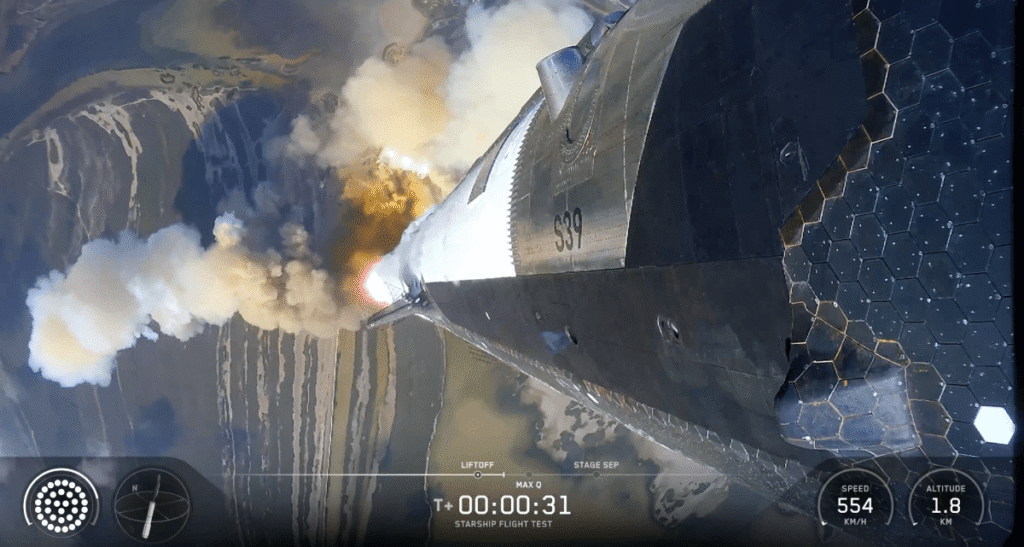
Table of Contents
Hardware evolution meets operational friction at Starbase
SpaceX has officially flight-tested the third iteration of its Starship system, the most powerful launch vehicle ever constructed. While the mission achieved several key primary objectives, the flight served as a stark reminder of the volatile nature of iterative rocket development, ending with the loss of the Super Heavy booster during its return attempt.
The 407-foot vehicle lifted off from the Starbase facility in Texas at 5:30 p.m. local time. The ascent phase largely validated the updated flight profile, with the upper stage separating from the booster as planned and continuing its trajectory into space. However, the return of the Super Heavy booster—a critical component for SpaceX’s goal of full and rapid reusability—did not go according to script.
During the descent, the booster attempted to perform a simulated landing in the Gulf of Mexico. Reports indicate that the engines failed to properly re-ignite for the sustained landing burn required to stabilize the vehicle. Without the necessary thrust to control its descent, the booster entered a tumble and was destroyed upon impact with the water.
Engine anomalies and payload success
The Starship upper stage also faced technical hurdles. One of its six Raptor engines failed during the ascent, yet the vehicle maintained enough velocity and stability to reach its target orbit. Once in space, the ship successfully deployed 20 Starlink satellite simulators and two modified Starlink satellites specifically designed to capture high-resolution exterior footage of the vehicle’s thermal performance.
Roughly one hour after liftoff, Starship executed a simulated landing in the Indian Ocean. In keeping with the current testing phase—where the ship is not yet designed for a soft touchdown on water—the vehicle tipped over and exploded upon contact, an outcome SpaceX engineers expected for this specific mission profile.
The Raptor 3 Gamble
The V3 hardware represents a significant leap in propulsion technology. This version utilizes third-generation Raptor engines, which boast increased thrust and a streamlined design intended to reduce manufacturing complexity and increase reliability. These engines are the centerpiece of the V3 strategy, aimed at making the booster’s ‘catch’ by the launch tower arms more consistent and the overall takeoff more efficient.
This launch also served as the inaugural test for the heavily redesigned launchpad at Starbase. The infrastructure has undergone years of iterative building to handle the immense acoustic and thermal loads of the Starship system, and early data suggests the pad held up under the stress of the V3 lift-off.
Financial Stakes and the Nasdaq Horizon
The timing of this test flight is not coincidental. SpaceX is currently navigating a critical financial inflection point following the public disclosure of its IPO filings this week. The company is expected to list on the Nasdaq in mid-June, with a valuation target that could see the offering raise approximately $75 billion.
Industry analysts suggest this capital injection is not merely for rocket development. The funds are expected to subsidize SpaceX’s expanding AI ambitions and potentially offset debts linked to Elon Musk’s other ventures, including xAI and the social media platform X. As the company transitions from a private entity to a public one, the stakes for Starship’s success have shifted; future failures will no longer be viewed solely as engineering hurdles, but as events capable of triggering immediate stock market volatility.
For now, the immediate priority remains the deployment of advanced Starlink satellites. While the long-term goal is a multi-planetary existence and NASA’s lunar missions, the Starlink constellation remains the primary driver of SpaceX’s profitability, making the reliable operation of Starship a commercial necessity rather than just a scientific ambition.


