SpaceX’s Secret ‘Starfall’ Project Aims to Industrialize the Low Earth Orbit Economy
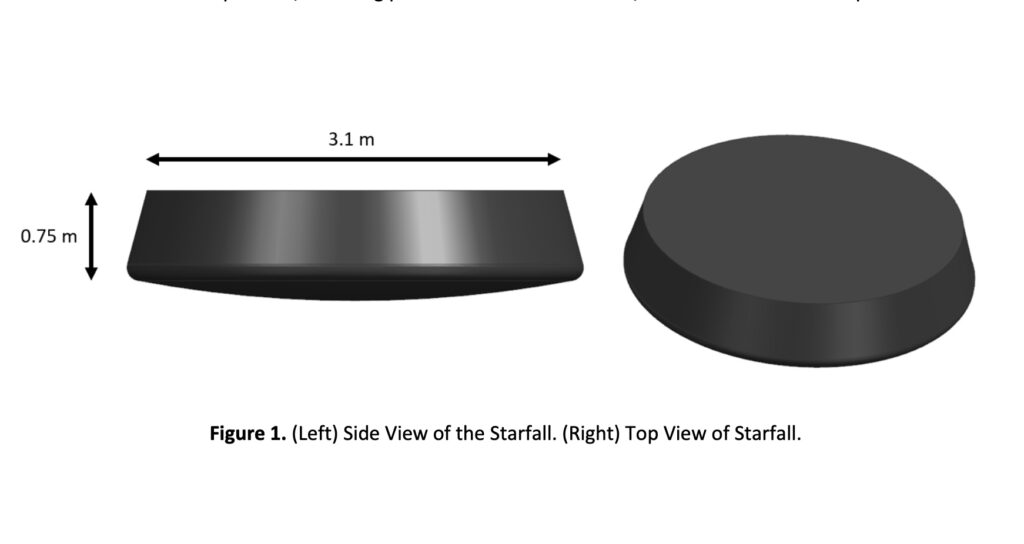
Table of Contents
The Blueprint for a Space-Based Economy
While Elon Musk’s SpaceX has spent the last few years dominating the headlines with the iterative testing of Starship, a quieter project known as ‘Starfall’ has been moving through the federal regulatory pipeline. New documents from the Federal Aviation Administration (FAA) provide a rare technical glimpse into a program that aims to do more than just launch satellites—it aims to build a logistical bridge for an industrial economy in orbit.
The FAA’s May 15 environmental assessment, which was later publicized in a May 29 update, clears the way for test flights of the Starfall vehicle. Far from being a simple research pod, the documents describe Starfall as a precursor to a ‘proliferated successor’ to the International Space Station (ISS). The goal is to move beyond the era of government-funded labs and toward a self-sustaining commercial market where microgravity and vacuum environments are used as raw materials for high-end manufacturing.
The Logistics of Return: How Starfall Works
The technical specifications revealed in the FAA filings paint a picture of a vehicle designed for utility and mass production rather than the luxury of crewed travel. Starfall is a disk-shaped capsule, measuring 3.1 meters in diameter and just 0.75 meters in height. It is split into two primary components: a 1,400-kilogram aluminum top plate and a 700-kilogram carbon-fiber heat shield.
Unlike the Crew Dragon, Starfall is stripped down. It lacks a primary propulsion system, relying instead on cold-gas attitude control thrusters to maintain orientation. It cannot deorbit itself, meaning it is entirely dependent on its launch vehicle—either a Falcon 9 or a Starship—to set its trajectory for reentry. The descent is handled by a traditional sequence of pilot, drogue, and main parachutes, with the heat shield being jettisoned prior to a Pacific Ocean splashdown.
According to a report by contractor KBR analyzed in the FAA documents, Starfall isn’t just a prototype but a blueprint for a mass-producible fleet. These vehicles are intended to carry up to 1,000 kilograms of payload within a 2.5 x 1.5 x 0.5 meter volume, effectively turning the vacuum of space into a factory floor where products can be created and then ‘shipped’ back to Earth on a rapid timeline.
Disrupting the ‘Rideshare’ Ecosystem
The strategic implication of Starfall is that SpaceX may be preparing to compete with its own customers. Currently, a growing cluster of startups relies on SpaceX’s rideshare missions to get their own reentry vehicles into orbit. Varda Space Industries, for instance, has successfully flown several W-series spacecraft for microgravity research using SpaceX launches.
Other players like Inversion, Atmos Space Cargo, and Reditus Space are all chasing the same dream: the ability to launch a payload, process it in orbit, and return it safely. By developing a standardized, low-cost reentry vehicle of its own, SpaceX could potentially vertically integrate the entire process—providing the rocket, the orbital platform, and the return vehicle.
Regulatory Clearance and Next Steps
The FAA has approved two specific reentries in the Pacific Ocean, roughly 1,300 kilometers off the coasts of California and Mexico. While the documents don’t specify a hard launch date, the approval of the environmental assessment is a critical hurdle. SpaceX’s move toward a ‘service at scale’ model suggests that the company is no longer just thinking about transportation, but about the infrastructure of the orbital economy itself.
If Starfall can prove that cargo can be returned precisely and cheaply, it removes one of the biggest barriers to space-based pharmaceutical and semiconductor manufacturing: the ‘last mile’ problem of getting the finished product back to a laboratory on Earth.