FAA Grounds Starship After V3 Booster Failure Clouds SpaceX IPO Timeline
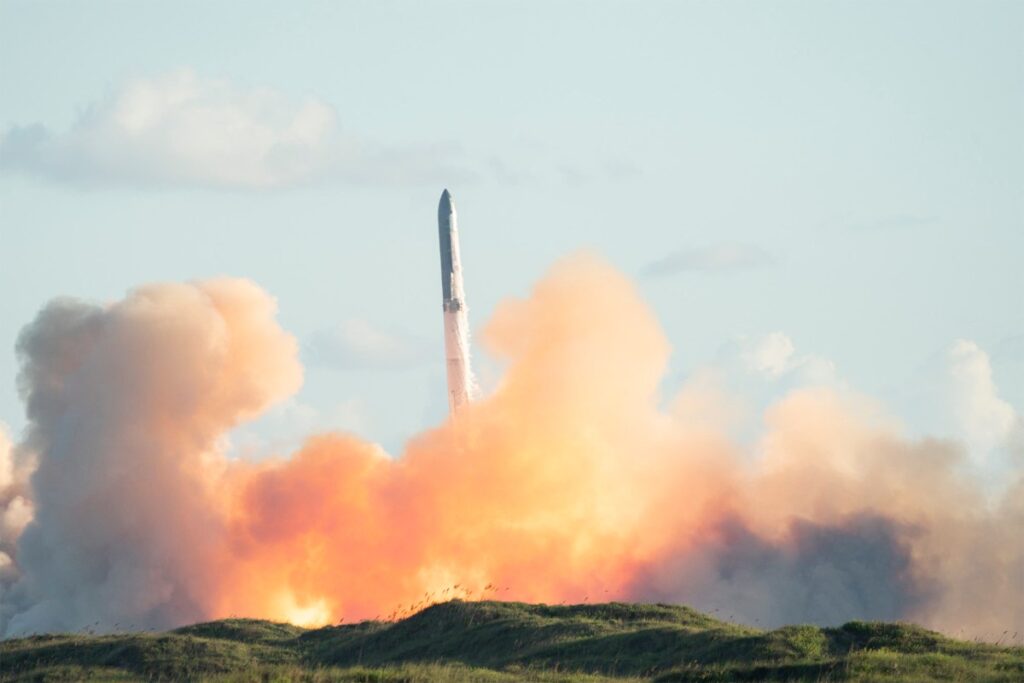
Table of Contents
A ‘Mishap’ in the Gulf
The Federal Aviation Administration (FAA) has officially designated the May 22 flight of SpaceX’s Starship as a ‘mishap,’ triggering a mandatory investigation into the failure of the Super Heavy booster. The move, confirmed in a statement released Wednesday, effectively freezes Starship’s flight cadence until SpaceX can prove to federal regulators that the root cause of the failure has been identified and mitigated.
The incident occurred during Flight 12, the debut of the heavily anticipated ‘V3’ iteration of the launch system. While the combined stack successfully navigated the period of maximum dynamic pressure and reached space, the mission degraded rapidly following stage separation. As the Super Heavy booster attempted its descent toward the Gulf of Mexico for a simulated landing, it suffered what appeared to be a catastrophic engine failure—or a sequence of them—during the critical sustained burn required to steer the vehicle. The result was a loss of attitude control, sending the booster into a tumble before it disintegrated upon impact with the water.
For the FAA, the terminology is precise: a ‘mishap’ occurs whenever a launch deviates from its planned trajectory or results in the loss of a vehicle. While the agency noted there were no injuries to the public or damage to infrastructure, the regulatory oversight is now absolute. The FAA will oversee every step of the SpaceX-led probe, and no further Starship launches can proceed without the agency’s explicit approval of the final report and any subsequent corrective actions.
The V3 Gamble and the Raptor Problem
The failure is particularly stinging because the V3 architecture was designed specifically to solve the reliability issues that plagued the first 11 test flights. SpaceX implemented a sweeping array of changes for this version, including structural refinements to the booster and the integration of third-generation Raptor engines. These engines are the heart of the Starship system, and their ability to restart and maintain thrust during atmospheric reentry is the linchpin of SpaceX’s goal for total reusability.
The instability wasn’t limited to the booster. The Starship upper stage also experienced a partial failure, losing one of its six Raptor engines. This forced mission control to abandon a key testing objective: a secondary sustained burn in orbit. The simultaneous struggles of both the booster and the ship suggest that the transition to V3 hardware may have introduced new complexities or unforeseen instabilities in the engine’s combustion cycles.
Financial Stakes and the IPO Clock
Beyond the engineering hurdle, there is a pressing corporate timeline. SpaceX is currently navigating the complexities of an anticipated IPO in mid-June. While the company has long been a private powerhouse, the transition to a public entity places its technical milestones under an intense financial microscope.
The urgency is driven by Starlink. According to the company’s own IPO filings, the massive growth of its satellite internet constellation is fundamentally tethered to the success of Starship. Falcon 9, while a triumph of aerospace engineering, lacks the payload capacity to deploy the next generation of larger, more capable Starlink satellites at scale. Starship is not just a moon rocket; it is the primary logistics vehicle for SpaceX’s only currently profitable business segment.
The Competitive Landscape
The FAA’s rigorous oversight is not exclusive to Elon Musk’s venture. The agency has applied similar mishap protocols to Blue Origin as it develops the New Glenn heavy-lift rocket. However, the timing favors Jeff Bezos’s company in the short term; the FAA cleared New Glenn to return to flight just last week, with a fourth launch attempt expected within the coming month.
As SpaceX works to satisfy the FAA’s requirements, the company faces a familiar tension: the desire to ‘fail fast’ and iterate rapidly versus the reality of operating within a federal regulatory framework that prioritizes safety and predictability over speed. For now, the path back to the launch pad in South Texas depends entirely on the telemetry data from the Gulf and the FAA’s satisfaction with the resulting report.


