SpaceX’s S-1 Filings Reveal a Fragile Balance Between Starlink Growth and Starship’s Reusability Gap
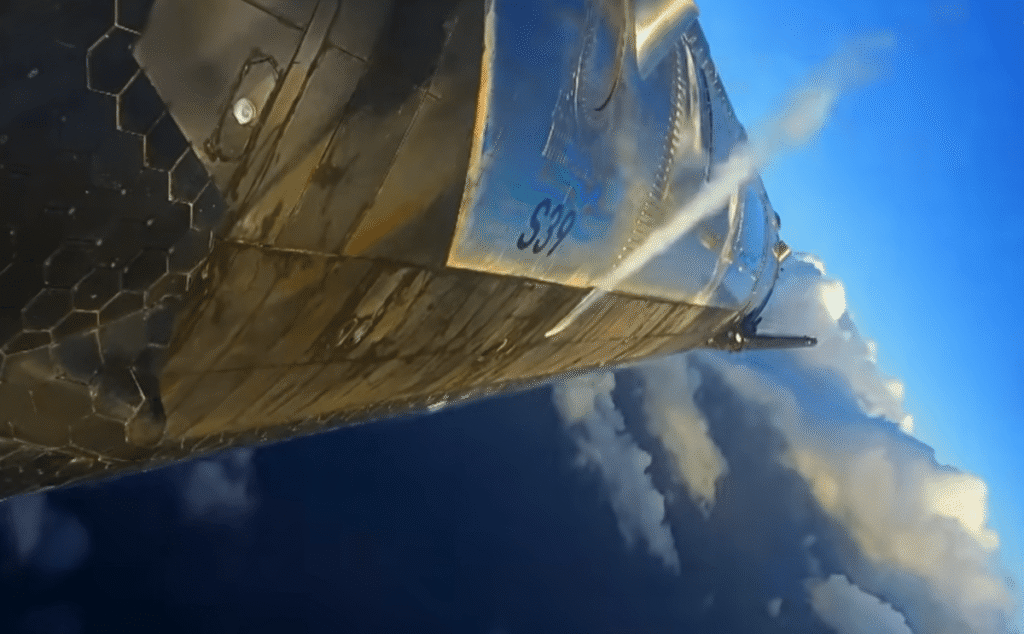
Table of Contents
The Financial Tension Behind the Hype
For years, the narrative surrounding SpaceX has been one of inevitable dominance, driven by Elon Musk’s vision of a multi-planetary species and a global internet canopy. However, a closer look at SpaceX’s recent S-1 filing with the U.S. Securities and Exchange Commission reveals a more precarious financial balancing act. While the company’s top-line numbers are impressive, the documents suggest that the promised synergy between Starship and Starlink is not yet a solved equation.
Starlink currently serves as the company’s economic engine, generating $11.4 billion in revenue last year. But this growth comes with a punishing capital expenditure treadmill. To maintain service levels, SpaceX must replace roughly 20% of its satellite constellation annually. The filings show that since the start of 2023, SpaceX has poured $11.4 billion into its satellite business—surpassing the $8.4 billion invested in Starship and its supporting ground infrastructure.
The Reusability Paradox
The central gamble for SpaceX is that Starship will drastically lower the cost of putting mass into orbit. Musk has previously suggested that without a fully reusable Starship, the company’s long-term viability could be at risk. Yet, the S-1 filing contains a subtle but critical admission: full reusability may not be a prerequisite for launching the next generation of high-throughput Starlink satellites.
This admission creates a strategic paradox. If SpaceX resorts to using Starship as an expendable vehicle to maintain its launch cadence, the cost advantages vanish. Tim Farrar, a veteran satellite market analyst, notes that without full reusability, the cost per launch could hover around $100 million, effectively making Starship no more economical than the existing Falcon 9 fleet, despite its massive 100-ton payload capacity.
This concern was reinforced by the recent test flight of the third Starship version. While the mission successfully deployed dummy satellites and test vehicles, it struggled with the precise relighting of Raptor engines on both the booster and the ship—a technical hurdle that is non-negotiable for a controlled return to Earth. If SpaceX begins deploying its new satellites later this year using expendable ships, it may be prioritizing short-term capacity over the long-term cost-efficiency required for more ambitious projects, such as orbital data centers.
Slowing Momentum and Market Saturation
Beyond the engineering challenges, the S-1 suggests that Starlink’s aggressive growth phase may be hitting a ceiling. While the network boasts over 10 million subscribers, data indicates a deceleration in user acquisition throughout the first quarter of 2026. This trend contradicts projections from firms like Quilty Space, which estimated a year-end total of 16.8 million users—a target that would require quarterly growth to nearly double from current levels.
The financial pressure is compounded by a slide in Average Revenue Per User (ARPU). In 2023, Starlink’s ARPU sat at $99; by Q1 2026, it dropped to $66. This decline is a direct result of SpaceX expanding into emerging international markets where pricing must be lower to compete with local infrastructure. As revenue per user dips and growth slows, the return on investment for every new satellite launched becomes thinner.
A Warning Sign for the Space Sector
The headwinds facing SpaceX are not happening in a vacuum. Amazon’s Project Kuiper is steadily approaching a scale that could challenge SpaceX’s monopoly on LEO (Low Earth Orbit) broadband, provided Amazon can navigate FCC deadlines regarding its 1,600-satellite launch requirement.
Perhaps the most sobering takeaway from the filings is what they imply for the broader industry. If SpaceX—possessing the most advanced launch capability and the largest constellation—is experiencing a slowdown in demand, it suggests that the total addressable market for space-based broadband may be significantly smaller than the industry’s architects believed. For competitors like Blue Origin, the SpaceX data serves as a cautionary tale: the path to profitability in space is not just about building the rocket, but about ensuring the market can sustain the cost of the ride.


