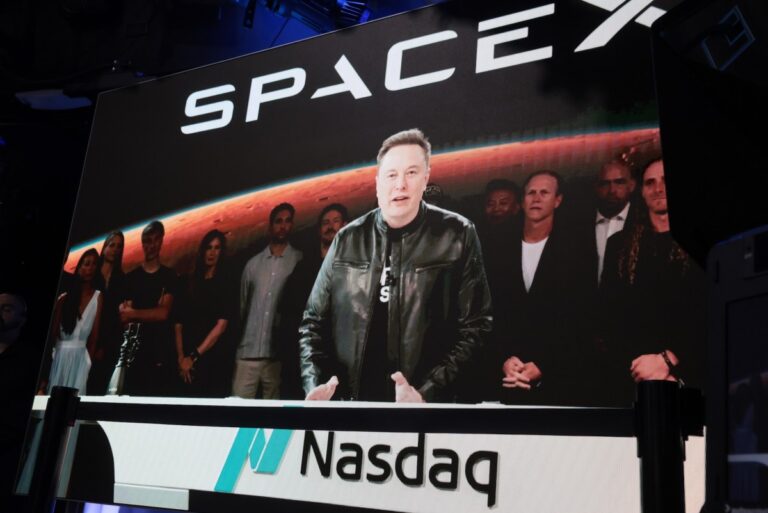
SpaceX Enters the 401(k) Arena: The High-Stakes Gamble of Private Equity Retirement

Table of Contents
A New Frontier for Employee Benefits
For years, SpaceX employees have grown wealthy through secondary market sales of their equity, but the company is now moving toward a more formalized—and controversial—integration of company value into retirement planning. By allowing employees to pivot their retirement strategies toward private equity and company-backed vehicles, SpaceX is attempting to institutionalize the ‘unicorn’ wealth effect. However, this shift has created a rift among the workforce, pitting those who crave high-alpha growth against those who fear the lack of liquidity in private markets.
The core of the tension lies in the fundamental difference between a traditional 401(k) and a private-equity-heavy portfolio. Most American retirement accounts are built on the bedrock of public indices—S&P 500 trackers or Target Date Funds—where assets can be liquidated in seconds. SpaceX is betting that the company’s trajectory toward Mars and the continued dominance of Starlink justify a higher concentration of non-public assets in the portfolios of its staff.
The Liquidity Trap
Critics within the company and broader financial analysts argue that tying a retirement account to a private entity creates a dangerous concentration of risk. If an employee’s salary, current net worth (via stock options), and future retirement are all tied to the survival and success of a single company, they are effectively “all-in” on Elon Musk’s vision. This isn’t just a diversification issue; it’s a liquidity crisis waiting to happen. Unlike a share of Apple or Microsoft, SpaceX equity cannot be sold on an open exchange at the click of a button.
While SpaceX has historically facilitated tender offers—allowing employees to sell shares to outside investors—these events are sporadic and controlled by the company. Relying on these windows for retirement funding introduces a level of unpredictability that traditionally makes financial advisors cringe. The risk is that an employee may reach retirement age only to find that the window for selling their shares is closed, or that the valuation has stagnated during a period of regulatory scrutiny.
The ‘Musk Premium’ vs. Market Reality
Despite the risks, there is a significant contingent of engineers and operators at SpaceX who view this as the only logical way to build generational wealth. For them, the “Musk Premium”—the historical tendency of Musk-led ventures to disrupt entire industries—outweighs the safety of a 4% dividend yield. They argue that the transition from a startup to a quasi-state utility (via Starlink) provides a floor of stability that most private equity lacks.
This strategy mirrors a broader trend in Silicon Valley where “wealth creation” is being decoupled from the traditional IPO. By keeping SpaceX private while offering retirement-adjacent equity vehicles, Musk maintains total control over the company’s direction without the quarterly pressure of Wall Street. The employees, in effect, become the venture capitalists, absorbing the risk in exchange for the potential of astronomical returns.
Regulatory Gray Areas
From a compliance standpoint, the move tests the boundaries of ERISA (Employee Retirement Income Security Act) guidelines, which generally require plan fiduciaries to diversify investments to minimize the risk of large losses. While the company can offer these options, the legal liability of promoting a concentrated private equity position in a retirement account is a complex area of employment law. If a market crash or a catastrophic launch failure were to wipe out a significant portion of employee retirement savings, the fallout could extend beyond financial loss to massive legal challenges regarding fiduciary negligence.
As SpaceX continues to scale its Starship operations and expand Starlink’s global footprint, the company’s internal financial architecture is becoming as complex as its rocket telemetry. For the employees, the gamble is simple: bet on the company that is trying to colonize another planet, or stick to the safety of the terrestrial stock market.