SpaceX Debuts Starship V3 with Mixed Results in High-Stakes Test Flight
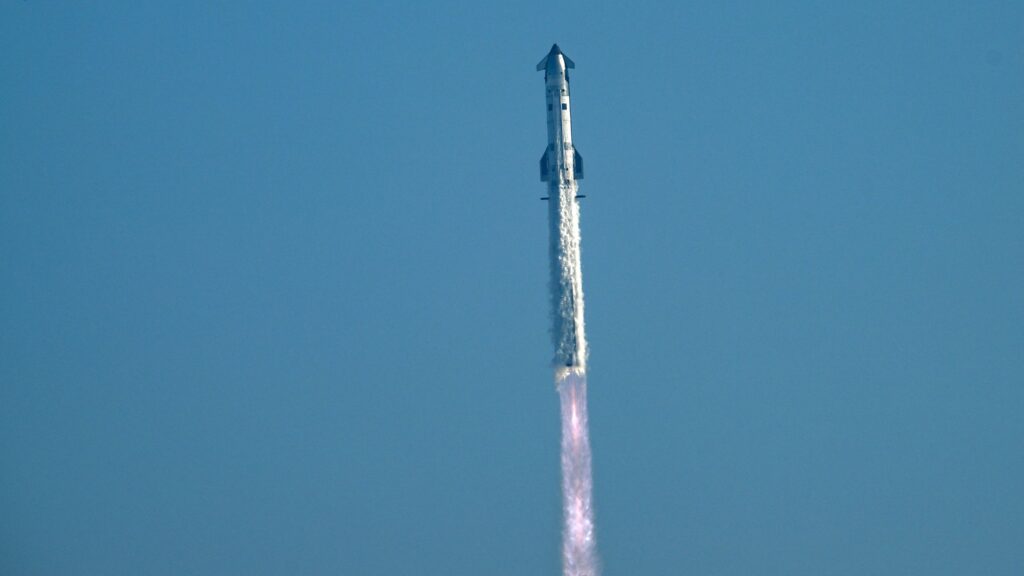
Table of Contents
A New Iteration Takes Flight
SpaceX returned to the launch pad Friday with the debut of Starship Version 3 (V3), the latest evolution of the most powerful rocket ever flown. Launching from a newly completed second pad at the Starbase facility in South Texas, the 408-foot-tall vehicle climbed into the sky on its 12th suborbital test flight, marking a significant design shift for the company as it moves closer to fully operational missions.
The V3 iteration isn’t just a minor tweak; it represents a comprehensive design overhaul. The most visible change is found at the top of the Super Heavy booster. Unlike the V2, which utilized an interstage ring that discarded during separation, V3 employs a specialized hardware configuration—essentially a protective fence around the fuel tank’s dome. This modification is intended to provide the necessary clearance and thermal protection for the upper stage engines’ ignition during the critical “hot staging” phase.
Technical Glitches and Tactical Adjustments
The flight was not without its complications. Early in the ascent, one of the 33 Raptor engines on the Super Heavy booster shut down prematurely. This failure cascaded into a navigation issue: the booster missed its critical “boost back” maneuver, which is essential for guiding the rocket back toward the launch site for recovery.
Simultaneously, the Ship 39 upper stage lost one of its six main engines during the climb. Despite the loss of power, the vehicle managed to reach space, though SpaceX spokesperson Dan Huot noted that the resulting trajectory was not a “nominal orbital insertion,” though it remained within analyzed bounds.
The failure of the boost-back burn meant that the Super Heavy booster could not be caught by the “chopstick” arms of the launch tower. In a calculated move to protect the brand-new hardware of the V3 pad, SpaceX had already planned for a soft splashdown in the Gulf of Mexico for this specific mission. The booster ultimately plummeted into the water, beaming data and video back to mission control until the signal cut out.
Payloads and the ‘Dodger Dogs’
Despite the engine troubles, the mission achieved its primary payload objectives. About 17 minutes into the flight, Starship utilized its unique “PEZ dispenser” deployment door to release 22 payloads. This included 20 dummy Starlink satellites and two operational spacecraft equipped with specialized imaging sensors.
These two satellites, nicknamed “Dodger Dogs” by SpaceX staff, were tasked with a critical diagnostic: scanning the heat shield tiles of Ship 39 in real-time. The goal is to develop a reliable method for inspecting thermal protection systems for damage before the vehicle attempts reentry—a hurdle that has plagued previous Starship iterations.
The Cost of Engine Failure
The engine loss during ascent forced flight controllers to make a difficult call. SpaceX had intended to perform an in-space relight of a Raptor engine—a vital demonstration of the spacecraft’s ability to manage cryogenic fuels and execute maneuvers in zero-G. This capability is the bedrock for any future missions to the Moon or Mars, where mid-course corrections and return trajectories are mandatory.
Due to the instability caused by the missing engine, the relight test was skipped. However, the descent phase provided its own set of data. Ship 39 performed a series of structural stress tests during reentry, eventually executing a banking maneuver designed to mimic the orientation required for a tower catch at Starbase.
The mission ended with the expected violence of a test flight. After igniting two engines for its final landing burn, Ship 39 toppled into the ocean and exploded in a fireball—a planned conclusion that allowed the team to gather final telemetry on the vehicle’s structural limits.