Sony Hits India With BRAVIA 7II: A Technical Push Toward True RGB Mini-LED
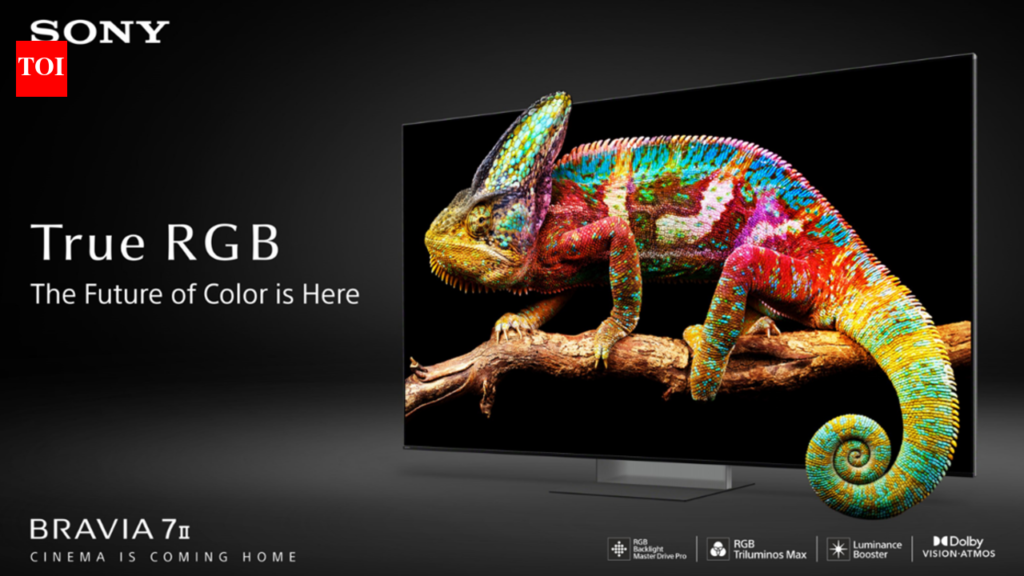
Table of Contents
Precision Over Pixels
Sony has officially expanded its high-end display portfolio in the Indian market with the launch of the BRAVIA 7II. While the broader industry has trended toward massive screen sizes and aggressive pricing, Sony is doubling down on color accuracy and luminance control, centering the 7II around its proprietary True RGB technology.
The BRAVIA 7II isn’t just a iterative refresh; it is a targeted attempt to bridge the gap between consumer Mini-LEDs and professional-grade reference monitors. By utilizing a more sophisticated array of Mini-LEDs, Sony claims a significant reduction in “blooming”—the distracting halo effect often seen around bright objects on dark backgrounds, a perennial weakness in high-contrast LED panels.
The Mechanics of True RGB
At the heart of the 7II is the commitment to True RGB. Most mainstream LED TVs rely on white LEDs coated with yellow phosphor, which then pass through color filters. Sony’s approach in the 7II utilizes a more direct method of light emission to ensure that red, green, and blue primaries are rendered with higher purity. This results in a wider color gamut and a more natural skin-tone reproduction, which is critical for the HDR10 and Dolby Vision content that defines modern streaming.
Driving this hardware is the latest iteration of the XR Cognitive Processor. Rather than simply applying a blanket filter to the image, the processor analyzes the “focal point” of a scene—mimicking how a human eye perceives a room—and concentrates processing power on the areas of the screen where the viewer is most likely to be looking. This creates a depth of field that feels more cinematic and less digitally processed.
Gaming and Integration
Sony is clearly eyeing the PlayStation 5 ecosystem with the BRAVIA 7II. The set includes specialized “Game Menu” settings that allow users to toggle between various modes—such as FPS or RPG—which automatically adjust HDR mapping and low-latency inputs. With HDMI 2.1 support, the TV handles 4K/120Hz output natively, ensuring that the high frame rates of current-gen consoles aren’t bottlenecked by the display hardware.
On the software side, the TV continues to leverage Google TV, providing a seamless bridge for smart home integration. However, the real value proposition lies in the “Acoustic Multi-Audio” system, which uses actuators to vibrate the screen itself, attempting to make the sound originate from the center of the action rather than from downward-firing speakers at the bottom of the bezel.
Market Positioning in India
Entering the Indian market is a calculated move for Sony. With competitors like Samsung and LG pushing aggressive OLED pricing, Sony is positioning the BRAVIA 7II as the “reliable premium” choice—offering the brightness levels required for sun-drenched Indian living rooms while maintaining the color science Sony is known for in its professional cinema cameras.
Pricing for the BRAVIA 7II is tiered based on screen size, targeting the upper-mid to premium segment. While the exact street price varies by retailer, the launch is accompanied by a focus on bundled service offers and extended warranties, signaling Sony’s intent to lock in long-term brand loyalty in a volatile electronics market.


