Sony Challenges OLED Dominance with New ‘True RGB’ Mini LED Lineup
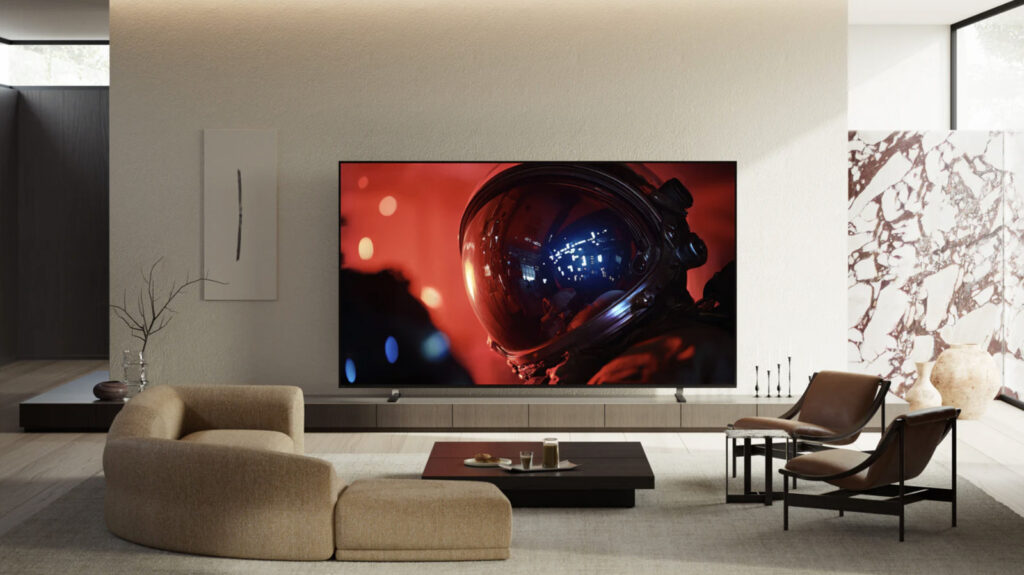
Table of Contents
A New Play for Color Precision
For years, the divide in high-end television has been stark: you either chose the infinite contrast and pixel-level control of OLED or the searing brightness and longevity of Mini LED. Sony is attempting to blur that line with the launch of its new “True RGB” lineup, headlined by the flagship Bravia 9 II and the more accessible Bravia 7 II.
The “True RGB” branding isn’t just marketing fluff; it represents a fundamental shift in how Sony handles backlighting. Most Mini LED TVs rely on white LEDs combined with a color filter to produce the primary colors. Sony’s new approach utilizes independently driven red, green, and blue LEDs. By controlling these light sources separately via the new RGB Backlight Master Drive Pro system, Sony claims to achieve a level of color purity and saturation that traditionally required an OLED panel, while maintaining the high-nit peaks that make Mini LED preferable for bright, sun-drenched living rooms.
The Flagship: Bravia 9 II
The Bravia 9 II is clearly positioned as the crown jewel of the series. Beyond the True RGB hardware, Sony has introduced a specific screen treatment called Immersive Black Screen Pro. This is an aggressive anti-glare and low-reflection layer designed to solve the perennial Mini LED struggle: maintaining deep, inky blacks when ambient light hits the screen. In a typical bright room, Mini LEDs can suffer from “blooming” or a greyish haze in dark scenes; the 9 II is engineered specifically to mitigate this through more granular backlight zones.
Audio is also a focal point for the flagship. Sony has integrated up-firing beam tweeters into the acoustic array, attempting to move the soundstage vertically to match the scale of its largest panels. This is a strategic move to capture the “home cinema” crowd who may want a massive screen without the immediate necessity of a complex external soundbar setup.
The Mid-Range: Bravia 7 II
While the 9 II pushes the technical envelope, the Bravia 7 II serves as the volume driver for the True RGB ecosystem. It retains the core independently controlled RGB backlight architecture, ensuring it doesn’t feel like a compromised experience in terms of color. However, it lacks the Immersive Black Screen Pro treatment and the high-end beam tweeters found in its larger sibling.
Both models leverage Sony’s latest AI processing, specifically Voice Zoom 3. This feature uses machine learning to isolate and enhance dialogue, a necessary addition as modern cinematic mixes often bury voice tracks under heavy bass and orchestral scores. From a design perspective, both units feature a narrow, transparent stand, a stylistic choice intended to create a “floating” aesthetic and simplify cable management.
Compatibility and Cost of Entry
On the software and standards front, Sony continues its broad-spectrum approach. Both the 7 II and 9 II support Dolby Vision, Dolby Atmos, DTS:X, and IMAX Enhanced. Notably, Sony has included studio calibration modes for Netflix and Prime Video, as well as its own Sony Pictures Core service, allowing users to toggle between a “director’s intent” look and a more processed, vibrant image.
The pricing, however, reflects the premium nature of the True RGB tech. The Bravia 9 II starts at $3,600 for the 65-inch model and scales aggressively up to a massive 115-inch variant priced at $31,000. The Bravia 7 II is more approachable, starting at $1,600 for a 50-inch screen, though the 98-inch version still commands a steep $9,000.


