Sony BRAVIA 7II Hits India: Assessing the Impact of True RGB Technology on Mid-Range Luxury TVs
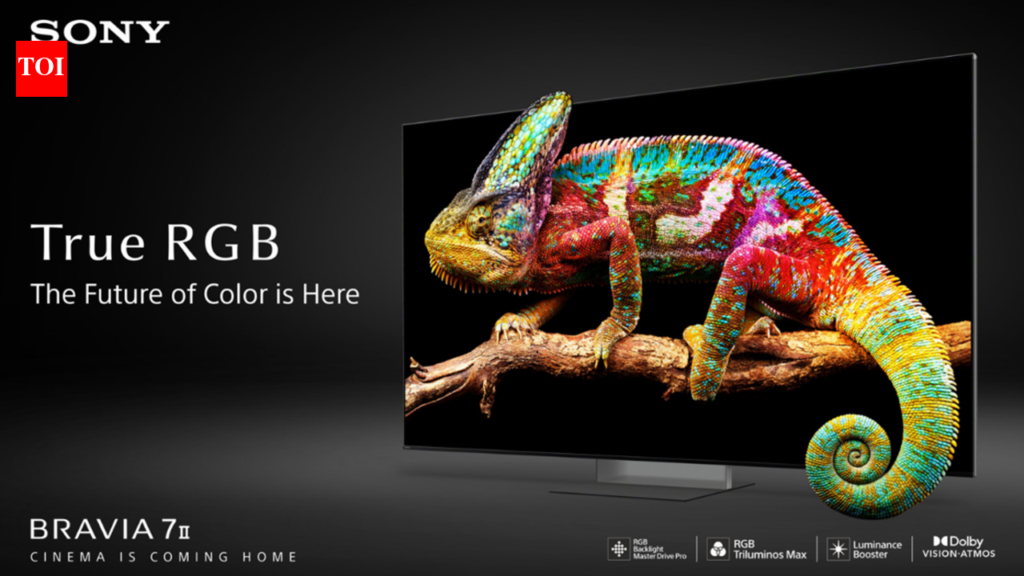
Table of Contents
Sony’s Strategic Pivot in the Indian Premium Display Market
Sony has officially expanded its 2024-2025 lineup in India with the launch of the BRAVIA 7II. While the industry has been locked in a fierce battle between the infinite blacks of OLED and the searing brightness of Mini-LED, Sony is attempting to carve out a middle ground. The BRAVIA 7II isn’t just a refresh; it is a calculated effort to implement what Sony calls ‘True RGB technology’ to solve the color accuracy issues that often plague high-brightness LED panels.
- True RGB Integration: Moves beyond standard white-subpixel layouts to ensure more precise color reproduction in high-brightness scenarios.
- XR Processor Intelligence: The brain of the unit handles cognitive processing to minimize the ‘blooming’ effect common in Mini-LEDs.
- Market Positioning: Targets the ‘aspirational premium’ segment in India, sitting between the entry-level X80 series and the flagship BRAVIA 9.
- Gaming Ecosystem: Full support for HDMI 2.1, 4K/120Hz, and VRR, making it a viable contender for PS5 owners.
For the average consumer in India, the shift to the 7II series represents a move toward longevity. While OLEDs suffer from potential burn-in over a decade of use, Mini-LEDs like the 7II offer a lifespan that matches traditional LED TVs while approaching OLED-like contrast. However, the real question for tech enthusiasts is whether the ‘True RGB’ marketing translates to a visible difference in color volume when viewing HDR content in a brightly lit living room.
Deconstructing ‘True RGB’ and the Mini-LED Architecture
To understand why the BRAVIA 7II matters, we have to look at the physics of the panel. Most standard LED TVs use a white LED backlight with a color filter. This often results in ‘washed out’ whites or shifted hues when the brightness is pushed to its limit. True RGB technology aims to refine the sub-pixel structure and the backlight’s interaction with the quantum dots, ensuring that red, green, and blue channels maintain their saturation even at peak luminance.
In practical terms, this means that when you are watching a high-contrast scene—such as a sunset over a dark ocean—the orange hues won’t bleed into a yellowish white. This level of precision is usually reserved for professional mastering monitors, but Sony is bringing it to the consumer living room. When combined with the XR Processor, the TV can analyze the focal point of a scene and boost brightness locally without sacrificing the surrounding shadows.
Performance Metrics: Where the BRAVIA 7II Stands
Based on early technical benchmarks, the BRAVIA 7II pushes peak brightness significantly higher than its predecessors. While Sony rarely releases exact nits in marketing materials, industry testing suggests a peak luminance that comfortably handles HDR10 and Dolby Vision content, even in rooms with significant sunlight. This is a critical advantage for the Indian market, where living rooms are often designed with large windows and high ambient light.
| Feature | BRAVIA 7II Specification | Industry Standard (Mid-Range) |
|---|---|---|
| Backlighting | Advanced Mini-LED | Edge-lit or Direct-lit LED |
| Color Tech | True RGB | Standard RGB / Phosphor |
| Refresh Rate | 120Hz (Native) | 60Hz – 120Hz |
| Processor | XR Cognitive Processor | Standard AI Upscaling |
| HDR Formats | Dolby Vision, HDR10, HLG | HDR10 |
What This Means for the Indian Consumer
The introduction of the BRAVIA 7II signifies a shift in how we value ‘premium’ television. For years, the choice was binary: buy a cheap LED or an expensive OLED. The 7II provides a third path. It offers the brightness required for daytime viewing (which OLEDs struggle with) while providing a color accuracy that mimics the professional grade of Sony’s cinema cameras.
For gamers, the integration of ‘Game Menu’ settings and Auto HDR Tone Mapping means less time fiddling with calibration and more time playing. If you are a PlayStation 5 user, the synergy between the console and the BRAVIA 7II’s XR processor creates a low-latency environment that is noticeably smoother than generic 4K panels.
Comparing the 7II to OLED Alternatives
It is important to be transparent about the trade-offs. Despite the True RGB enhancements, the BRAVIA 7II is still a Mini-LED. This means it uses ‘zones’ to control light. While Sony has more zones than most, you may still see slight ‘blooming’ (a halo effect) around white text on a black background. An OLED, which turns off pixels individually, will always win on absolute black levels.
However, the 7II wins on color volume. OLEDs can lose color saturation as they get brighter (known as APL or Average Picture Level limitation). The BRAVIA 7II maintains its vividness even when the entire screen is bright, making it a superior choice for sports and bright action sequences.
Frequently Asked Questions
Is the BRAVIA 7II better than an OLED for a bright room?
Yes. Because it uses Mini-LEDs, it can achieve much higher peak brightness than most OLEDs, which prevents the image from looking washed out when sunlight hits the screen.
What exactly is True RGB technology?
True RGB refers to a refined sub-pixel and backlight arrangement that ensures red, green, and blue colors remain accurate and saturated even at maximum brightness, reducing the ‘color shift’ seen in cheaper LED TVs.
Does the BRAVIA 7II support 4K gaming at 120fps?
Yes, it features HDMI 2.1 ports that support 4K resolution at 120Hz, along with Variable Refresh Rate (VRR) and Auto Low Latency Mode (ALLM).
How does the XR Processor improve the image?
The XR Processor uses cognitive analysis to identify where the human eye naturally focuses in a scene, prioritizing detail and contrast in those areas to create a more lifelike, three-dimensional image.
Is it worth upgrading from a BRAVIA 6 series?
If you prioritize HDR performance and color accuracy, yes. The jump to Mini-LED and True RGB provides a significant upgrade in contrast and brightness over the standard LED arrays found in the 6 series.
The Verdict on Sony’s New Direction
The BRAVIA 7II is not trying to kill the OLED; it is trying to make the LED experience indistinguishable from it for 95% of users. By focusing on True RGB and cognitive processing, Sony has addressed the primary complaints about Mini-LEDs—color inaccuracy and blooming. In the competitive Indian market, where durability and brightness are as important as picture quality, the 7II is a formidable contender that justifies its premium price tag through sheer engineering refinement.