SITAEL Sets Sights on €200 Million Revenue Target as European Space Ambitions Pivot Toward Industrialization
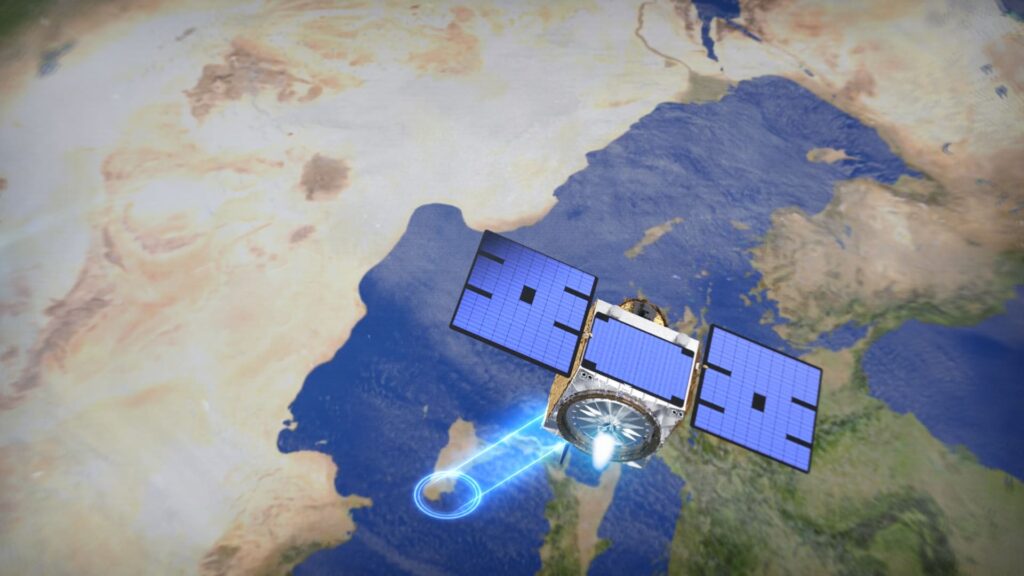
Table of Contents
A Pivot from Prototyping to Production
For much of the last decade, the European small-sat sector has been characterized by academic curiosity and fragmented prototyping. SITAEL, the Italian space firm and subsidiary of Angel Holding, is betting that the era of ’boutique’ satellite building is over. Speaking at SmallSat Europe in Amsterdam, the company outlined an aggressive growth trajectory aimed at hitting €200 million in annual revenues by 2031, a significant leap from its current approximate €60 million mark.
The strategy is not based on speculative ventures but on a mounting backlog of over €150 million and a rigorous shift toward industrial-scale production. While many startups struggle to move from a single successful orbit to a repeatable product, SITAEL has invested heavily in physical infrastructure. The company now operates two primary hubs: a high-capacity clean room in Mola di Bari capable of simultaneous construction for five satellites, and a specialized production line in Pisa dedicated to Hall-effect electric propulsion, which became operational in July 2025.
The HiBiDiS Mission and the ‘Prime’ Evolution
Central to SITAEL’s climb up the value chain is its role as the prime contractor for the European Space Agency’s (ESA) Scout HiBiDiS mission. Transitioning from a component supplier to a prime contractor is a critical milestone for any aerospace firm; it signals that the company can manage the entire lifecycle of a mission, from systems engineering and integration to final delivery.
Scheduled for launch in 2030, HiBiDiS is designed to tackle a persistent gap in Earth observation: the forest understory. Most current satellites only see the top of the canopy, but HiBiDiS will utilize high-performance platforms and hyperspectral imaging to monitor biodiversity and ecosystem resilience beneath the leaves. To achieve this, SITAEL is collaborating with AMOS on the hyperspectral instrument, alongside VITO and the University of Zurich for data processing.
“HiBiDiS is more than a new contract,” CEO Chiara Pertosa noted during the announcement. “It confirms our evolution towards becoming a European mission company, capable of combining platform, payload, integration, data and impact.” This transition allows SITAEL to leverage its EMPYREUM and NextGen platforms, moving away from bespoke builds toward standardized, high-performance architectures.
Navigating the ‘New Space Cycle’
SITAEL’s timing coincides with a broader European push for technological sovereignty. With the continent increasingly wary of reliance on non-EU launch and satellite capabilities, there is a growing demand for secure communications and Earth observation architectures. SITAEL has already signaled its intent to bid for major programs, including the European Resilience from Space (ERS) and IRIS², Europe’s second-generation secure satellite constellation.
Beyond government contracts, the company is diversifying its technical moat. Its focus on Very Low Earth Orbit (VLEO) missions is supported by the development of a propellantless RAM-EP thruster—a technology that could fundamentally change how satellites maintain orbit in the thin upper atmosphere without carrying massive amounts of fuel.
Expanding the Ecosystem
The company is also looking beyond Italian borders to build a more robust commercial network. A recent Memorandum of Understanding (MoU) with Eycore, a Polish provider of Synthetic Aperture Radar (SAR) services, suggests a move toward integrated satellite-as-a-service models. By pairing SITAEL’s platform expertise with Eycore’s SAR capabilities, the two firms aim to offer more sophisticated Earth observation data to commercial and governmental clients.
Financially, the roadmap is ambitious. SITAEL expects its EBITDA to climb from 12% toward 25% as it scales. With nine launches slated between 2026 and 2030—including the PLATINO and IRIDE series—the company is moving out of the developmental phase and into a period of sustained industrial execution.