Satire to Streets: How the ‘Cockroach Janta Party’ is Weaponizing Memes Against India’s Education Crisis
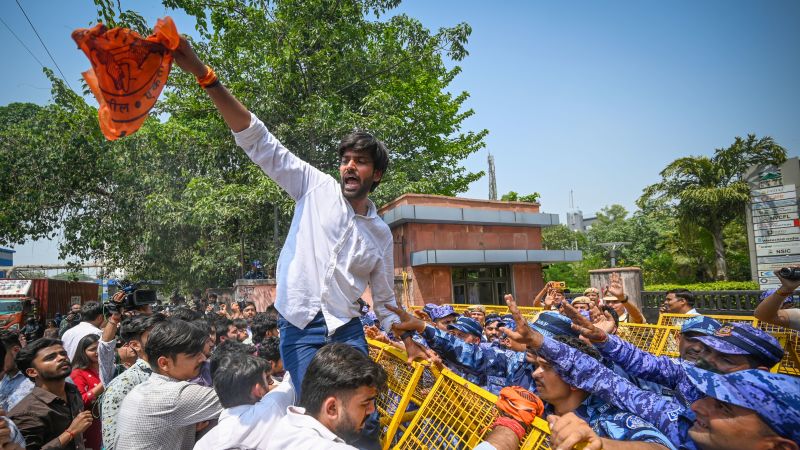
Table of Contents
Digital Satire as Political Weaponry
The transition from a viral Instagram trend to a physical protest in New Delhi happened with startling speed for the Cockroach Janta Party. What began as a biting response to a judicial comment has evolved into a concentrated digital movement, reflecting a deeper, more systemic frustration among India’s Gen Z population. This is not merely a case of internet trolling; it is a manifestation of a demographic crisis where high academic credentials are failing to translate into economic stability.
Abhijeet Dipke, a 30-year-old Boston University graduate, recently returned to India to bridge the gap between the movement’s online momentum and real-world political pressure. Upon arriving in New Delhi, Dipke faced an immediate security presence at the airport—a reminder of the precarious nature of dissent in the current political climate. His objective is clear: a protest at the Jantar Mantar monument demanding the resignation of Education Minister Dharmendra Pradhan.
The catalyst for the party’s name was a spark of institutional friction. Chief Justice Surya Kant made remarks that were widely interpreted as labeling unemployed youth as “cockroaches.” While Kant later clarified that his comments targeted those using fraudulent degrees to enter professions, the nuance was lost in the vacuum of widespread youth desperation. The resulting “Cockroach Janta Party” didn’t just embrace the insult; they weaponized it, using AI-generated imagery and high-velocity meme sharing to amass over 22 million followers in a single week.
The Algorithm of Anger
The scale of the party’s digital growth highlights a shift in how political mobilization works in the world’s most populous nation. By leveraging AI-generated mascots and a shared sense of indignity, the movement has bypassed traditional political machinery to reach millions of digitally savvy graduates. This digital-first strategy has allowed the movement to saturate news cycles and social feeds, turning a specific judicial comment into a broader critique of the state’s failure to provide viable career paths.
For many followers, like Amrita Singh, the party represents a new form of political representation that acknowledges the contributions of youth to national growth while criticizing the systemic roadblocks they face. The speed of the party’s growth is a direct reflection of the accessibility of current social media tools and the shared trauma of a generation facing a shrinking job market.
Structural Failure and the ‘Exam Trap’
The digital noise of the Cockroach Janta Party is grounded in a grim statistical reality. According to a report by Azim Premji University in Bengaluru, nearly 40% of graduates aged 25 and under are unemployed. In a country with over 360 million people between 15 and 29, this represents a ticking demographic time bomb.
This economic anxiety is compounded by a crumbling examination infrastructure. India’s high-stakes entrance exams—often the only gateway to prestigious medical or engineering careers—have become synonymous with chaos. Paper leaks and technical failures have turned these tests from measures of merit into lotteries of luck and corruption. The pressure is immense, as seen in the experience of 24-year-old Veronica Madan, who spent years preparing for medical entrance exams only to find the system’s volatility as daunting as the curriculum itself.
The convergence of these factors—high unemployment, exam scandals, and a perceived lack of empathy from the judiciary and executive branches—has created a fertile environment for satirical movements. When the formal channels for grievance are perceived as broken, the youth turn to the only tools they have mastered: the internet and irony.
While the Ministry of Education and the ruling Bharatiya Janata Party (BJP) have yet to issue a formal response to the specific demands of the Cockroach Janta Party, the movement’s ability to move from pixels to pavement suggests that the digital anger of India’s youth is no longer content to remain behind a screen.