Samsung Pushes NPU-Driven Upscaling With 2026 Vision AI TV Rollout in India
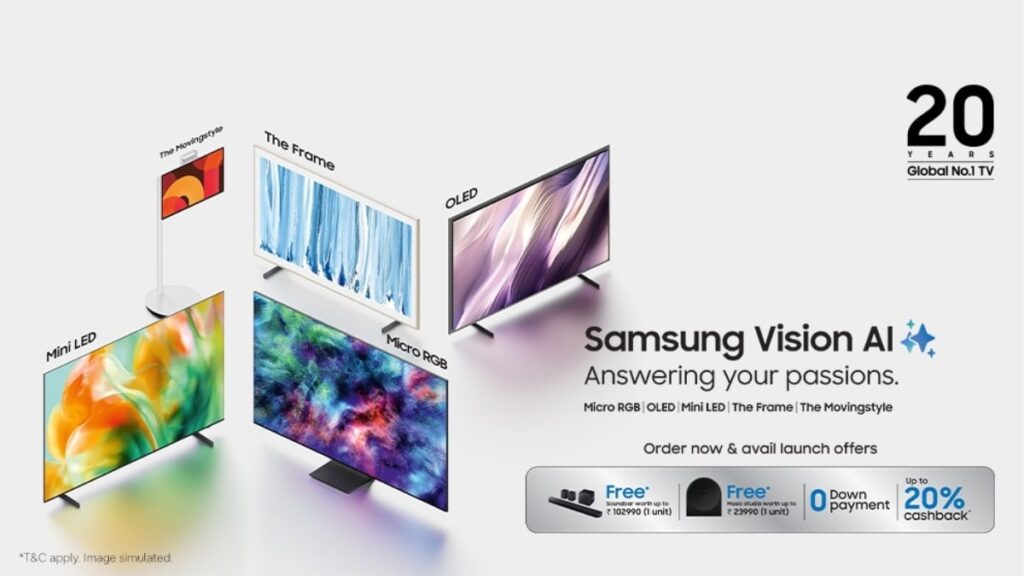
Table of Contents
Moving Beyond Basic Upscaling
Samsung has officially launched its 2026 Vision AI TV lineup in India, marking a strategic pivot from simply increasing pixel density to deploying aggressive AI-driven image reconstruction. The new range, spanning the flagship OLEDs and the high-brightness Neo QLED series, centers on a redesigned Neural Processing Unit (NPU) designed to handle real-time content analysis with significantly lower latency than previous iterations.
The core of the 2026 series is the “Vision AI” engine. While AI upscaling has been a marketing staple for years, Samsung is now leaning into generative AI to fill in missing detail in low-resolution streams. Unlike traditional interpolation, which often results in a “soapy” or smeared look, the new NPU identifies specific objects—such as facial features or textile patterns—and applies targeted sharpening based on a deep learning library of high-resolution textures.
The Hardware Split: OLED vs. Neo QLED
The lineup continues to split its identity between two primary display technologies. The 2026 OLED models focus on absolute black levels and precision, targeting the home cinema enthusiast. These units utilize a refined QD-OLED panel that aims to bridge the brightness gap that typically separates OLEDs from their LED counterparts.
On the other side, the Neo QLED models leverage Mini-LED technology to dominate high-ambient light environments. The 2026 iteration introduces a more granular local dimming system. By increasing the number of independent dimming zones, Samsung is attempting to curb the “blooming” effect often seen around bright subtitles or white text on dark backgrounds, a persistent critique of previous Neo QLED generations.
Intelligence in the Living Room
Beyond the screen, Samsung is integrating the TVs more deeply into the SmartThings ecosystem. The 2026 models act as a central AI hub, capable of managing connected home devices through a more conversational interface. This isn’t just voice command; the TVs can now suggest automation routines based on the time of day and the type of content being consumed.
One of the more practical additions is the AI Energy Mode. By analyzing the ambient lighting of the room and the brightness of the current scene, the TV dynamically adjusts the power draw of the backlight. Samsung claims this results in a measurable reduction in electricity consumption without a perceptible drop in picture quality, a move that aligns with tightening energy regulations across global markets.
Market Positioning and Availability
In India, Samsung is positioning these sets to compete directly with Sony’s Bravia XR series and LG’s C-series OLEDs. The pricing strategy reflects a tiered approach, with the Neo QLED models serving as the high-volume drivers, while the OLEDs target the luxury segment. While the company has not detailed a specific ‘budget’ AI model in this initial wave, the trickle-down effect of the Vision AI processor is expected to hit the mid-range Crystal UHD series later in the year.
The 2026 lineup will be available through Samsung’s online store and major electronics retailers across India, with various financing options and exchange offers intended to lower the barrier for users upgrading from 2020-era 4K panels.