Samsung Aggressively Undercuts Premium TV Market with New AI-Powered Mini LED Lineup in India
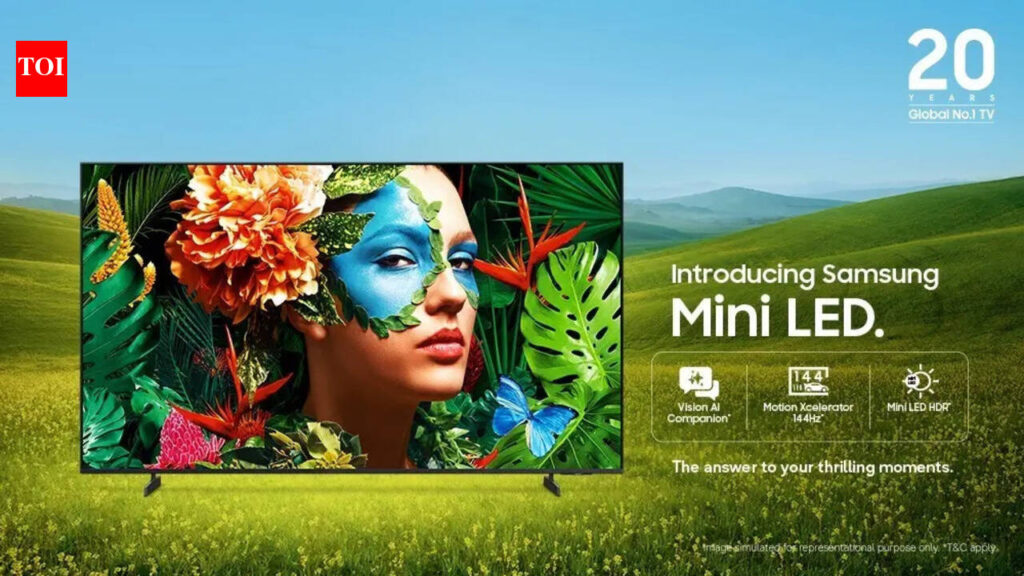
Table of Contents
A Strategic Pivot in Premium Pricing
Samsung has traditionally positioned its Mini LED and Neo QLED offerings as luxury beacons, often priced well above the reach of the average Indian consumer. However, the launch of its latest AI-powered Mini LED range, starting at a surprisingly accessible Rs 42,990, suggests a tactical shift. By lowering the entry barrier to Mini LED technology, Samsung is moving to neutralize the growing momentum of aggressive Chinese competitors like Xiaomi and TCL, who have spent the last few years dominating the ‘affordable premium’ segment.
The move is more than just a price cut; it is an attempt to democratize precise light control. Unlike standard LEDs, which rely on larger clusters of backlight, these Mini LED panels utilize thousands of tiny diodes. This allows for significantly tighter dimming zones, effectively killing the ‘blooming’ effect often seen around bright objects on dark backgrounds—a common pain point for users transitioning from budget LED sets to higher-end displays.
AI as the Engine for Visual Fidelity
While the hardware handles the luminance, the heavy lifting for image quality is shifted to a dedicated AI processor. Samsung claims this chip performs real-time optimization, which in practical terms means it analyzes the incoming signal—whether it is a grainy 720p cable broadcast or a 4K stream—and applies dynamic contrast and noise reduction on the fly.
The AI processor focuses heavily on upscaling. In the Indian market, where a significant portion of content is still consumed via Standard Definition (SD) or High Definition (HD) set-top boxes, the ability to artificially enhance resolution without introducing distracting artifacts is a key selling point. This processor doesn’t just brighten the image; it attempts to map depth and texture, mimicking the look of native 4K content.
Industrial Design and the ‘MetalStream’ Aesthetic
Visually, Samsung is moving away from the chunky plastic bezels of the past. The new range introduces what the company calls ‘MetalStream Design,’ a look inspired by aerospace engineering. The chassis is slimmer, with a focus on a minimalist profile that allows the TV to blend into modern interior aesthetics. This design language is not merely cosmetic; a thinner profile often indicates a more integrated backlight system, reducing the overall depth of the unit when wall-mounted.
Technical Breakdown: Mini LED vs. Standard LED
| Feature | Standard LED | Samsung AI Mini LED |
|---|---|---|
| Backlight Control | Zonal / Global Dimming | Precise Mini-LED Dimming |
| Contrast Ratio | Moderate | High (Deep Blacks) |
| Processing | Standard Scaling | AI Real-time Optimization |
| Design | Plastic-dominant | MetalStream Aerospace-inspired |
Market Implications for the Indian Ecosystem
Launching a Mini LED series at the Rs 42,990 mark puts Samsung in direct competition with high-end QLEDs and entry-level OLEDs. For the consumer, this narrows the gap between ‘budget’ and ‘premium.’ For the industry, it signals that the era of Mini LED being a niche, ultra-expensive luxury is ending.
Industry analysts suggest that Samsung’s ability to leverage its existing supply chain in India may be the key to these aggressive price points. By integrating AI-driven software to compensate for hardware variances, Samsung can maintain a high perceived quality of image while keeping the BOM (Bill of Materials) competitive.
The new range is available through major retail channels and Samsung’s online store, accompanied by launch offers that further lower the effective cost for early adopters. As AI continues to move from a buzzword into a functional part of the display pipeline, the focus for users will likely shift from raw specs to how ‘smart’ the TV is at managing those specs in real-time.


