Rare Atmospheric Event: Bolide Meteor Captured Over Active Philippine Volcano
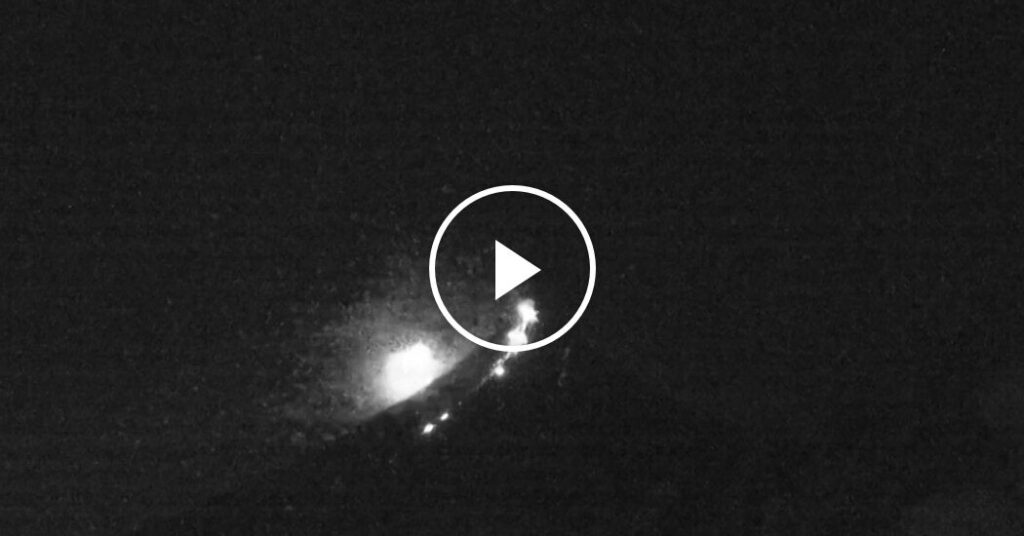
Table of Contents
A Collision of Natural Extremes
In a rare alignment of geological and atmospheric violence, footage has emerged showing a massive fireball—technically known as a bolide—streaking through the atmosphere directly above an erupting volcano in the Philippines. The event, captured by observers on the ground, presents a striking visual juxtaposition: the slow, churning ascent of volcanic ash and magma meeting the hypersonic descent of a space rock.
While the imagery has circulated widely across social media, the event provides a unique opportunity for atmospheric scientists to study the intersection of high-altitude particulate matter and kinetic energy. Bolides are exceptionally bright meteors that explode in the atmosphere, often creating a sonic boom and a brilliant flash of light caused by the rapid compression of air in front of the object.
The Mechanics of the ‘Fireball’
What the public identifies as a ‘fireball’ is actually a meteor that reaches an apparent magnitude of -4 or brighter. As these objects enter Earth’s atmosphere at speeds ranging from 11 to 72 kilometers per second, the friction between the meteoroid and the atmospheric gases generates intense heat, ionizing the surrounding air and creating the luminous trail seen in the video.
The presence of an active volcanic plume adds a layer of complexity to the event. Volcanic eruptions inject massive amounts of sulfur dioxide and silicate ash into the stratosphere. Depending on the altitude of the bolide’s fragmentation, these particles can interfere with the light refraction of the meteor trail, potentially altering the colors observed by witnesses on the ground.
Geological Context in the Pacific Ring of Fire
The Philippines, situated along the volatile Pacific Ring of Fire, is no stranger to seismic activity. However, the timing of this celestial entry over an active vent is an extraordinary coincidence. In most cases, volcanic plumes reach altitudes of 10 to 20 kilometers, while bolides typically begin to glow brightly at altitudes of 80 to 100 kilometers. The visual overlap occurs only from specific terrestrial vantage points, creating a ‘perfect storm’ of imagery.
Experts in planetary science note that while such events are visually spectacular, they are functionally independent. The eruption is driven by tectonic shifts and magma pressure from within the Earth’s mantle, while the bolide is an extraterrestrial remnant—likely a fragment of an asteroid or comet—that happened to cross Earth’s orbital path.
Analyzing the Impact
Whether the bolide survived its atmospheric transit to strike the volcanic terrain remains unconfirmed. Most bolides disintegrate completely before reaching the surface, leaving behind a trail of microscopic meteorites. If fragments did reach the ground, they would likely be buried under fresh layers of volcanic tephra, making recovery efforts nearly impossible for geologists.
This event serves as a reminder of the dynamic nature of our planet and its surrounding space. From the deep subterranean pressures that fuel Philippine volcanoes to the random trajectories of interstellar debris, the intersection of these two forces provides a vivid illustration of the chaotic systems that define the natural world.