Precision from Orbit: How Sophie Adenot Used a Nikon Z9 to Capture Europe’s Most Volatile Peaks
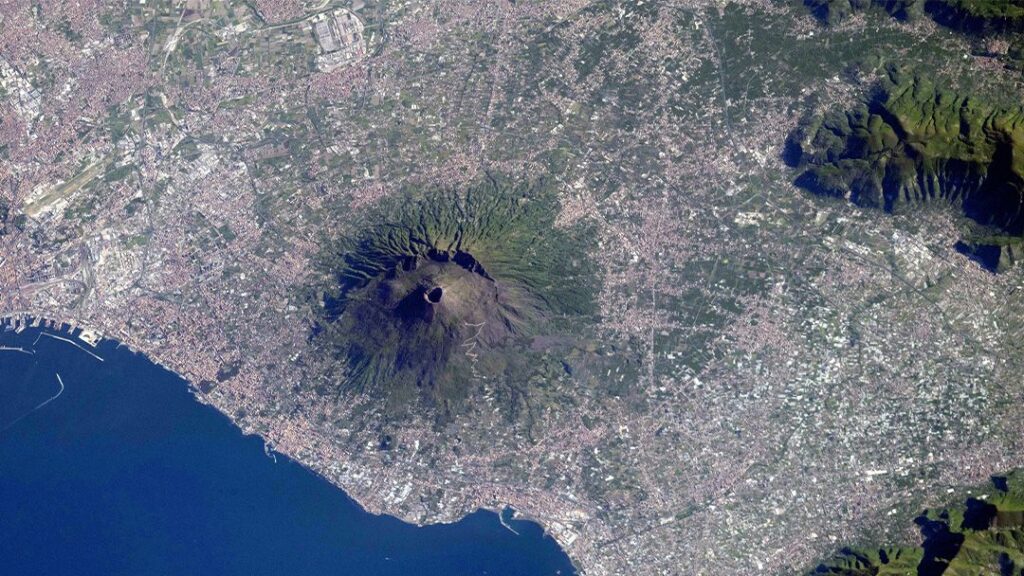
Table of Contents
The Challenge of Shooting at 17,500 MPH
Capturing a clear image of a terrestrial landmark from the International Space Station (ISS) is less about artistic intuition and more about a precise intersection of orbital mechanics and high-end optics. For French astronaut Sophie Adenot, currently midway through a nine-month stint aboard the station, that window of opportunity is often measured in seconds.
During her 1,598th orbit of Earth—roughly 103 days into her mission—Adenot managed to capture two of Europe’s most storied geological landmarks, Mount Vesuvius and Mount Etna, within a single minute of flight time. The resulting images offer a rare perspective on the dormant Vesuvius, known for the destruction of Pompeii, and the active, snow-dusted peaks of Sicily’s Etna.
According to a statement from the European Space Agency (ESA), the experience of spotting these peaks through the ISS shutters is a reminder of the Earth’s volatility. “Etna caught me by surprise one morning,” Adenot noted, describing the contrast between the white slopes and the “elegant plume of smoke” that signals the volcano’s persistent activity.
Breaking Down the Gear: The Nikon Z9 Setup
For those following the technical side of space photography, Adenot’s gear choice is significant. She is utilizing a Nikon Z9, a professional mirrorless powerhouse capable of handling the extreme conditions and rapid shutter speeds required to counteract the vibration and velocity of the ISS.
The heavy lifting, however, is done by the glass. Adenot paired the Z9 with a Nikkor Z 400mm f/2.8 TC VR S telephoto lens. While the lens is natively 400mm, she engaged the integrated teleconverter to reach a focal length of 560mm, allowing her to crop in tight on the craters. Shooting from an altitude of approximately 400 kilometers, even a 560mm reach requires absolute stability and precise exposure.
Technical Specifications of the Shots
To achieve the deep focus required for these landscapes—where the entire frame remains sharp from the crater’s edge to the surrounding terrain—Adenot opted for a narrow aperture of f/14. This choice maximizes the depth of field, ensuring that the geological details are not lost to a shallow focal plane.
The lighting conditions of orbit are notoriously harsh, alternating between blinding sunlight and total darkness every 45 minutes. To balance the exposure against the bright, reflective snow of Etna and the hazy atmosphere of the Mediterranean, she utilized an ISO 500. This setting provides enough sensitivity to maintain a fast shutter speed (essential for eliminating motion blur at orbital velocities) without introducing the digital noise that often plagues high-ISO space imagery.
Beyond the Landscape: The Psilon Mission
Adenot is part of the ESA Psilon mission, having launched via a SpaceX Dragon capsule. While her volcanic captures have garnered attention for their aesthetic value, her role on the station involves a broader mandate of documentation and scientific observation. This includes candid portraits of crewmates—including NASA’s Jessica Meir and Jack Hathaway, and cosmonaut Andrey Fedyaev—as well as detailed imagery of her home country, France.
The ability to document the Earth with this level of precision serves a dual purpose: it provides valuable visual data for geological monitoring and helps bridge the gap between the sterile environment of the ISS and the public’s understanding of planetary science. As Adenot continues her mission, the use of high-resolution mirrorless systems like the Z9 suggests a shift toward more professional-grade cinematography and photography in low-Earth orbit, moving away from the more utilitarian imaging of previous decades.