POCO Pad C1 Hits Global Markets: A Budget Play for the 4G Tablet Space
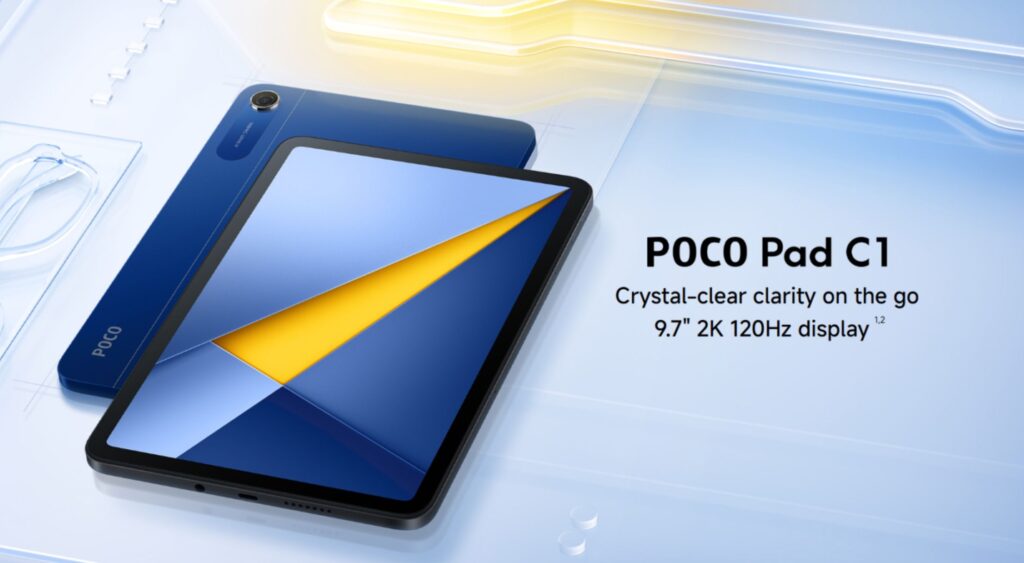
Table of Contents
Xiaomi expands budget slate lineup with the POCO Pad C1
Xiaomi has officially expanded its POCO ecosystem with the global rollout of the POCO Pad C1. Positioned as an entry-level alternative to the more expensive Pad series, the C1 isn’t trying to compete with the iPad Pro or the high-end Galaxy Tabs. Instead, it targets a specific gap in the market: users who need a lightweight, LTE-connected device for media consumption and light productivity without breaking the $300 barrier.
The first thing that stands out about the Pad C1 is the display. While budget tablets often compromise on resolution or refresh rates, POCO has opted for a 9.7-inch IPS panel sporting a 2K resolution. More importantly, it supports a 120Hz refresh rate, which makes navigation and scrolling through web pages feel significantly smoother than the standard 60Hz panels found in most budget competitors. To handle outdoor use, Xiaomi has rated the screen for 500 nits of typical brightness, peaking at 600 nits in direct sunlight.
Performance and the 4G Trade-off
Under the hood, the Pad C1 is powered by the Qualcomm Snapdragon 6s 4G Gen 2. The choice of a 4G chipset over 5G is a clear indicator of the device’s cost-saving strategy, but for most users in this price bracket, LTE connectivity is more than sufficient for streaming and browsing on the go. This is paired with 6GB of RAM and 128GB of internal storage, though the inclusion of a microSD slot allowing expansions up to 2TB is a welcome addition for those storing large libraries of offline videos or PDFs.
The software experience is driven by HyperOS 3.0. While Xiaomi’s skins have historically been criticized for bloat, the latest iteration of HyperOS is leaner and more focused on ecosystem connectivity. Interestingly, the Pad C1 isn’t devoid of modern AI trends; it integrates features like Google’s Circle to Search and Gemini, bringing a layer of conversational intelligence to a device that otherwise relies on basic hardware.
Design and Endurance
Physicality is where the C1 leans into its “portable” identity. Encased in a slim metal body, the tablet measures just 7.4 mm in thickness and weighs in at 406 grams. It’s a build quality that feels more premium than the plastic shells often seen in the sub-$300 category.
Powering the experience is a 7,600 mAh battery. While the 18W charging speed is underwhelming by modern standards—meaning users should expect to spend a few hours tethered to a wall for a full charge—the endurance is respectable. Xiaomi claims up to 15 hours of continuous video playback, which aligns with the low power draw of the Snapdragon 6s chipset.
On the utility front, POCO has kept the 3.5 mm audio jack, a rarity in 2024 but a critical feature for students and budget-conscious users who prefer wired headphones over Bluetooth latency. The audio is rounded out by dual speakers, though their performance is expected to be functional rather than immersive.
Market Positioning
The camera setup—an 8 MP rear sensor and a 5 MP front shooter—is purely utilitarian. In the tablet world, cameras are often an afterthought, and the C1 follows this trend; these sensors are sufficient for document scanning or the occasional video call, but they aren’t meant for photography.
While regional pricing varies, the global strategy suggests a price point well under $300. By combining a high-refresh 2K screen with 4G connectivity and a metal chassis, the POCO Pad C1 carves out a niche for those who want more than a basic tablet but aren’t ready to invest in a full-blown productivity machine.