Pakistan to Abolish ‘Period Tax’: How a Legal Battle is Redefining Menstrual Equity
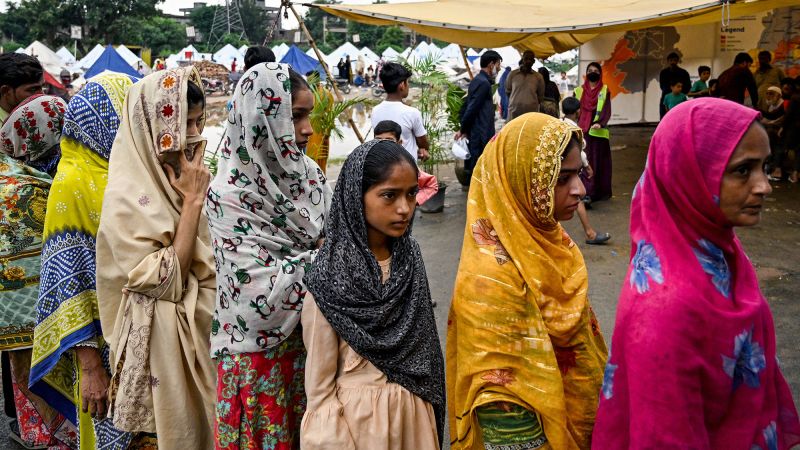
Table of Contents
A Shift in Fiscal Policy: Pakistan’s Move Toward Menstrual Equity
In a significant shift for reproductive health and gender equity, the Pakistani government has announced the abolition of the 18% sales tax on sanitary products and contraceptives. This move, unveiled as part of the country’s most recent fiscal budget, marks a transition in how the state categorizes essential health needs, moving menstrual care from the realm of “luxury items” to indispensable health requirements.
- Tax Abolition: The government is removing the 18% sales tax on sanitary pads and contraceptives to improve affordability and access.
- Legal Catalyst: The reform follows a landmark legal challenge led by lawyers Ahsan Jehangir Khan and Mahnoor Omer.
- Critical Need: UNICEF data indicates only 12% of women and girls in Pakistan currently use commercial sanitary products due to cost and stigma.
- Broader Implications: The move is designed to reduce period poverty and address “alarming” population growth through cheaper contraceptives.
The decision comes at a critical juncture for the nation’s public health infrastructure. Finance Minister Muhammad Aurangzeb explicitly linked the reform to the dignity and social participation of women, stating that such items are indispensable for women’s health and their ability to engage fully in public and professional life. Furthermore, the inclusion of contraceptives in the tax-free category is a strategic response to Pakistan’s status as the world’s fifth-largest country by population, with family planning now labeled a top government priority.
The Legal Architecture of the ‘Period Tax’ Challenge
The catalyst for this policy shift was not a spontaneous government initiative but a rigorous legal battle. Lawyers Ahsan Jehangir Khan and Mahnoor Omer filed a constitutional petition in October, arguing that taxing menstrual products was a violation of Article 25 of the Pakistani Constitution, which prohibits discrimination based on sex.
For years, the Pakistani tax regime treated sanitary pads as non-essential or luxury goods. This classification allowed the state to apply a standard 18% sales tax. However, for those relying on imported products, the financial burden was even steeper. According to the legal petition, imported menstrual items were subjected to an additional 25% customs tax. When combined with other local levies, some women faced an effective surcharge of up to 40% on basic hygiene products.
“If there was never a constitutional petition, the government would not have woken up to the fact that even the sales tax is wrong,” stated Ahsan Jehangir Khan in a recent interview with CNN.
The legal argument centers on the concept of menstrual equity—the principle that people should have affordable and sustainable access to the products they need to manage their menstruation without financial hardship or shame. By classifying these products as luxury items, the state was effectively taxing a biological necessity, creating a systemic barrier to education and employment for millions of girls and women.
The Reality of Period Poverty in Pakistan
To understand why a tax reduction is critical, one must look at the socio-economic data surrounding menstrual health in the region. According to the United Nations’ children’s agency, UNICEF, only an estimated 12% of women and girls in Pakistan use commercial sanitary products. This represents a staggering gap in health infrastructure.
The primary driver of this low uptake is cost. With nearly 45% of the population living below the World Bank’s global lower middle-income poverty line of $4.20 (approximately 1,175 Pakistani rupees) per day, commercial pads are often prohibitively expensive. A standard pack of 10 pads can cost more than a third of a person’s daily income—and 10 pads are rarely sufficient for a full menstrual cycle.
As a result, the vast majority of women resort to makeshift alternatives, including old cloth and homemade materials. While cloth is a traditional alternative, improper hygiene and the lack of clean facilities for washing and drying these cloths often lead to reproductive tract infections (RTIs) and other health complications.
| Tax Component | Previous Rate (Approx.) | New Status |
|---|---|---|
| General Sales Tax (GST) | 18% | Abolished |
| Customs Tax (Imported) | 25% | Pending Review |
| Combined Effective Surcharge | Up to 40% | Reduced |
What This Means: Practical Implications for Users
The removal of the 18% sales tax is a critical first step, but its impact varies across different demographics. For the urban middle class, this will result in a direct price drop at the pharmacy or supermarket. For the most vulnerable populations, however, the impact is more complex.
For Students: Reduced costs mean fewer girls will miss school during their periods. In many parts of Pakistan, “period poverty” leads to significant absenteeism, which eventually contributes to higher dropout rates for adolescent girls.
For Low-Income Workers: Increased affordability of sanitary products allows women to maintain their presence in the workforce, reducing the economic instability caused by missing work days due to a lack of hygiene products.
For Public Health: By making commercial products and contraceptives more affordable, the government can potentially lower the incidence of infections caused by unhygienic homemade alternatives and help manage the national population growth rate.
The Ongoing Struggle for Complete Tax Eradication
While the fiscal budget’s announcement is a victory, reproductive justice advocates argue that the job is only half-done. Mahnoor Omer and Ahsan Jehangir Khan are not seeking a mere reduction in sales tax; they are pushing for the complete dismantling of the taxation regime surrounding menstrual health.
Their current legal pursuit focuses on two primary areas: the customs tax on imported products and the taxes on raw materials used by local manufacturers. If the raw materials used to produce pads are taxed, those costs are passed down to the consumer, regardless of whether the final product is “tax-free.” To achieve true affordability, advocates argue that the entire supply chain must be tax-exempt.
Bushra Mahnoor, co-founder of Mahwari Justice, emphasizes that the symbolic value of this change is as important as the financial one. By removing the tax, the state is acknowledging that menstruation is a health issue, not a luxury or a taboo. This helps de-stigmatize sexual health conversations in a society where these topics are often shrouded in silence.
Global Context: The Movement Against the Tampon Tax
Pakistan’s move mirrors a global trend toward menstrual equity. The term “Tampon Tax” became a focal point of international activism in the 2010s, highlighting the absurdity of taxing menstrual products while exempting other necessities like toilet paper or soap.
- Scotland: Became the first country in the world to make period products free for everyone in 2022.
- India & Nepal: Have taken various steps to reduce or eliminate GST on sanitary napkins to promote women’s hygiene.
- United States: More than a dozen states have abolished the “luxury tax” on menstrual products, recognizing them as essential health goods.
These reforms are typically driven by a combination of grassroots activism, legal challenges, and a growing understanding of the link between menstrual health and economic productivity.
Analysis: Why the Government Changed Its Stance
Initially, the Pakistani government denied that the tax rates were excessive. In responses to the legal petition, officials argued that the taxes were designed to “meet the revenue needs of the state,” suggesting that the funds generated actually benefited women through public services. This is a common defense used by states to justify regressive taxation.
However, the shift in stance likely reflects a convergence of three factors: the mounting pressure from the judiciary in Rawalpindi, the visible success of the legal arguments regarding Article 25, and a strategic need to address the population crisis. By bundling the removal of taxes on contraceptives with sanitary products, the government created a policy that satisfies both gender equity advocates and population control strategists.
Frequently Asked Questions
What is the “period tax”?
The period tax refers to the sales tax applied to menstrual products, such as sanitary pads and tampons. In many jurisdictions, these products were historically classified as “non-essential” or “luxury items,” meaning they were taxed at higher rates than basic necessities.
How much will sanitary products cost in Pakistan now?
While exact retail prices depend on the manufacturer, the removal of the 18% General Sales Tax (GST) should theoretically lower the cost of locally made products. However, the final price depends on whether manufacturers pass these savings on to consumers and whether raw material taxes remain.
Why are contraceptives also tax-free?
The Pakistani government cited “alarming” population growth as the primary reason. By reducing the cost of contraceptives, the state aims to make family planning more accessible to the general population.
Who are Mahnoor Omer and Ahsan Jehangir Khan?
They are the lawyers responsible for filing the constitutional petition that challenged the legality of the period tax in Pakistan, arguing that it violated the constitutional right to non-discrimination based on sex.
Does this remove all taxes on period products?
No. While the 18% sales tax is being abolished, other levies—such as customs duties on imported products and taxes on raw materials—may still be in place. The legal case continues to push for the total removal of all such taxes.
As the case moves toward final arguments in the judiciary, the potential for a total tax wipeout remains. For now, the move signals a growing recognition that menstrual health is not a luxury, but a fundamental human right.