Oura Ring 5 Review: Does the World’s Smallest Smart Ring Justify the Upgrade?
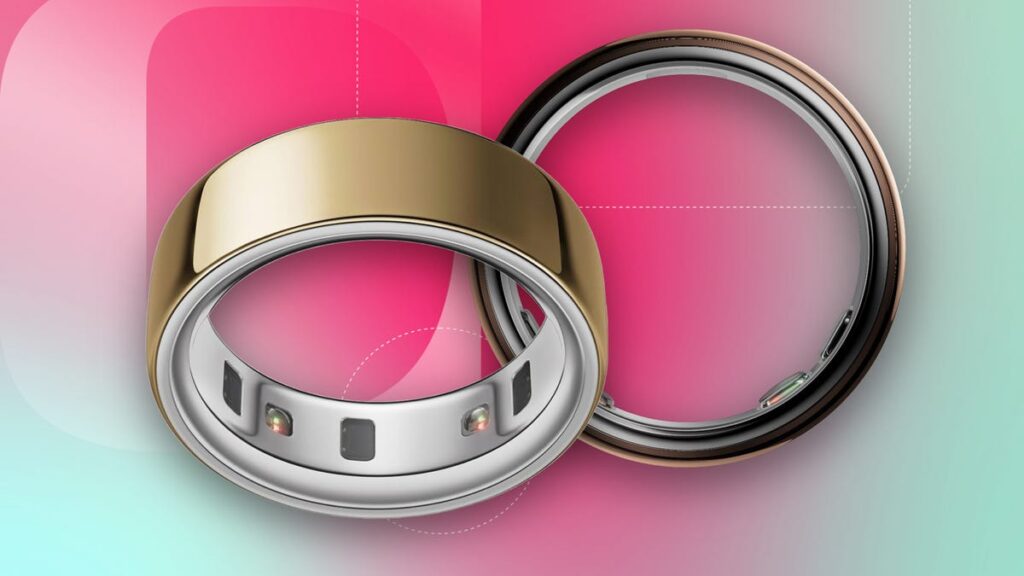
Table of Contents
The Shrinking Act: First Impressions of the Oura Ring 5
- Form Factor: The Oura Ring 5 is 40% smaller than Gen 4, significantly reducing the “chunky” feel and finger gap.
- Battery Life: Real-world testing shows an increase from 4 days (Gen 4) to roughly 7 days (Gen 5).
- Hardware: New PVD coating enhances scratch resistance, and the sensor array has been streamlined to 12 light pathways.
- Cost: Starting price has increased by $50, now beginning at $399 for base colors.
For years, the primary friction point with smart rings hasn’t been the software; it’s been the bulk. Even the most streamlined trackers often feel like a piece of hardware strapped to the finger rather than a piece of jewelry. With the launch of the Oura Ring 5, the company has pivoted its entire engineering philosophy toward invisibility. After spending ten days wearing the Oura Ring 5 on my index finger—and comparing it against the Gen 4 I’ve used since late 2024—it’s clear that Oura is no longer just iterating on sensors; they are refining the ergonomics of wearable health.
The immediate difference is physical. Oura claims the Gen 5 is the smallest smart ring in the world, and the numbers back that up. The width has plummeted from 6.09 mm in the Gen 4 to just 2.28 mm. In practical terms, this removes the awkward gap that typically forms between the index and middle fingers, allowing for a more natural grip and less interference with daily tasks. The weight reduction is equally stark, with the Gen 5 hovering between 2.0g and 2.68g, compared to the 3.3g to 5.2g range of its predecessor.
Technical Breakdown: Sensors and Signal Accuracy
One of the most intriguing changes is hidden beneath the titanium shell. The Oura Ring 5 has actually reduced its light pathways from 18 in the Gen 4 to 12. On paper, fewer sensors might seem like a downgrade, but Oura asserts that the new LEDs are brighter and the pathways more efficient. The company claims a pulse signal that is 100 times stronger than typical wrist-based wearables, which is designed to solve a long-standing industry problem: signal noise across diverse skin tones and finger shapes.
From a clinical perspective, the accuracy of heart rate variability (HRV) and sleep staging is where these devices live or die. Oura reports a 99% heart rate accuracy when compared to a medical-grade ECG and 95% accuracy in sleep staging against clinical polysomnography data. While these figures are provided by Oura and not an independent third-party audit, my own experience as a certified sleep science coach suggests a high level of consistency in the sleep-wake transitions and REM detection compared to previous iterations.
Durability and Aesthetics
The Gen 5 introduces a Physical Vapor Deposition (PVD) coating. For the non-engineers, this is essentially a vacuum-coating process that bonds a thin layer of material to the titanium surface, significantly increasing hardness. In the Gen 4, micro-scratches began to appear after a few months of gym use. While long-term testing is required, the PVD coating is designed to mitigate this “wear and tear” effect, making the ring more resilient to the abrasive nature of weightlifting or daily chores.
Visually, the palette has evolved. The new “Deep Rose” is a departure from the previous rose gold, leaning more toward a copper hue. The gold finish has also been toned down, removing the overly orange tint found in Gen 4 to better mimic authentic gold jewelry.
The Battery Gap: 4 Days vs. 7 Days
Battery anxiety is the silent killer of wearable adoption. Oura’s official marketing for the Gen 4 promised five to eight days of life. However, in my actual usage, the Gen 4 consistently tapped out at the four-day mark. This creates a stressful cycle of charging and disrupts the continuity of data collection.
The Oura Ring 5 shifts this dynamic. Official specs claim 6 to 9 days, and my real-world testing aligned closely with that. I observed a consistent battery drain of approximately 15% per day, meaning the ring comfortably lasts a full week. This is a transformative improvement for users who travel or forget their charger for a few days.
For those who want to decouple themselves from the cable entirely, Oura has introduced a new charging case for $99. This aluminum, matchbox-sized accessory can hold enough power to sustain the ring for up to a month. While it’s an additional expense, it effectively turns the Oura Ring into a “set and forget” device for long trips.
Sizing and Fit: Why You Can’t Just Order Your Old Size
A critical warning for existing users: do not assume your Gen 4 size translates to the Gen 5. Because the ring is significantly thinner and the internal geometry has shifted, the fit feels different. In my case, while the nominal size remained the same, the Gen 5 feels slightly tighter on the finger.
Fingers are dynamic; they swell based on hydration, temperature, and time of day. Oura’s recommendation to use the free sizing kit for 24 hours is not just a sales tactic—it’s a technical necessity. If your Gen 4 felt snug, there is a high probability you will need to size up for the Gen 5 to avoid restricted blood flow or discomfort during sleep.
Pricing and the Subscription Model
The cost of entry for the Oura ecosystem has increased. The base colors (Silver and Black) now start at $399, a $50 jump from the Gen 4. Premium finishes—Gold, Stealth, Deep Rose, and Brushed Silver—are priced at $499. This represents a strategic shift by Oura to position the device more as a luxury health accessory than a standard gadget.
Despite the hardware price hike, the membership remains unchanged at $5.99 per month or $69.99 per year. This subscription is the gateway to the actual data analysis; without it, the ring provides basic metrics but lacks the deep-dive insights into readiness and sleep trends that make the device valuable.
What This Means for the User
If you are currently using an Oura Ring 3 or 4, the decision to upgrade depends entirely on your tolerance for the ring’s bulk and battery life. Because Oura is rolling out most new software features to previous generations, you aren’t losing out on “intelligence” by staying with Gen 4. However, if you find the Gen 4 too chunky or are tired of charging every three to four days, the Gen 5 is a significant quality-of-life upgrade.
For first-time buyers, the Oura Ring 5 is the clear choice. The reduction in size makes it far more wearable for people who aren’t used to rings, and the battery longevity removes the primary pain point of the smart ring experience.
Comparing the Ecosystem
| Feature | Oura Ring 4 | Oura Ring 5 |
|---|---|---|
| Width | 6.09 mm | 2.28 mm |
| Weight (Avg) | ~4.2g | ~2.3g |
| Battery Life (Real World) | ~4 Days | ~7 Days |
| Sensor Pathways | 18 | 12 (High-Efficiency) |
| Starting Price | $349 | $399 |
| Coating | Standard Titanium | PVD Coating |
The Competitive Landscape
Oura is no longer the only player in the game. Competitors like Ultrahuman and RingConn have pushed the industry toward more open data models and, in some cases, no-subscription pricing. Oura’s decision to keep the membership fee while increasing the hardware price is a bold bet on their brand’s authoritativeness and the quality of their sleep science. To stay relevant, Oura is focusing on the “invisible” aspect of the tech, betting that a device you forget you’re wearing is more valuable than one with a slightly different set of features.
FAQ: Common Questions About Oura Ring 5
Do I need the subscription for the Oura Ring 5 to work?
Yes, to access the full suite of health insights, Readiness scores, and detailed sleep analysis, a monthly or yearly membership is required. Without it, your access to data is significantly limited.
Is the Oura Ring 5 waterproof?
The Oura Ring 5 maintains the high water-resistance standards of its predecessors, making it suitable for swimming, showering, and general water exposure, though it is always recommended to rinse it with fresh water after saltwater or chlorine exposure.
Will my Gen 4 charger work with the Gen 5?
Yes, the charging mechanism remains compatible across the recent generations, although the new optional charging case is specifically designed to optimize the Gen 5 experience.
Which finger is best for the Oura Ring 5?
Oura generally recommends the index finger for the most accurate readings, followed by the middle and ring fingers. The smaller profile of the Gen 5 makes the index finger even more comfortable than before.
Does the PVD coating prevent all scratches?
While PVD coating significantly increases surface hardness and scratch resistance compared to standard polished titanium, it is not completely scratch-proof. It will, however, show significantly less wear over months of use.
Ultimately, the Oura Ring 5 isn’t a revolution in what it tracks, but a revolution in how it’s worn. By solving the bulk and battery issues, Oura has moved closer to the ideal of a seamless health companion. Whether the $50 price increase is justified depends on how much you value the feeling of not wearing a ring at all.