Xiaomi Disrupts Indian Budget Market with FX Mini LED Series: A Deep Dive into Specs and Value
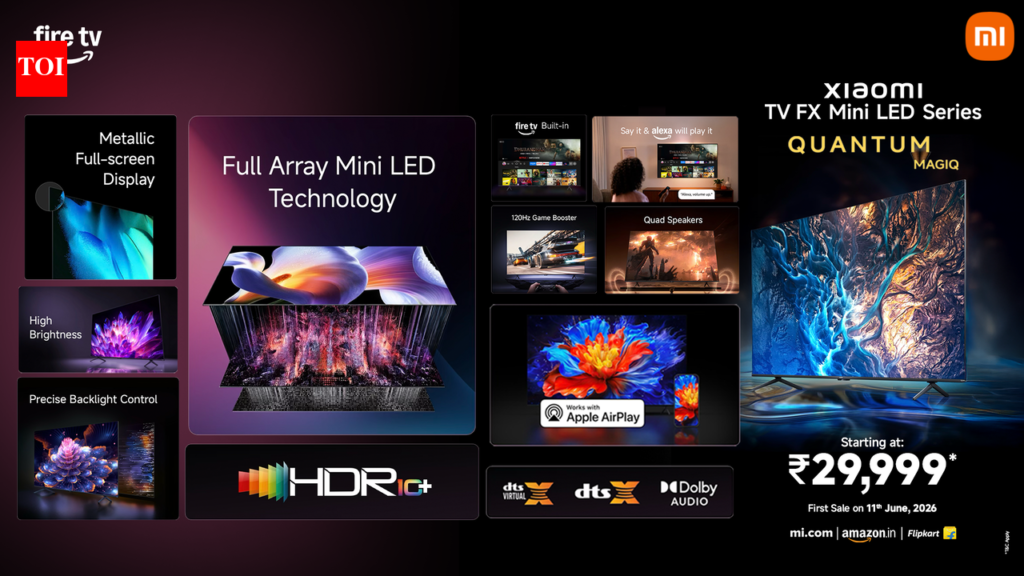
Table of Contents
A Bold Play for the Entry-Level Market
Xiaomi has officially expanded its display portfolio in India with the launch of the Xiaomi TV FX Mini LED Series, kicking off with a disruptive starting price of ₹29,999. While Mini LED technology has historically been reserved for flagship models costing upwards of ₹1,00,000, Xiaomi is attempting to democratize high-contrast viewing for the mass market.
This move isn’t just about a new product launch; it’s a strategic shift in the Indian home entertainment landscape. By introducing Mini LEDs at a sub-30k price point, Xiaomi is putting immense pressure on traditional LED-LCD manufacturers and challenging the dominance of budget brands that rely on standard edge-lit panels.
- Aggressive Pricing: Starts at ₹29,999, making Mini LED technology accessible to a wider demographic.
- Enhanced Contrast: Utilizes smaller LEDs for better precision in brightness and deeper blacks compared to standard LEDs.
- Smart Ecosystem: Powered by the latest iteration of PatchWall, integrating Google TV features with Xiaomi’s proprietary content discovery.
- Market Positioning: Targets the ‘value-conscious’ upgrade segment looking for cinematic quality without the premium OLED price tag.
Breaking Down the Mini LED Advantage
To understand why the Xiaomi TV FX Mini LED Series is a significant release, one must understand the technical difference between standard LED, Mini LED, and OLED. Most budget TVs use Edge-Lit or Direct-Lit LED backlighting, where a few large LEDs illuminate the screen. This often results in ‘blooming’—where bright light leaks into dark areas of the image.
Mini LED technology employs thousands of microscopic LEDs. These are grouped into local dimming zones, allowing the TV to turn off specific clusters of LEDs entirely while keeping other areas bright. For the user, this means a stark difference in contrast: blacks look deeper, and highlights (like a flashlight in a dark room) don’t wash out the rest of the scene.
Technical Specifications and Hardware
The FX series leverages a high-density backlight array that significantly improves the Peak Brightness levels. While Xiaomi has not released the exact nit count for the entry-level model, industry benchmarks for this class typically target 600-1,000 nits, which is a substantial jump over the 250-300 nits found in standard budget LED TVs.
| Feature | Xiaomi TV FX Mini LED (Base) | Standard Budget LED |
|---|---|---|
| Backlight Type | Mini LED (Local Dimming) | Direct/Edge LED |
| Contrast Ratio | High (Deep Blacks) | Moderate (Greyish Blacks) |
| Peak Brightness | Significantly Higher | Standard |
| OS | PatchWall / Google TV | Android TV / proprietary |
| Starting Price | ₹29,999 | ₹20,000 – ₹35,000 |
The Software Layer: PatchWall and the Ecosystem
Hardware is only half the story. The Xiaomi TV FX series runs on a refined version of PatchWall. In the Indian market, content discovery is a major pain point due to the fragmentation of OTT apps (Disney+ Hotstar, Zee5, SonyLIV, Netflix). PatchWall acts as a content aggregator, pulling data from multiple streaming services into a single, intuitive home screen.
From a user experience perspective, the integration of AI-driven recommendations based on local viewing habits gives Xiaomi an edge over generic Google TV skins. The series also supports the Xiaomi Home ecosystem, allowing users to control smart lights or security cameras directly from their TV remote.
What This Means for the Indian Consumer
For the average buyer, the launch of the FX Mini LED series means the “price floor” for high-quality HDR content has dropped. Previously, if you wanted a TV that could actually handle HDR (High Dynamic Range) without looking washed out, you had to spend a premium on high-end Sony or Samsung models.
The practical implication is that gaming and cinema enthusiasts on a budget now have a viable alternative. While not as fast as a 120Hz OLED for competitive gaming, the Mini LED panel provides the luminosity and contrast needed for an immersive experience in a brightly lit Indian living room, where OLEDs can sometimes struggle with reflections.
Market Dynamics and Competitive Pressure
Xiaomi is not operating in a vacuum. Brands like TCL and Hisense have been pushing Mini LED technology globally, but Xiaomi’s aggressive pricing in India is a direct shot at brands like Mi’s own competitors—Samsung’s Crystal UHD and LG’s entry-level series.
By pricing the FX series at ₹29,999, Xiaomi is essentially telling the market that high-end display tech is no longer a luxury. This will likely force other manufacturers to either lower their prices or accelerate the transition to Mini LED in their budget lines to avoid losing market share in the critical ₹30,000 to ₹50,000 segment.
Potential Trade-offs to Consider
No technology comes without compromise, especially at this price point. Prospective buyers should be aware of a few likely caveats:
- Viewing Angles: Mini LEDs often use VA panels to achieve those deep blacks, which can result in color shifting if you are sitting far to the side of the TV.
- Dimming Algorithm: The quality of the ‘local dimming’ depends on the software. In some budget implementations, you might see ‘halos’ around bright subtitles on a dark background.
- Processing Power: To keep the cost at ₹29,999, Xiaomi may have used a mid-range chipset. While fine for streaming, it may not be as snappy as a flagship processor when navigating heavy apps.
Frequently Asked Questions
Is Mini LED better than OLED?
Mini LED is not strictly “better,” but it is different. OLEDs have perfect blacks because each pixel is self-lit. Mini LEDs use zones of backlight. However, Mini LEDs are generally brighter and completely immune to burn-in, making them better for long-term use as a primary TV or for gaming with static HUDs.
Will the Xiaomi TV FX series support 4K gaming?
Yes, the series supports 4K resolution and HDR10+. However, users should check if the specific model they are buying supports HDMI 2.1 for 4K@120Hz, as entry-level models often cap out at 60Hz.
Does it come with a warranty?
Xiaomi typically provides a one-year standard warranty in India, with options to purchase extended warranties through authorized retailers and Mi stores.
What is the difference between PatchWall and Google TV?
Google TV is the operating system that handles the apps and settings. PatchWall is a skin/interface that sits on top of it, specifically optimized for Indian content discovery and Xiaomi device integration.
Can I use a Fire Stick or Apple TV with this?
Yes, the TV features standard HDMI ports, making it fully compatible with external streaming devices, though PatchWall is designed to make them redundant.
Verdict on the Value Proposition
The arrival of the Xiaomi TV FX Mini LED Series is a classic Xiaomi move: take a premium technology and aggressively price it to disrupt the market. For ₹29,999, the value proposition is incredibly strong. While professional calibrators might find flaws in the dimming zones, for the vast majority of users, the jump in contrast and brightness over a standard LED TV will be immediately apparent.
Xiaomi has successfully lowered the barrier to entry for high-end visuals, making the FX series a compelling choice for anyone looking to upgrade their home theater without breaking the bank.