OPPO Pad 6 Debuts With Slim Chassis and Dimensity 9500s Power
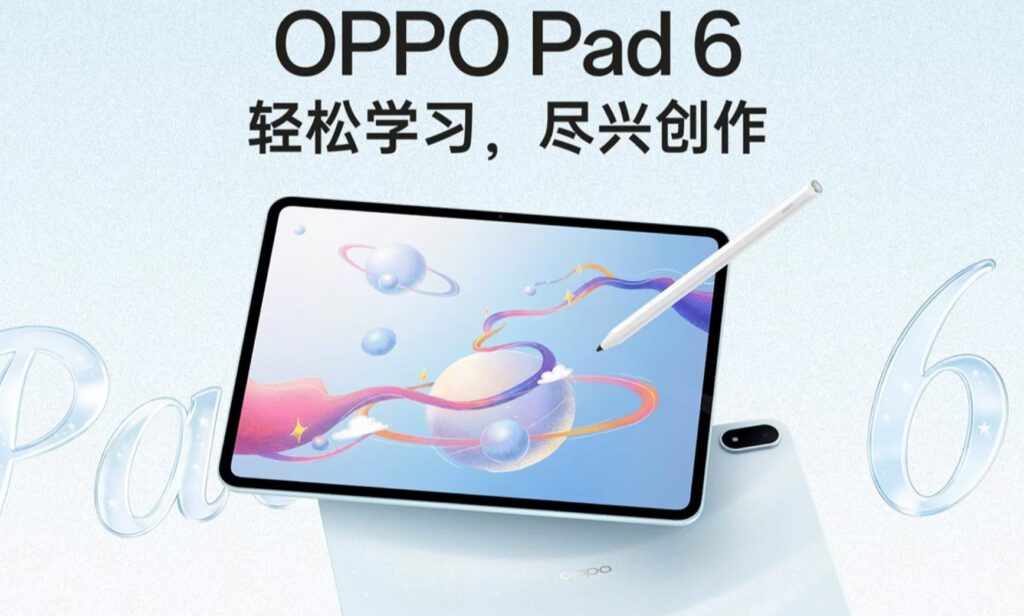
Table of Contents
A Leaner Profile for a Familiar Form Factor
OPPO has officially pulled the curtain back on the Pad 6 during its launch event in China on May 25th. While the company has recently experimented with a wider range of sizes—including the Pro variants and the smaller Pad Mini—the Pad 6 represents a refined iteration of the brand’s primary productivity slate. The most immediate shift is in the ergonomics; OPPO has managed to shave the device down to a thickness of just 5.99 mm, with a total weight of 577 grams, positioning it as a highly portable option for users moving between a desktop and a mobile environment.
The device will hit the market in three distinct finishes: Starlight Blue, Galaxy Silver, and Deep Space Gray, maintaining the metallic, minimalist aesthetic that has defined OPPO’s hardware language over the last two years.
The Display Strategy: Prioritizing Readability
At the center of the device is a 12.1-inch 3K LCD panel. While the industry has seen a push toward OLED in flagship tablets, OPPO is sticking with a high-grade LCD here, bolstered by a 144Hz refresh rate to ensure smooth scrolling and low-latency stylus input.
Interestingly, OPPO is leaning heavily into its “Soft Light” screen technology. This isn’t just a marketing term for a matte finish; it is a targeted effort to reduce specular reflections and glare, which typically plague glossy tablets when used under harsh office lighting or outdoors. By diffusing light more effectively, the Pad 6 aims to reduce eye strain for professionals who spend hours reading PDFs or editing documents, bridging the gap between a traditional tablet and the paper-like feel of an E-ink reader without sacrificing the vibrancy of a 3K resolution.
Silicon and Sustenance
Under the hood, the Pad 6 departs from the Snapdragon dominance often seen in this category, opting instead for the MediaTek Dimensity 9500s. This chipset has already seen a successful deployment in high-end handsets like the POCO X8 Pro Max, and its transition to the tablet format is designed to handle heavier workloads. According to internal benchmarks, the processor is pushing scores over 3 million points on AnTuTu, suggesting that it can comfortably handle demanding creative apps and multitasking without thermal throttling.
To power this hardware, OPPO has integrated a 10,420 mAh battery. Given the energy-efficient nature of the Dimensity 9500s and the 144Hz panel’s variable refresh rate, the battery life should be substantial. When the device does run low, the 67W fast charging system ensures that the massive cell doesn’t require an all-day tether to the wall.
Bridging the Gap to Desktop Productivity
The hardware is supported by a software layer that treats the tablet less like a giant phone and more like a compact PC. OPPO is doubling down on “PC-style” file management, allowing users to drag and drop files across windows with a level of granularity previously reserved for laptops. The integration of floating windows and dedicated stylus support suggests a workflow geared toward the “prosumer” who may not need a full Windows environment but finds standard Android multitasking too restrictive.
One notable connectivity feature is the seamless 5G sharing capability. The Pad 6 can directly leverage a nearby OPPO phone’s 5G connection, reducing the friction of setting up hotspots and ensuring a constant data stream in transit. While the jump from the Pad 5 to the Pad 6 may feel incremental in terms of raw utility, the combination of the ultra-slim chassis and the Dimensity 9500s’s efficiency makes it a more polished tool for the modern digital nomad.