Nvidia’s RTX Spark Push Signals a Shift Toward Localized Generative AI
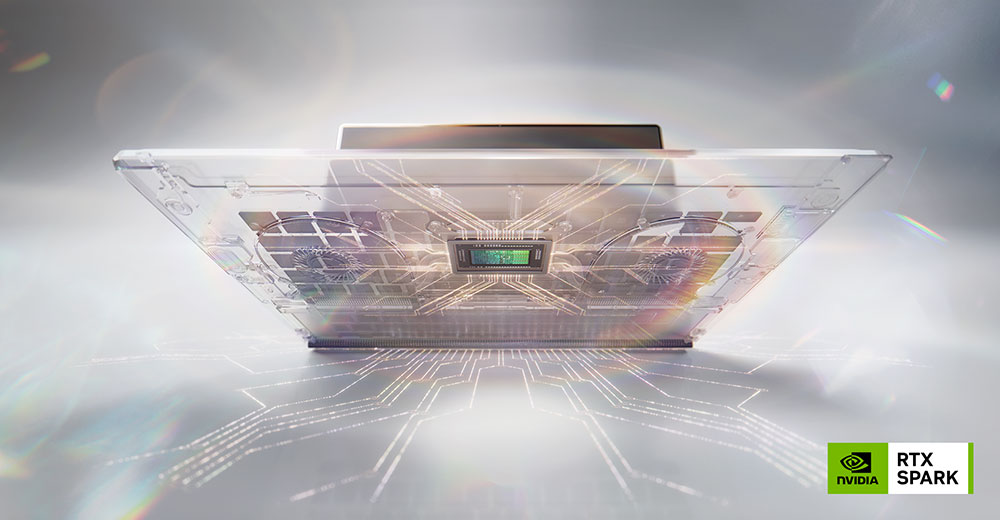
Table of Contents
The Push for Local Intelligence
For the last eighteen months, the AI narrative has been dominated by the cloud. From OpenAI’s GPT-4 to Google’s Gemini, the heavy lifting of generative AI has happened in massive data centers, with the PC serving as little more than a window into a remote server. Nvidia is now attempting to flip that script with RTX Spark, a strategic push to move generative AI execution directly onto the user’s hardware.
RTX Spark isn’t a single piece of silicon, but rather a software and ecosystem layer designed to optimize how large language models (LLMs) and diffusion models run on GeForce RTX GPUs. While competitors like Qualcomm and Intel have been marketing “NPUs” (Neural Processing Units) as the key to the AI PC, Nvidia is betting that the raw compute power of the GPU remains the only viable path for high-performance, local AI that doesn’t feel sluggish or truncated.
Breaking the Cloud Dependency
The primary friction point for current AI users is latency and privacy. When a user prompts a cloud AI, the data travels to a server, is processed, and returns—a process that introduces a lag and requires trusting a third party with sensitive data. By leveraging RTX Spark, Nvidia allows developers to deploy models that run entirely on-device.
This shift has significant implications for professional workflows. In gaming, this could mean NPCs with dynamic, unscripted dialogue that doesn’t require an internet connection. In creative suites, it allows for real-time generative fill and asset creation without the subscription-based “credit” systems common in cloud tools. The goal is to transform the PC from a terminal into a self-sufficient AI node.
Technical Friction and the VRAM Hurdle
Despite the ambition, Nvidia faces a persistent hardware bottleneck: Video RAM (VRAM). Local LLMs are notorious memory hogs. A model that runs comfortably in the cloud can easily crash a consumer GPU if the weights exceed the available VRAM. To counter this, RTX Spark focuses heavily on quantization—the process of compressing models to reduce their memory footprint without sacrificing too much intelligence.
By optimizing how models are loaded and executed, Nvidia is attempting to make 8GB and 12GB cards viable for a wider range of generative tasks. This is a direct response to the growing popularity of local LLM communities and tools like LM Studio, which have proven there is a massive appetite for private, offline AI.
The Ecosystem War: GPU vs. NPU
Nvidia’s move puts it in direct ideological conflict with the “Copilot+ PC” vision championed by Microsoft, Qualcomm, and Intel. Those companies are pushing for a low-power architecture where a small NPU handles background AI tasks to save battery life. Nvidia’s approach is far more aggressive; they are arguing that if you want real generative power, you need the parallel processing capabilities of a discrete GPU.
This creates a divide in the market. On one side are the ultra-portable AI PCs designed for basic productivity and voice-to-text. On the other is the RTX-powered workstation, designed for creators and power users who need to generate images, code, and text locally. As Nvidia integrates Spark deeper into its drivers and software stack, the distinction between a “gaming PC” and an “AI PC” is effectively disappearing.