Nvidia’s RTX Spark SoC: A Potential Catalyst for the Next Generation of Gaming Handhelds
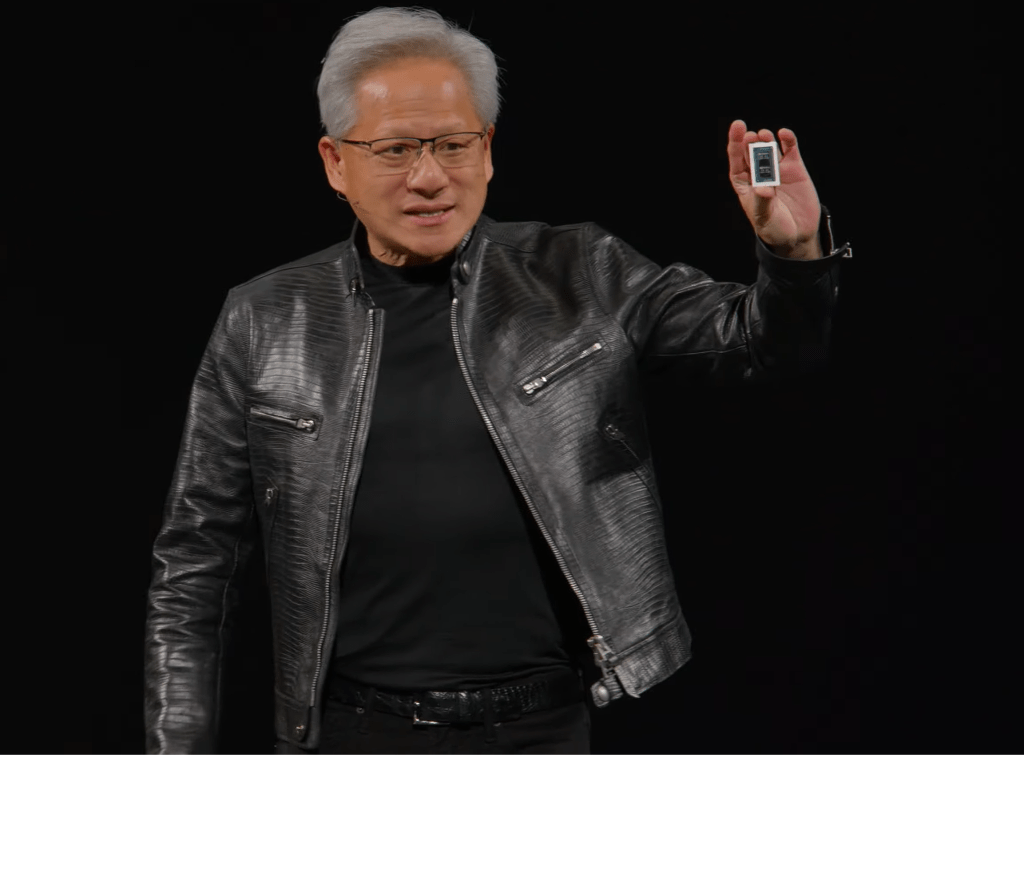
Table of Contents
The Silicon Shift: Beyond the AI Agent Hype
At Computex, Nvidia unveiled the RTX Spark, a sophisticated System-on-Chip (SoC) designed to integrate a high-performance CPU and GPU into a single piece of silicon. While CEO Jensen Huang positioned the launch as a cornerstone for the “personal AI agent era,” framing the chip as the engine for Windows ultraportables that can autonomously execute complex tasks, the technical specifications suggest a much more immediate and tangible impact on the gaming hardware landscape.
The hardware composition is formidable. RTX Spark pairs a 20-core Nvidia Grace CPU with a Blackwell-based RTX GPU featuring 6,144 CUDA cores—a figure that mirrors the specifications of the desktop GeForce RTX 5070. These components are bridged by Nvidia’s proprietary NVLINK technology, which offers significantly higher data throughput than standard PCI Express connections. By consolidating these elements into an SoC, Nvidia is moving aggressively into the territory currently dominated by Apple’s M-series and AMD’s Ryzen mobile platforms.
Performance Gains and the DLSS 4.5 Advantage
While the initial rollout is targeted at thin-and-light laptops and mini PCs by late 2026, the implications for the handheld gaming market are profound. Currently, the handheld space is largely an AMD stronghold; the Steam Deck, Asus ROG Ally X, and Lenovo Legion Go all rely on Ryzen SoCs. While AMD’s FSR (FidelityFX Super Resolution) provides a necessary performance boost, it has historically lagged behind Nvidia’s DLSS in terms of image stability and shimmering artifacts.
Crucially, RTX Spark will natively support DLSS 4.5. This is a strategic sweet spot for gamers. While Nvidia is simultaneously pushing DLSS 5—which utilizes generative AI to alter pixels in a way that some early testers have described as “AI slop” or overly processed—DLSS 4.5 maintains the balance of high-fidelity upscaling without the uncanny valley effects of generative fills. The inclusion of Multi-Frame Generation, Super Resolution, and Ray Reconstruction allows for a massive jump in framerates without the visual degradation often associated with lower-tier upscaling methods.
Comparing Upscaling Efficacy
| Feature | Nvidia DLSS 4.5 (Spark) | AMD FSR 4 (Typical Handhelds) | |
|---|---|---|---|
| Frame Generation | AI-driven Multi-Frame Gen | Interpolation-based | |
| Image Quality | High stability / low artifacting | Prone to shimmering in motion | |
| Hardware Synergy | Integrated NVLINK / Blackwell | General GPU compatibility |
Data from community benchmarks, including extensive reader surveys from German tech outlet ComputerBase, consistently indicate a preference for DLSS 4.5 over FSR 4 across various titles, with some users reporting that the upscaled image actually looks cleaner than the native resolution.
The Handheld Horizon
The current lack of DLSS support in most handhelds—with the notable exception of the Nintendo Switch 2, which utilizes a custom Tegra SoC—has left a performance gap. If Nvidia transitions the RTX Spark architecture into a handheld-specific SKU, the industry could see a paradigm shift in mobile gaming. We are looking at the possibility of AAA titles like Cyberpunk 2077 or the upcoming 007 project running at a stable 60+ FPS on a handheld device, utilizing high-end textures that were previously reserved for desktop rigs.
However, the transition will not be without hurdles. Integrating a Blackwell-class GPU into a handheld chassis requires solving significant thermal and power delivery challenges. A 20-core Grace CPU and a 5070-equivalent GPU generate substantial heat, and the battery life of a handheld powered by Spark would either require a massive cell or a very aggressive power-management profile.
Despite these caveats, the shift toward a unified SoC allows Nvidia to optimize the software-hardware stack more tightly than ever before. For the gaming community, the move away from generic laptop components toward a specialized, high-bandwidth SoC suggests that the next generation of portable PCs will be defined not by how much power they can draw, but by how efficiently they can use AI to simulate high-end performance.