Nvidia Pivots to System-on-Chip with RTX Spark, Challenging the x86 Stronghold
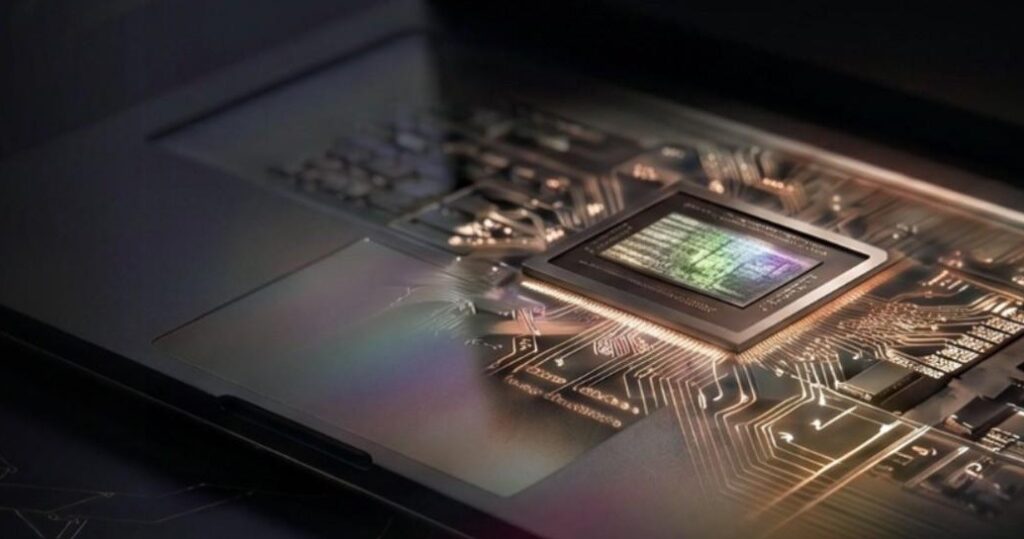
Table of Contents
A Fundamental Shift in PC Architecture
Nvidia is officially moving beyond the role of a component supplier to become a full-stack system-on-chip (SoC) provider. The company has unveiled the RTX Spark, a family of Arm-based processors that integrate CPU, GPU, and memory into a single package. This move places Nvidia in direct competition with Apple’s M-series, Qualcomm’s Snapdragon X Elite, and the traditional x86 dominance of Intel and AMD.
While Nvidia has long dominated the discrete GPU market, the RTX Spark represents a strategic pivot toward the ‘AI PC.’ By leveraging Arm architecture, Nvidia is targeting the thin-and-light laptop segment, where power efficiency has historically been the Achilles’ heel of high-performance gaming and creator machines.
Technical Specifications and the Memory Play
The flagship RTX Spark chip is essentially a consumer-facing evolution of the GB10 silicon found in the DGX Spark ‘personal AI supercomputer.’ The high-end variant features 20 CPU cores, 6,144 GPU cores, and a massive 128GB of LPDDR5X unified memory. This architecture allows the CPU and GPU to access the same memory pool, eliminating the latency of moving data across a PCIe bus—a critical advantage for large-scale AI workloads.
Nvidia intends to scale this family downward, with leaner configurations offering as little as 16GB of RAM to hit more competitive price points. However, the focus remains on the high end, with claims that these chips can render 90GB 3D scenes or push 12K video editing in laptops as thin as 14mm without being tethered to a power outlet.
The “AI as UX” Paradigm
The most ambitious part of Nvidia’s pitch isn’t the raw hardware, but the software integration. In collaboration with Microsoft, Nvidia is pushing a vision where the user interface is driven by local AI agents rather than traditional app menus. Using the OpenShell runtime and new security primitives being debuted at Microsoft Build, Nvidia claims these agents can autonomously control the OS—managing GitHub QA issues or automating complex Adobe Creative Cloud workflows by simulating mouse and keyboard inputs.
By keeping these 120-billion-parameter models local to the 128GB unified memory pool, Nvidia is attempting to solve two of the biggest hurdles in consumer AI: data privacy and the recurring cost of token-based API calls. If the hardware can handle the inference locally, the ‘AI PC’ becomes a private, offline tool rather than a portal to a cloud server.
Solving the Arm Compatibility Gap
The transition to Arm on Windows has historically been fraught with emulation lag and software incompatibility. Nvidia is attempting to bypass this by securing native support from the start. A significant roster of creative software—including DaVinci Resolve, Blender, and Cinema4D—already runs natively on Arm. Adobe has also reportedly optimized Premiere and Photoshop specifically for the Spark architecture.
Gaming, usually the hardest sector to migrate, is seeing unexpected movement. While the Prism emulator handles legacy apps, Riot Games is bringing League of Legends and Valorant to Windows on Arm, and Krafton is doing the same for PUBG. Nvidia is also coordinating with anti-cheat providers like BattlEye and Denuvo to ensure that the restrictive security layers of modern gaming don’t block Arm-based installations.
Market Entry and Hardware Partners
The rollout begins this fall with a heavy emphasis on premium hardware. Microsoft is leading the charge with the Surface Laptop Ultra, described by Surface head Andrew Hill as the company’s most powerful machine to date. Beyond Microsoft, Nvidia has confirmed partnerships with Acer, Asus, Dell, Gigabyte, HP, MSI, and Lenovo.
Despite the bold claims of being the ‘most efficient PC chip ever built,’ Nvidia has remained tight-lipped on specific battery life benchmarks and pricing. Mark Aevermann, senior director of product management, noted that while the chips can scale down to ‘low single-digit’ wattage, the first wave of laptops will target ‘premium price points.’


