NTSB Shuts Down Public Database After AI Users Reconstruct Dead Pilots’ Voices from Spectrograms
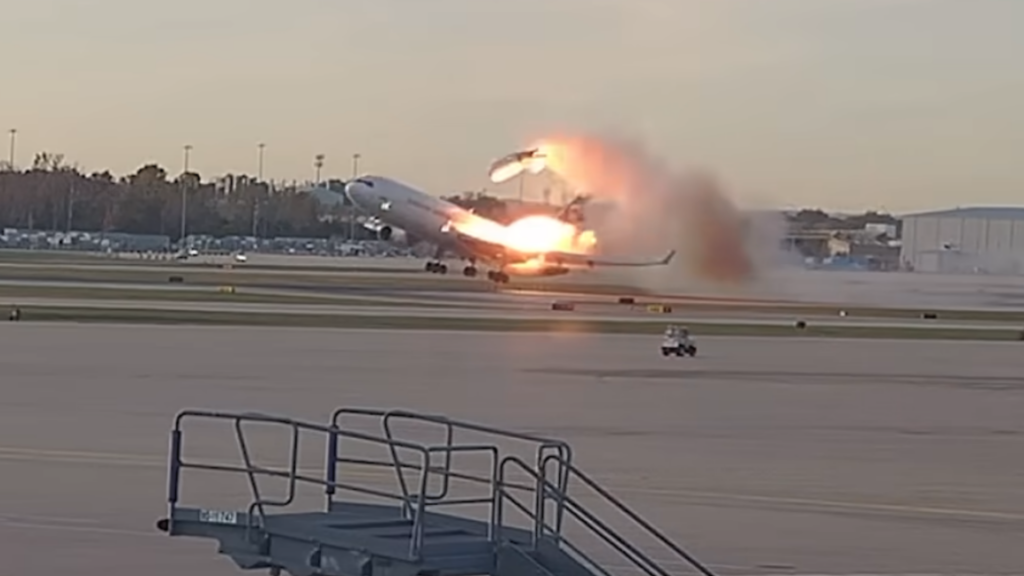
Table of Contents
A Digital Breach of Privacy
The National Transportation Safety Board (NTSB) has taken the drastic step of suspending public access to its entire civil transportation accident database. The move comes after internet researchers and AI enthusiasts managed to reconstruct the final moments of a fatal cargo plane crash using only visual data provided by the agency.
The controversy centers on the crash of UPS flight 2976, a McDonnell Douglas MD-11F that went down in Louisville, Kentucky, on November 4, 2025. The disaster, caused by a catastrophic structural failure that detached an engine shortly after takeoff, claimed the lives of three pilots and 12 people on the ground. While the NTSB has adhered to federal law by refusing to release the actual audio from the Cockpit Voice Recorder (CVR), it inadvertently provided the raw materials for a digital workaround.
As part of a public investigative hearing on May 19 and 20, the NTSB released a PDF containing a spectrogram—a visual mapping of sound frequencies over time. To the average observer, a spectrogram is a series of abstract lines and gradients. To those familiar with signal processing and generative AI, it is a blueprint of sound.
From Visuals to Vocals
Shortly after the documents were published, approximations of the pilots’ voices began appearing on X and Reddit. These weren’t official recordings, but synthetic reconstructions that mirrored the patterns found in the NTSB’s spectrogram.
The process relies heavily on the Griffin-Lim algorithm, a method for estimating a signal from its magnitude spectrogram first detailed in 1984. While once the domain of specialized acoustics engineers, the algorithm is now widely accessible via Python libraries on GitHub. The integration of Large Language Models (LLMs) has accelerated this process further. One user on X claimed that using OpenAI’s Codex model allowed them to write the necessary reconstruction code in roughly ten minutes.
This convergence of legacy signal processing and modern AI has created a loophole in the 1990 federal law that prohibits the public release of CVR audio. The law was originally established after a 1988 Delta Air Lines crash, where the public broadcast of cockpit conversations led to a fierce backlash from pilots who feared their final, panicked moments would be used as public spectacle.
The Ethics of the ‘Last Seconds’
Ben Berman, a former NTSB investigator and Boeing 737 pilot, notes that the privacy of these recordings is paramount to the functioning of the aviation industry. “People are horrified with the idea of their last moments being made public and used for anything other than accident investigation,” Berman stated. He emphasized that the guarantee of privacy is often what allows pilots to operate comfortably knowing they are recorded daily.
The NTSB’s internal security for these recordings is typically rigorous. Former chairman Robert Sumwalt has previously described a protocol where access is limited to a small group who must sign nondisclosure agreements, leave their mobile devices outside the room, and destroy any handwritten notes after the session.
However, the agency’s decision to share the spectrogram in a public PDF effectively bypassed these physical security measures. By providing the visual representation of the sound, the NTSB provided the data necessary for AI to ‘guess’ the audio with haunting accuracy.
A System-Wide Shutdown
The NTSB announced on May 21 that its online docket system would be “temporarily unavailable” while the agency reviews how to scrub or modify materials that could be exploited by computational methods. The agency has not yet specified when the database will return or what new redaction standards will be implemented to prevent similar reconstructions in future cases.
While the audio from UPS flight 2976 has already permeated social media, the NTSB is now racing to ensure that other active investigations do not fall victim to the same AI-driven sleuthing. The agency stated it will share updates via its official website and X account as it evaluates a long-term solution to balance transparency with the legal and ethical requirements of pilot privacy.