NTSB Shuts Down Public Database After AI Users ‘Reverse Engineer’ Dead Pilots’ Voices
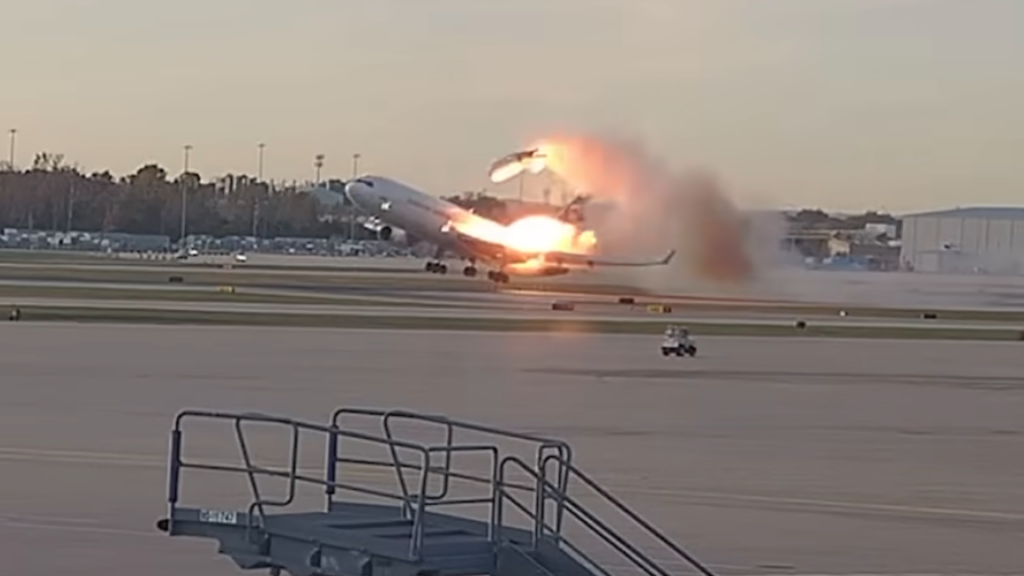
Table of Contents
A Digital Breach of Privacy
The National Transportation Safety Board (NTSB) has taken the drastic step of suspending public access to its entire database of civil transportation accidents. The move comes after a wave of internet users leveraged AI tools and signal processing software to reconstruct the final moments of a fatal cargo flight, effectively bypassing a federal law designed to protect the privacy of deceased flight crews.
The controversy centers on the crash of UPS flight 2976, an MD-11F cargo aircraft that went down in Louisville, Kentucky, on November 4, 2025. The disaster, caused by a structural failure that led to an engine detaching during takeoff, claimed the lives of three pilots and 12 people on the ground. While the NTSB traditionally releases factual reports and transcripts to ensure transparency and safety improvements, it is strictly prohibited by a 1990 federal law from releasing the actual audio from cockpit voice recorders (CVRs).
However, in a move that has now become a cautionary tale for the agency, the NTSB included a PDF in its public docket containing a spectrogram—a visual representation of sound frequencies—of the final 30 seconds of the flight. To the untrained eye, it is a series of abstract lines and waves. To an AI-literate user, it is a blueprint for audio reconstruction.
From Visuals to Voices
Almost immediately after the documents were posted, users on X and Reddit began sharing audio clips that claimed to be the reconstructed voices of the UPS pilots. These reconstructions aren’t just guesses; they are based on the Griffin-Lim algorithm, a method of recovering a signal from its magnitude spectrum first introduced in 1984. While this math has existed for decades, the barrier to entry for using it has collapsed.
The integration of Python-based libraries and the rise of Large Language Models (LLMs) have turned what was once a highly specialized forensic task into a ten-minute project for a hobbyist. One user on X reported using OpenAI’s Codex model to quickly generate the code necessary to transform the NTSB’s spectrogram into a rough audio file.
“I was shocked to hear about this, because I hadn’t imagined that it was possible to do something like this,” said Ben Berman, an accident investigator and former NTSB analyst who also flew Boeing 737s for United Airlines. “But all kinds of things are possible now.”
The Ethics of the ‘Last Moment’
The 1990 law prohibiting the release of CVR audio was born out of a fierce backlash from the pilots’ union after a TV station aired cockpit conversations from a 1988 Delta Air Lines crash. The aviation industry argues that if pilots know their final, often panicked words could become public entertainment or social media fodder, they may be less forthcoming in the cockpit or more stressed during critical failures.
Robert Sumwalt, a former NTSB chairman, has previously detailed the extreme measures the agency takes to keep these recordings secure. Access is typically limited to a tiny circle of investigators who must sign non-disclosure agreements, leave their phones outside the room, and destroy any handwritten notes after the session. The fact that a PDF upload managed to undo these physical security protocols highlights a growing gap between traditional government secrecy and modern computational capabilities.
A System-Wide Blackout
The NTSB’s response has been swift and sweeping. On May 21, the agency announced that its online docket system was “temporarily unavailable” while it reviews all publicly available materials to ensure no other spectrograms or similar data could be exploited.
In a formal statement, the NTSB acknowledged that “advances in image recognition and computational methods have enabled individuals to reconstruct approximations of cockpit voice recorder audio.” The agency has not specified when the database will return, but the incident suggests a fundamental shift in how the government must handle forensic data. What was once considered a ‘visual’ representation of data is now, for all intents and purposes, the data itself.
While the reconstructed audio of UPS flight 2976 is already circulating across the web, the NTSB is now playing a game of catch-up, attempting to sanitize its archives before another ‘digital forensic’ enthusiast finds a way to bring the dead back to speech.