Navantia Unveils the LASV75: A Crewless Warship Designed for the ‘Hybrid Navy’
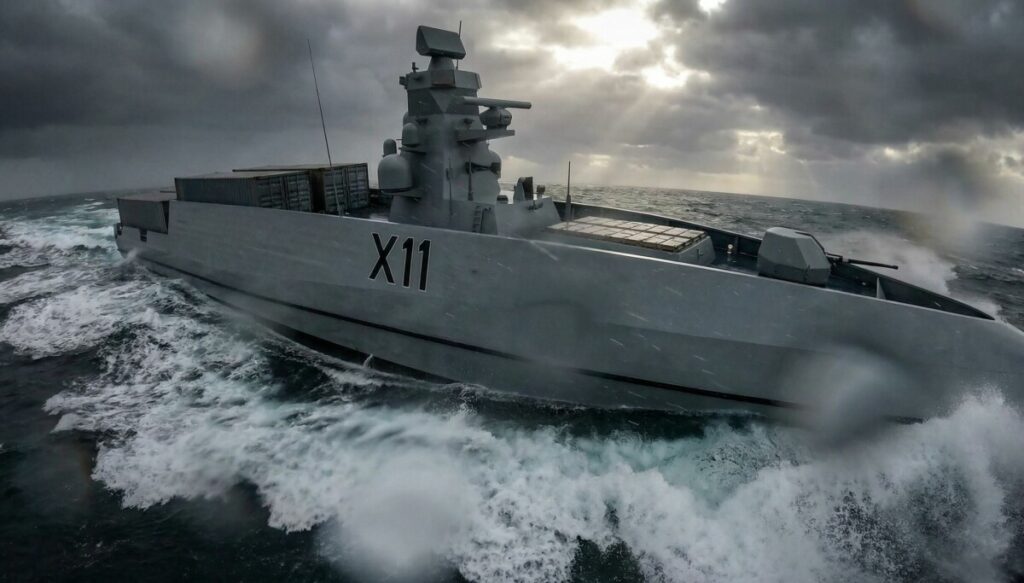
Table of Contents
The Shift Toward Autonomous Seas
Navantia, the Spanish shipbuilding powerhouse, has unveiled a design that looks less like a traditional warship and more like a floating sensor platform. The Large Autonomous Surface Vessel, or LASV75, is a 75-meter drone ship engineered to operate without a single human soul on board. Developed by Navantia’s UK division, the vessel is positioned as a cornerstone for what the company calls a “hybrid navy”—a future where traditional crewed destroyers and frigates are supported by a swarm of autonomous escorts.
At 1,000 tonnes, the LASV75 sits in a curious middle ground of naval architecture. It is roughly half the length of a Royal Navy Type 45 destroyer, bringing it closer in scale to the River-class patrol vessels. However, the internal layout is where the departure from tradition is most stark. There is no bridge, no galley, and no berthing. By removing the necessity for life-support systems and crew safety quarters, Navantia has freed up significant internal volume for fuel, propulsion, and mission-specific hardware.
Modular Warfare and the ‘Container’ Strategy
One of the most striking aspects of the LASV75 design is its commitment to modularity. The deck is designed to carry standard shipping containers, a trend increasingly adopted by modern navies to rapidly swap out capabilities without returning to a dry dock. Whether it is an electronic warfare suite, additional missile cells, or specialized surveillance gear, the vessel can be reconfigured based on the mission profile.
The propulsion system further separates the LASV75 from the smoking funnels of 20th-century warships. The vessel utilizes Integrated Full Electric Power and Propulsion (IFEP), relying on diesel generators to feed electric motors. This setup not only increases efficiency but contributes to a lower acoustic signature—a critical advantage when the primary mission is tracking elusive submarines.
Filling the Atlantic Gap
While Navantia is marketing the vessel globally, the design is heavily tailored to the strategic anxieties of the UK’s Royal Navy. Specifically, the LASV75 appears designed to support the “Atlantic Bastion” strategy. This operational framework focuses on protecting critical undersea infrastructure—such as the fiber-optic cables and energy pipelines that sustain the UK’s digital and physical economy—while monitoring Russian submarine activity in the North Atlantic.
Currently, these grueling long-range patrols are handled by Type 23 frigates and will eventually be transitioned to the Type 26. However, using a billion-dollar crewed frigate for persistent surveillance is an expensive and taxing use of human resources. A flotilla of uncrewed Type 92 sloops, or vessels like the LASV75, would allow the Navy to maintain a constant, uninterrupted presence in the open ocean without risking sailors or wearing down high-value assets.
“Autonomous vessels are fundamental to the future of sovereign defence capabilities,” says Derek Jones, Navantia UK’s chief commercial and business development officer. “Naval capabilities of the future will comprise a hybrid mixture of crewed warships with uncrewed escorts and ancillary ships.”
The Cost of Autonomy
Navantia claims that the LASV75 can be built at a significantly faster pace and at a lower cost than crewed counterparts. While the company has stopped short of providing a specific price tag, the economic argument is clear: removing the human element removes the most expensive part of ship design—the habitat. When you don’t need air conditioning for cabins, plumbing for hundreds of sailors, or reinforced bridges for command and control, the cost per ton of combat capability drops precipitously.
As Navantia continues to build Fleet Solid Support (FSS) vessels for the Royal Fleet Auxiliary, this move into the autonomous space signals a broader pivot toward the “drone-ification” of naval power, where the human captain remains in the loop, but stays safely onshore.