NASA’s Lunar Logistics Gamble: Three New Missions to Pre-Seed the Moon by 2026
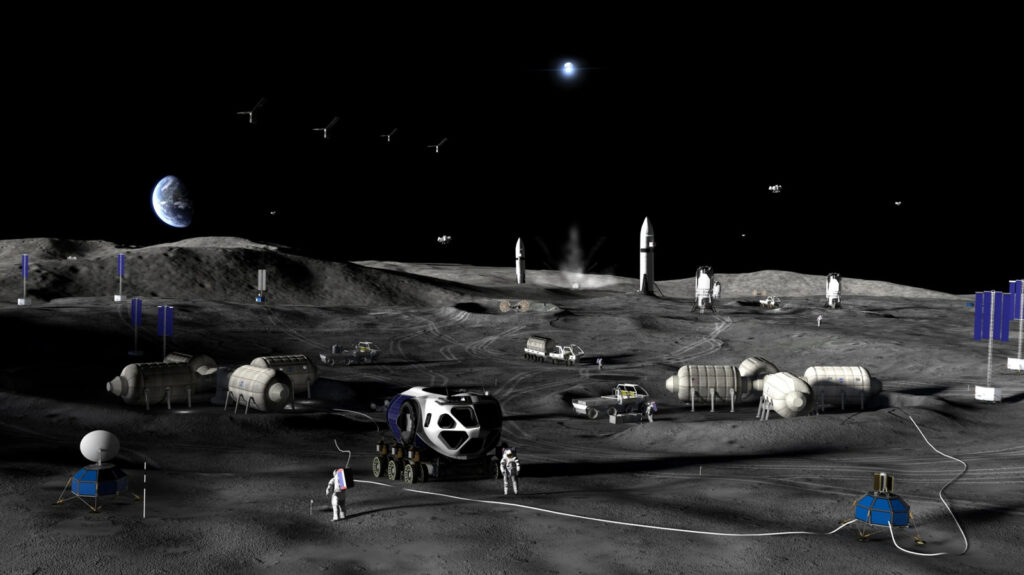
Table of Contents
Infrastructure Before Astronauts
NASA is shifting its lunar strategy from singular milestones to a sustained logistical pipeline. The agency has outlined a preliminary schedule for three critical cargo missions—designated as the Moon Base series—aimed at seeding the lunar surface with hardware and sensor arrays before the first boots hit the ground in the next era of exploration.
This pivot comes as a pragmatic response to the revised Artemis timeline. With human landings now pushed toward 2028, NASA is using the intervening window to treat the Moon as a testbed for commercial hardware. Rather than relying solely on government-built systems, the agency is diversifying its risk across a portfolio of private contractors, including Blue Origin, Astrolab, and Intuitive Machines.
The Payload Pipeline: Moon Base I, II, and III
The upcoming flight manifest is a mix of technical validation and scientific curiosity. The first leg, Moon Base I, is slated for a launch no earlier than fall 2026. It will utilize Blue Origin’s Blue Moon Mark 1 Endurance lander to deliver a Lunar Plume-Surface Studies instrument. This specific payload is designed to analyze how rocket exhaust interacts with the lunar regolith—data that is vital for ensuring that subsequent crewed landings don’t sandblast existing equipment or create hazardous debris fields.
Following closely is Moon Base II, which leans on Astrobiotic’s Griffin lander to deploy Astrolab’s FLIP rover. This isn’t just a science mission; it is a prototype validation. Astrolab is using the mission to refine the design of future lunar terrain vehicles, essentially treating the lunar surface as a high-stakes showroom for their mobility tech.
The third pillar, Moon Base III, will employ Intuitive Machines’ Nova-C Trinity lander. This mission takes a more academic turn, targeting lunar “swirls”—mysterious, light-colored regions of the Moon that have long puzzled planetary scientists. To broaden the international scope of the effort, this lander will carry payloads for the European Space Agency (ESA) and the Korea Astronomy and Space Science Institute (KASI).
The Commercial Space Race for Lunar Mobility
The complexity of these missions highlights a fragmented but aggressive procurement strategy. NASA is effectively funding two parallel paths for lunar mobility to avoid a single point of failure. Both Astrolab and Lunar Outpost have secured massive contracts—approximately $219 million and $220 million, respectively—to develop Lunar Terrain Vehicles (LTV). These are the “moon buggies” that will allow future astronauts to traverse far greater distances than the Apollo-era excursions.
While the rovers are being built by several firms, the delivery mechanism remains a critical bottleneck. Blue Origin’s $118 million contract to deliver these rovers represents a significant bet on the company’s lander architecture. NASA recently confirmed the completion of testing for the initial Blue Origin lander and has already taken delivery of a second-generation prototype designed for crewed operations.
The ‘MoonFall’ Precursor
These cargo runs are part of a broader choreography that includes the MoonFall mission, which intends to deploy drones to scout landing sites. By combining drone reconnaissance with the Moon Base cargo runs, NASA is attempting to build a digital and physical map of the lunar south pole before the Artemis crew ever leaves Earth’s orbit.
The ambition of the 2026 timeline is high, and the reliance on private partners introduces a layer of volatility. However, by distributing the technical burden across Blue Origin, Intuitive Machines, and Astrolab, NASA is betting that a competitive ecosystem will accelerate the arrival of a permanent lunar presence faster than any single government program could.