NASA Pivots Lunar Strategy: Astrolab and Lunar Outpost Tapped for First Moon Base Rovers
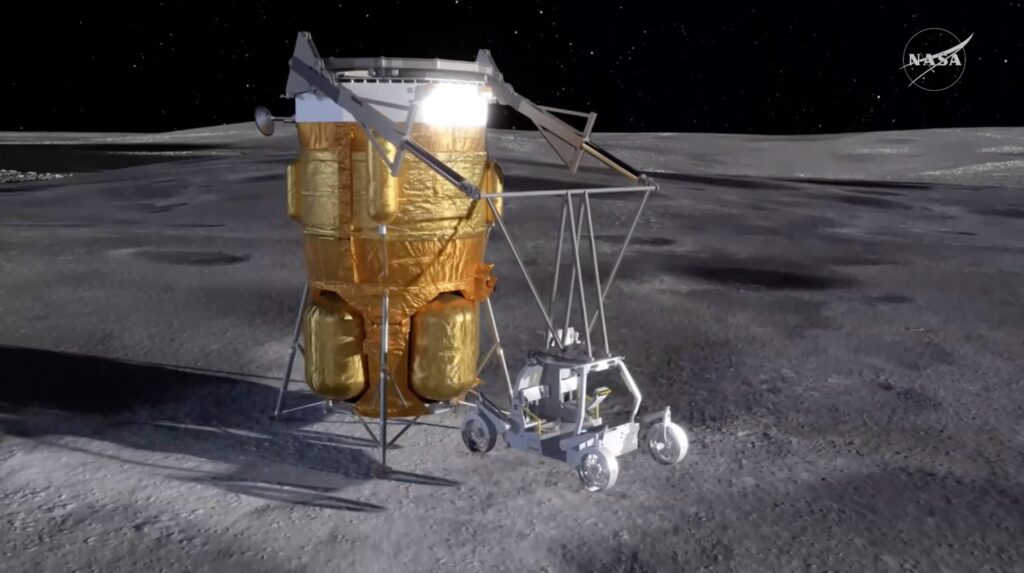
Table of Contents
A Strategic Pivot in Lunar Mobility
NASA is fundamentally reshaping how it will populate the lunar surface. In a significant shift from its original Lunar Terrain Vehicle (LTV) program, the agency has awarded initial contracts to Astrolab and Lunar Outpost to develop a new generation of rovers designed to scout and prepare the ground for the Artemis 4 crewed landing scheduled for 2028.
The move signals a departure from NASA’s previous requirement that rover developers secure their own transportation to the Moon. Instead, the agency is now integrating these assets into the Commercial Lunar Payload Services (CLPS) framework, effectively decoupling the vehicle design from the delivery mechanism to reduce costs and accelerate deployment.
Carlos Garcia-Galan, program manager for Moon Base at NASA, described the new fleet as a hybrid approach. “We need them to be on the surface, doing things that basically prospect the surface,” Garcia-Galan noted, characterizing the vehicles as a cross between the iconic Apollo-era Lunar Roving Vehicle and the autonomous, science-heavy rovers used on Mars.
The Hardware: Scaled Down for Speed
The selected designs are streamlined versions of earlier, more ambitious proposals. Astrolab will develop the Crewed Lunar Vehicle 1 (CLV-1), a scaled-down derivative of its FLEX architecture. This adaptation allows the company to leverage previous testing while adhering to NASA’s new, stricter mass and volume constraints—specifically a limit of one metric ton.
Parallel to this, Lunar Outpost has been awarded $220 million for its Pegasus rover. Heavily inspired by the Apollo LRV, Pegasus is designed to provide astronauts with the range and reliability necessary to identify permanent outpost sites. Astrolab’s award sits nearly identical at $219 million.
To get these vehicles to the surface, NASA has tapped Blue Origin. The Blue Moon Mark 1 robotic lander will serve as the delivery vehicle for both rovers. The contract includes a $188 million base period for design and hardware procurement, with an additional $280.4 million in options for the actual landing missions. This delivery schedule follows a tight sequence: first, a launch this fall, followed by the delivery of NASA’s VIPER rover for volatile scouting in 2027.
Market Volatility and the ‘Intuitive’ Absence
The announcement sent immediate ripples through the aerospace market, most notably for Intuitive Machines. As one of the three original LTV contenders, the company was widely expected to secure a piece of the pie. When the winners were announced without them, Intuitive Machines’ stock plummeted nearly 9%, erasing gains made earlier in the trading session.
CEO Steve Altemus attempted to steady the narrative, asserting that the current awards are merely the “opening phase” of a larger buildout. Altemus maintained that the company remains eligible for future task orders as lunar operations expand, though the immediate lack of a primary rover contract is a visible setback in the race for lunar surface dominance.
Hops and Drones: The MoonFall Initiative
Beyond traditional wheeled mobility, NASA is venturing into vertical agility with the MoonFall program. Developed at the Jet Propulsion Laboratory (JPL), MoonFall consists of drone-like spacecraft capable of “hopping” across the lunar surface to provide high-resolution reconnaissance of the south pole’s challenging lighting and terrain.
Firefly Aerospace has been selected to ferry these drones via its Elytra Dark spacecraft. The mission profile is complex: the Elytra will deploy the drones from a 50-kilometer lunar orbit, after which the drones will independently descend to the surface. Firefly confirmed a $75 million subcontract from JPL for the mission, which is currently slated for 2028. NASA is still determining whether the final payload will consist of three or four individual drones.