NASA’s Lunar Perimeter: The High-Stakes Logistics of Building a Permanent Moon Base
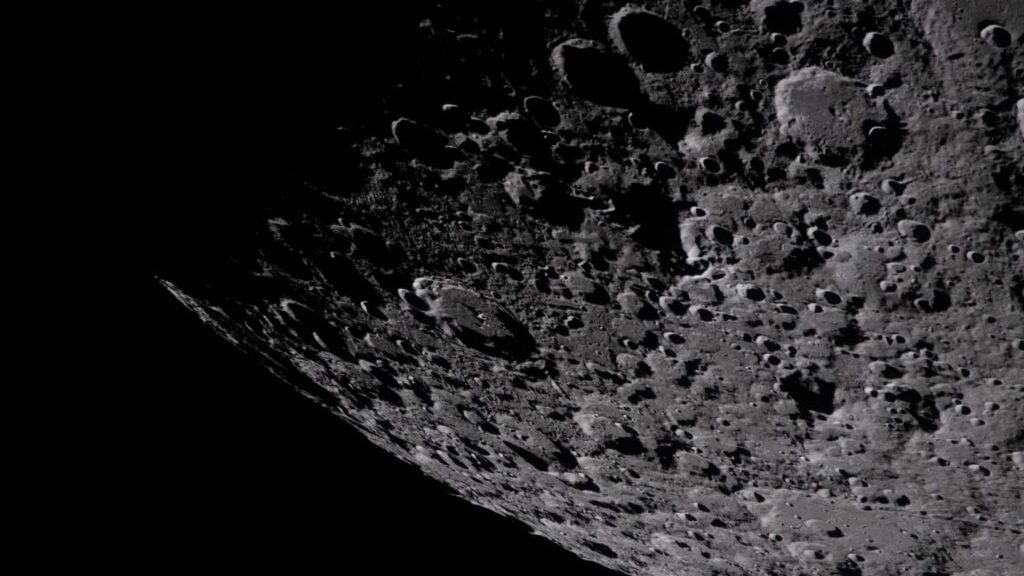
Table of Contents
The Hardware of Permanent Habitation
NASA is moving beyond the era of ‘flags and footprints’ and into the logistical grit of permanent lunar occupation. In a series of recent contract announcements, the agency has laid out the skeletal framework for its Moon Base initiative, prioritizing mobility, high-resolution reconnaissance, and the controversial concept of a physical perimeter.
At the center of this push are two new one-ton rovers designed to give astronauts the range and autonomy required for sustained operations. NASA has awarded $219 million to Astrolab for its “CLV-1” rover and $220 million to Lunar Outpost for its “Pegasus” model. These aren’t just glorified golf carts; the vehicles are engineered for a 200 km range and will operate via a hybrid of astronaut piloting and Earth-based autonomous guidance. Both are slated for delivery by 2028.
The delivery mechanism for this hardware further cements the role of Jeff Bezos’ Blue Origin in the agency’s architecture. NASA has allocated $280.4 million for Blue Origin to utilize its Blue Moon Mark 1 lander to ferry the rovers to the surface. This expands Blue Origin’s footprint from simply transporting cargo—such as the previously contracted Viper vehicle—to becoming a primary logistics artery for the Artemis program’s human-centric goals.
From 1 Meter to 1 Centimeter: The MoonFall Mission
Despite the Apollo missions, our actual tactile knowledge of the lunar surface is surprisingly thin. NASA Administrator Jared Isaacman pointed out the stark reality: the agency is basing its current plans on roughly 80 hours of total astronaut EVA time from over half a century ago. To bridge this data gap, the Jet Propulsion Laboratory is spearheading the “MoonFall” program.
MoonFall will deploy three to four drones, each weighing roughly 225 kg, delivered via Firefly Aerospace. The objective is to leapfrog the current imagery resolution from one meter per pixel down to a precise one centimeter. This granular detail is critical for identifying water ice in permanently shadowed regions and analyzing soil mechanics—data that is the difference between a successful landing and a catastrophic crash.
Defining the ‘Perimeter’
Perhaps the most intriguing aspect of the MoonFall mission is what happens when the drones reach the end of their operational life. According to lunar base manager Carlos Garcia-Galan, the retired drones will be positioned to establish a “Moon Base perimeter.” These assets will serve as boundary markers, retro-reflector beacons, or potentially the first lunar cell towers, marking the edges of areas reserved for scientific objectives or base construction.
The Legal Friction of ‘Safety Zones’
While “perimeter” sounds like a technical term, in the context of international law, it is a political lightning rod. The 1967 Outer Space Treaty explicitly forbids any nation from claiming sovereignty over lunar territory. However, the U.S.-led Artemis Accords introduce the concept of “safety zones” to prevent “harmful interference” between competing missions.
This is where NASA’s ambitions collide with geopolitical reality. China, which is pursuing its own independent lunar south pole ambitions, has been critical of the safety zone concept, viewing it as a backdoor to territorial claims. When asked if the MoonFall perimeter is the first physical manifestation of a safety zone, Isaacman remained non-committal, emphasizing a desire to be “respectful of other nations” while expecting reciprocity.
As the 2028 window for Artemis IV approaches, the deployment of these drones and rovers represents more than just a scientific milestone. It is a quiet but firm assertion of operational presence in a region where the law is vague and the competition is intensifying.