Moscow’s Economic Leverage: Putin Pressures Armenia Over EU Aspirations
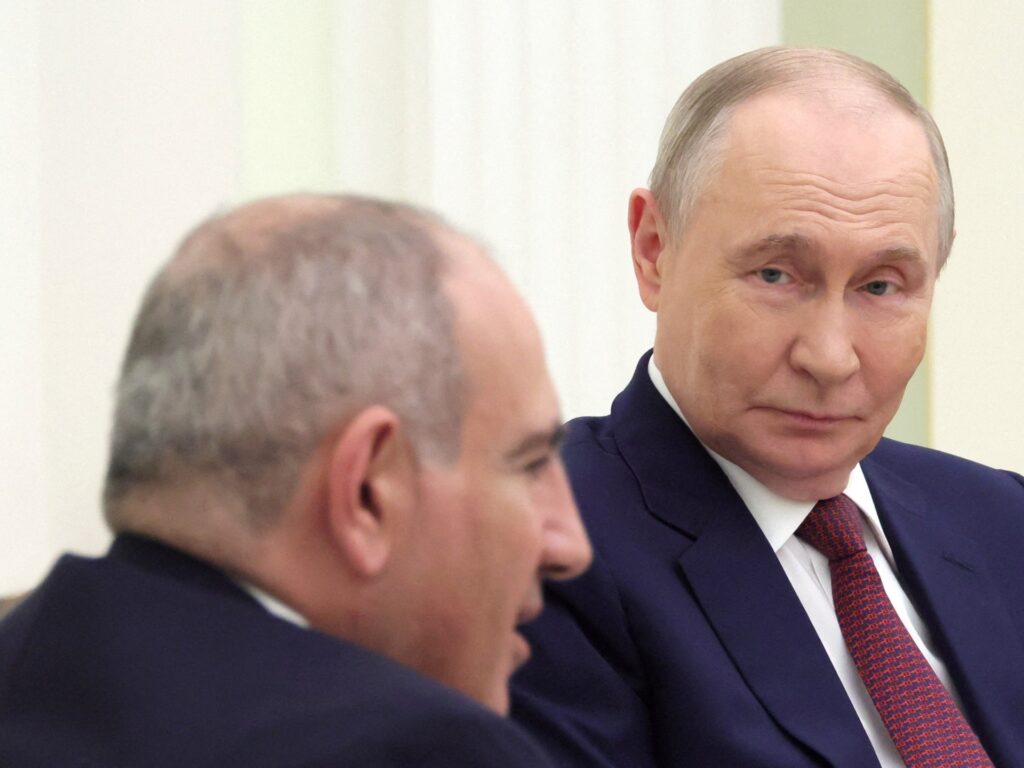
Table of Contents
A Birthday Call and a Political Ultimatum
What began as a formal birthday greeting from Vladimir Putin to Armenian Prime Minister Nikol Pashinyan quickly devolved into a geopolitical ultimatum. During a call on Monday, the Russian President demanded that Armenia hold an immediate referendum on its membership in the Russian-led Eurasian Economic Union (EAEU), effectively forcing Yerevan to choose between Moscow’s orbit and the European Union.
Pashinyan has since rejected the demand, labeling it “unreasonable.” The friction follows a contentious EAEU summit in Kazakhstan on May 29, where Russia, Belarus, Kazakhstan, and Kyrgyzstan issued a joint statement urging Armenia to clarify its alignment. Putin’s stance is rigid: membership in both the EAEU and the EU is a structural impossibility.
In a video address released via social media, Pashinyan argued that a referendum at this stage would be “purely theoretical,” as Armenia has not yet formally applied for EU candidate status. He maintained that Yerevan will continue to operate within the EAEU framework until a definitive choice becomes unavoidable, describing the current state of Russo-Armenian ties as being in a “transformation phase.”
The ‘Ukrainian Scenario’ and Diplomatic Coercion
The rhetoric from the Kremlin has shifted from diplomatic disagreement to explicit warning. Putin pointedly referenced the “Ukrainian scenario,” suggesting that Kyiv’s pursuit of EU membership was the catalyst for the current conflict in Ukraine—a thinly veiled threat toward Pashinyan’s administration.
This pressure is coinciding with critical timing, as Armenia prepares for parliamentary elections on June 7. Moscow appears to be utilizing a playbook of “economic discipline” to sway the political climate in Yerevan. Over the weekend, Russia recalled its ambassador for consultations, a move that typically signals a severe downgrade in bilateral relations.
Weaponizing Trade: The Seafood Ban
The most immediate impact of Moscow’s displeasure is felt in Armenia’s export markets. On Monday, Russia’s agricultural watchdog suspended all imports of Armenian fish and seafood, citing health violations. While framed as a regulatory issue, the timing suggests a strategic economic strike.
Russia is a critical trade partner, absorbing roughly 30 percent of Armenia’s total exports. This seafood embargo follows a series of similar bans on Armenian mineral water, alcohol, flowers, and produce. The European Union has already stepped in to criticize these moves, accusing Moscow of attempting to cripple the Armenian economy to influence the outcome of the upcoming June 7 elections.
The Erosion of a Traditional Alliance
The collapse of the Russia-Armenia partnership is not sudden, but rather the result of a long-term erosion of trust. The turning point for many in Yerevan was Russia’s failure to intervene during Azerbaijan’s 2023 military offensive in Nagorno-Karabakh, which resulted in Armenia losing control of the disputed territory.
This security vacuum, combined with the geopolitical fallout of the 2022 invasion of Ukraine, has pushed Armenia to diversify its partnerships. Yerevan has aggressively courted Western allies, recently hosting its first official EU summit and welcoming French President Emmanuel Macron for a state visit. The latter visit provided a stark visual contrast to the tension with Moscow, as a video of Macron singing while Pashinyan played the drums circulated widely—an image that the Kremlin viewed with visible disdain.
As the June 7 elections approach, Pashinyan finds himself balancing the necessity of Russian trade against the strategic desire for European integration, all while Moscow tightens the economic screws.


