Colombia’s Presidential Runoff: A Collision of Ideologies and a Pivot for U.S. Relations
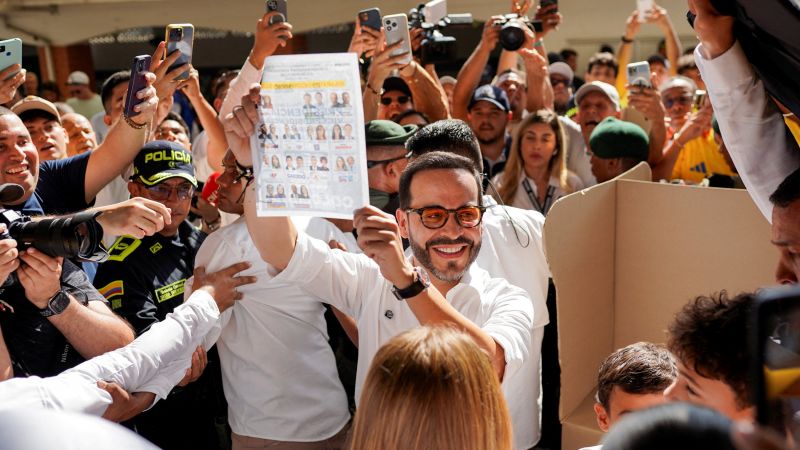
Table of Contents
A Nation Divided: The Path to June 21
Colombia is bracing for a political showdown that could fundamentally alter its trajectory and its standing with the United States. Following Sunday’s first-round presidential election, the country is headed toward a June 21 runoff that pits a conservative firebrand against the ideological heir to the current administration’s leftist agenda.
With over 99% of the ballots tabulated, Abelardo de la Espriella, a lawyer and political outsider, secured the top spot with 43.74% of the vote. While he failed to reach the absolute majority required for an outright win, his performance represents a significant surge for the right. Trailing closely in second place is Senator Iván Cepeda, the standard-bearer for President Gustavo Petro’s Historic Pact coalition, who garnered 40.90%.
The third-place finisher, Paloma Valencia of the Democratic Center, managed only 6.92%. In a move that could consolidate the right-wing vote, Valencia—the first woman to lead the party founded by former President Álvaro Uribe—has already thrown her support behind de la Espriella, framing the upcoming vote as a final stand against “new communism.”
The Outsider vs. The Institutionalist
The runoff presents a stark contrast in governance and philosophy. Abelardo de la Espriella, 47, has modeled his campaign on the “tough-on-crime” rhetoric of leaders like El Salvador’s Nayib Bukele. A self-described conservative nationalist, de la Espriella has campaigned on a platform of economic liberalization, tax cuts, and an aggressive expansion of oil exploration.
Crucially for international observers, de la Espriella has openly praised U.S. President Donald Trump and pledged to tighten security ties with both Washington and Israel. His approach to domestic security is confrontational, promising to dismantle criminal organizations through force—a sentiment echoed in his victory speech in Barranquilla, where he told supporters, “We will defend democracy by reason or by force.”
On the other side of the spectrum is Iván Cepeda, 63. A veteran human rights advocate and the son of the assassinated politician Manuel Cepeda Vargas, Cepeda represents the continuation of President Petro’s “total peace” strategy. His platform focuses on agrarian reform, social inclusion, and a “democratic revolution” intended to deepen the progressive shifts initiated since 2022.
A Verdict on the Petro Era
More than just a contest between two men, the runoff serves as a referendum on the presidency of Gustavo Petro. While Petro’s supporters point to expanded social protections, critics argue his tenure has been marked by stagnation in healthcare and a failure to curb rising gang violence.
The political atmosphere has been underscored by genuine volatility. The campaign season was marred by an assassination that shook the political establishment: candidate Miguel Uribe Turbay was shot at a rally in June and succumbed to his injuries on August 11. This level of political violence has pushed security to the forefront of the voter’s mind, fueling the appeal of de la Espriella’s harder line.
President Petro himself has remained skeptical of the preliminary figures, stating he will wait for the final data from the vote-counting commissions before accepting the results. His administration’s flagship policies are now on the line, as Colombia decides whether to double down on a negotiated peace or pivot toward a security-first, pro-market regime.


