Microsoft Unveils Surface Laptop Ultra: A CUDA-Powered Arm Workstation Aiming for the MacBook Pro Crown
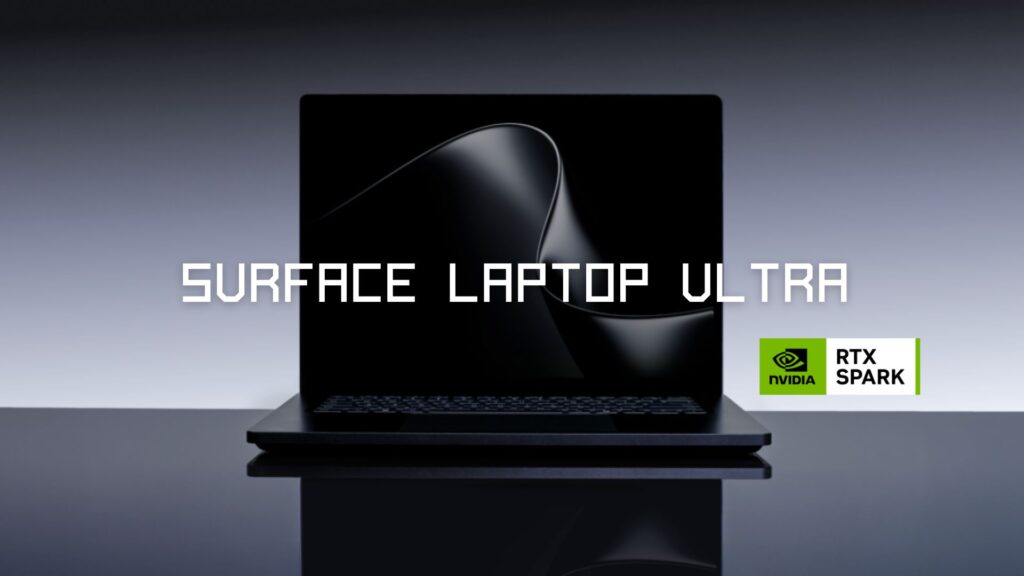
Table of Contents
The Arm War Scales Up
For years, the narrative surrounding Windows on Arm has been one of compromise—better battery life in exchange for diminished peak performance. Microsoft is attempting to shatter that perception at Computex 2026 with the introduction of the Surface Laptop Ultra. This isn’t just another iteration of the Surface line; it is a high-performance workstation designed to go toe-to-toe with Apple’s M-series Max and Ultra chips.
The centerpiece of the device is the NVIDIA RTX Spark platform. This custom silicon architecture represents a deep integration between Microsoft and NVIDIA, combining a 20-core NVIDIA Grace CPU—co-developed with MediaTek—and a Blackwell-based RTX GPU. By utilizing the NVLink-C2C chip-to-chip interconnect, the Ultra bypasses the traditional bottlenecks that have plagued hybrid Arm laptops, allowing the CPU and GPU to communicate with a level of efficiency previously reserved for data center hardware.
Unified Memory and Local AI
The most significant technical leap is the implementation of up to 128GB of unified memory. Much like the architecture found in Apple Silicon, the Surface Laptop Ultra dynamically allocates this pool between the processor and the GPU. For creative professionals, the implication is clear: the ability to handle massive datasets without the latency of moving data across a PCIe bus.
This architecture is specifically tuned for the current AI boom. With full CUDA support and a claimed one petaflop of AI compute, the Ultra can run 120-billion-parameter models locally. This moves AI from the cloud to the chassis, allowing developers to run local agents like Hermes and OpenClaw. To secure this, Microsoft has introduced new containment primitives within Windows 11 to sandbox these agents, preventing local AI processes from compromising the core OS.
Hardware and Thermal Management
Pushing a Blackwell GPU and a 20-core Grace CPU into a 4.5-pound chassis creates a significant thermal challenge. Microsoft has addressed this with a prominent dual-fan cooling system and the ‘Microsoft Power and Thermal Framework,’ designed to prevent the aggressive throttling that often hampers thin-and-light workstations.
The display is a 15-inch mini-LED PixelSense Ultra panel, boasting a 2880 x 1920 resolution. At 2,000 nits peak HDR brightness, it is currently the brightest screen Microsoft has ever deployed in a laptop, aimed squarely at HDR video editors and photographers who work in high-ambient-light environments.
Connectivity and the Legacy Gap
Departing from the trend of minimalism, Microsoft has opted for a pro-centric I/O array. The chassis includes a full-sized HDMI port, USB-C, USB-A, a dedicated SD card reader, and a headphone jack. It also signals a shift in Microsoft’s philosophy regarding longevity, with a replaceable SSD and a commitment to providing official repair guides and parts.
The software bridge is handled by a heavily optimized Prism emulation layer. To ensure that x86 legacy apps don’t feel sluggish, Prism leverages AVX and AVX2 instruction set extensions, effectively using the raw power of the Grace CPU to mask the overhead of emulation.
Gaming on Arm
The partnership extends into the gaming ecosystem, where Arm has historically struggled due to anti-cheat software. The RTX Spark platform includes native support for Epic and BattlEye, removing the primary barrier for competitive gaming. Riot Games has already confirmed that League of Legends and Valorant will launch natively on the platform, potentially opening the door for a broader shift of AAA titles toward Arm-based Windows machines.
The Surface Laptop Ultra is slated for release this fall, 2026. While the exact pricing remains under wraps, the premium nature of the Blackwell silicon and current global RAM supply constraints suggest a price point that will compete directly with the high-end MacBook Pro configurations.