Meta Breaks from Ray-Ban to Launch Budget-Friendly Smart Glasses
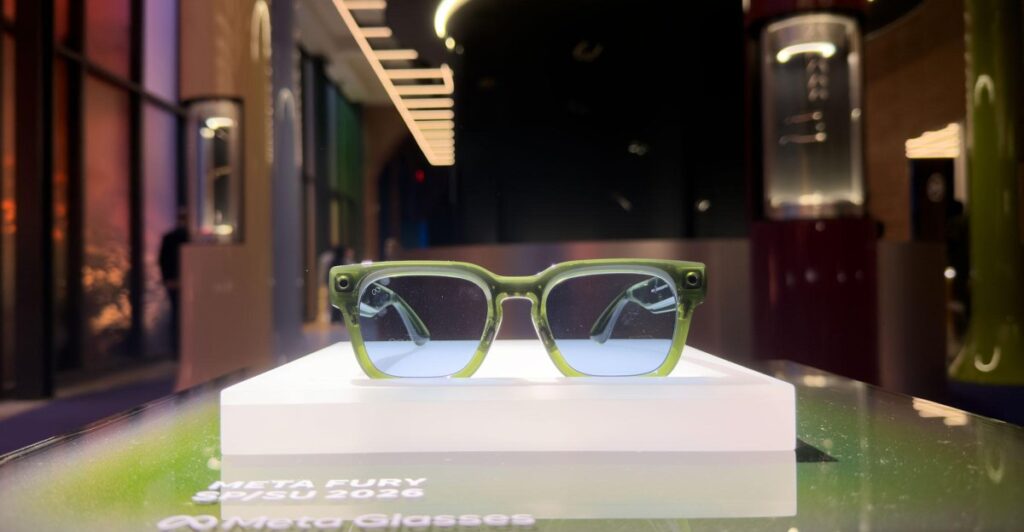
Table of Contents
The End of the Ray-Ban Monopoly
For the better part of three years, Meta’s foray into smart eyewear has been inextricably linked to the prestige of Ray-Ban. The partnership with EssilorLuxottica allowed Meta to bypass the ‘geek’ factor that plagued early wearables, delivering technology housed in frames people actually wanted to wear. Now, Meta is pivoting. The company has unveiled a new line of smart glasses that strip away the Ray-Ban branding in favor of a more accessible price point and a broader range of aesthetics.
The new lineup—featuring the Meta Fury, the Meta Adventurer, and a high-profile collaboration with Kylie Jenner—starts at $299. This marks a significant $80 drop from the entry price of the Ray-Ban Meta Gen 2, signaling Meta’s intent to move from a niche fashion-tech accessory to a mass-market consumer electronic.
Strategic Diversification and the ‘Kylie’ Effect
While the Ray-Ban partnership provided a shortcut to cultural legitimacy, Meta is now leaning into its own brand identity and influencer ecosystem. The collaboration with Kylie Jenner is a clear attempt to capture the Gen Z demographic, with frames featuring a distinct Y2K aesthetic designed to be worn lower on the bridge of the nose. The Jenner edition even includes a small decorative gem in the upper corner of the left lens, a detail that moves the product further away from ‘tool’ and closer to ‘fashion statement.’
Despite the lack of Ray-Ban logos, the relationship with EssilorLuxottica remains central. A look at the inside temples of the Fury and Adventurer models reveals EssilorLuxottica’s name stamped in small font. The company continues to handle the industrial design and logistics, essentially acting as the hardware backbone for Meta’s various branding experiments.
Hardware Refinements and Accessibility
Under the hood, the new glasses are largely iterative. They share the internal specifications of the recently released Ray-Ban Meta Optics Styles, though Meta claims they offer slightly improved battery life. The physical differences are primarily in the silhouettes: the Adventurer features thin, square rims, while the Fury adopts a bolder, chunkier frame similar to the Meta Ray-Ban Display.
More critical for long-term adoption are the ergonomic updates. Meta has introduced adjustable nose pads that click into three positions and bendable temple tips. For those with vision impairments, the glasses support a wide prescription range from -12 to +2.25, though prescriptions stronger than -6 still require an optician’s visit. These changes suggest Meta is moving beyond the ‘early adopter’ phase and addressing the actual fit and utility needs of a general population.
The Privacy Paradox
The launch comes at a tense time for Meta. Recent reporting from Wired and The New York Times has suggested the company is developing facial recognition capabilities for its eyewear—a move that would likely ignite a firestorm of privacy concerns. During the hands-on reveal, journalists pointed out that the camera modules appear smaller than in previous iterations, a change Meta says was introduced earlier this year with the Optics Styles.
Alex Himel, Meta’s VP of wearables, acknowledged the friction surrounding the devices. Addressing the rise of ‘glassholes’ and bad actors using the tech for harassment, Himel stated, “If people aren’t comfortable with you wearing the glasses, not only do we personally think that’s bad, but we wouldn’t have a business anymore.” While Himel remained tight-lipped on the specifics of upcoming privacy updates, he emphasized that the company is seeking a “uniform way of handling things” to prevent the devices from being banned in public spaces.
By lowering the price barrier, Meta is effectively accelerating the saturation of its AI-powered cameras in public spaces. The success of this gamble depends on whether the general public is willing to trade their privacy for a $299 piece of wearable tech.