Erin Brockovich Launches Crowdsourced Map to Track AI Data Center Fallout
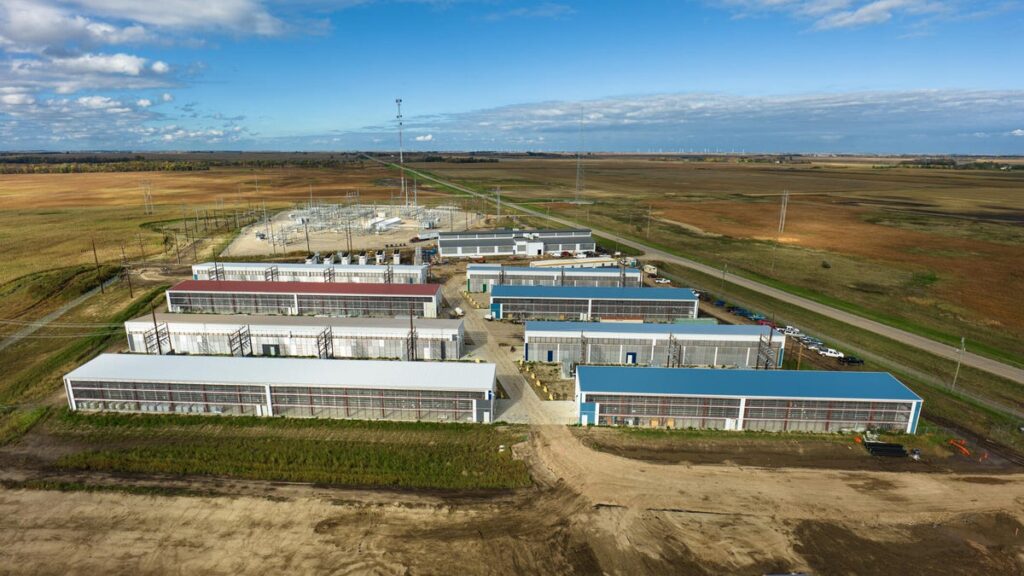
Table of Contents
The Infrastructure War
For decades, the tension between industrial growth and environmental preservation has played out in local zoning board meetings and courtrooms. Now, that conflict has a new catalyst: the generative AI boom. As companies like Microsoft, Google, and Meta scramble to build the massive compute clusters required to power Large Language Models, the physical footprint of the cloud is becoming a political flashpoint.
Entering this fray is Erin Brockovich, the consumer advocate and environmentalist whose fight against Pacific Gas & Electric in the 1990s became a global symbol of grassroots activism. Brockovich has launched a dedicated reporting hub featuring an interactive, crowdsourced map designed to track the proliferation of AI data centers and, more importantly, the grievances of the people living next to them.
Mapping the ‘Invisible’ Footprint
The Brockovich AI Data Center Reporting site isn’t a comprehensive industry directory; rather, it is a heatmap of friction. By allowing citizens to submit reports on proposed or existing facilities, the project has already cataloged 3,674 locations. The goal is to bridge the gap between corporate press releases and the lived reality of residents facing sudden water shortages or spiking electricity costs.
According to Suzanne Boothby, executive editor of The Brockovich Report, the initiative is less about exhaustive data and more about visibility. For many residents, the primary struggle isn’t just the environmental degradation, but the feeling of invisibility in the face of Big Tech’s rapid expansion. By centralizing these reports, the map transforms isolated local complaints into a documented national trend.
The scale of the build-out is staggering. While Pew Research identifies roughly 3,000 active data centers in the U.S., thousands more are in various stages of planning. This rapid growth is often facilitated by non-disclosure agreements and ‘stealth’ site acquisitions, which Brockovich argues creates a vacuum of transparency.
The Transparency Crisis
In a recent analysis of the submissions, Brockovich noted that while noise pollution and utility costs are recurring themes, the most frequent complaint is a total lack of transparency. Residents often discover that farmland or local forests have been cleared for a massive server farm only after the concrete has been poured.
This lack of communication has fueled a growing movement of ‘data center fatigue’ across the Midwest and East Coast. In Ohio, for instance, photos on Brockovich’s hub show cleared farmland in Bowling Green—a stark visual representation of how AI’s digital intelligence requires a very physical, and often destructive, appetite for land.
The friction is manifesting in significant corporate setbacks. On June 1, Oracle and OpenAI broke ground on a $16 billion campus in Saline Township, Michigan, but the move was met with immediate community protests. This pattern is repeating across the country, leading to a surge in legislative pushback.
Legislative Deadlock and Moratoriums
The geopolitical battle for AI supremacy is beginning to clash with local land-use laws. Nearly a dozen U.S. states are currently weighing construction moratoriums to prevent the unchecked sprawl of energy-hungry facilities. Maine recently saw a statewide ban on facilities drawing more than 20 megawatts of electricity, though the move was ultimately vetoed by Governor Janet Mills, highlighting the tension between economic development and resource conservation.
This regulatory volatility suggests that the ‘move fast and break things’ ethos of Silicon Valley is hitting a hard wall in the form of local utility grids and environmental protections. As AI companies explore increasingly radical solutions—including SpaceX’s discussions regarding space-based data centers—the immediate conflict remains grounded in the soil and water of American towns.
By providing a platform for those frustrated by the bureaucracy of the EPA or the Department of Natural Resources, Brockovich is attempting to shift the power dynamic from the boardroom to the backyard. The map serves as a living record of the cost of AI—not in tokens or GPU hours, but in gallons of water and megawatts of power.