Lumio Vision 9 First Impressions: Can a Specialized Processor Fix the Smart TV Lag?
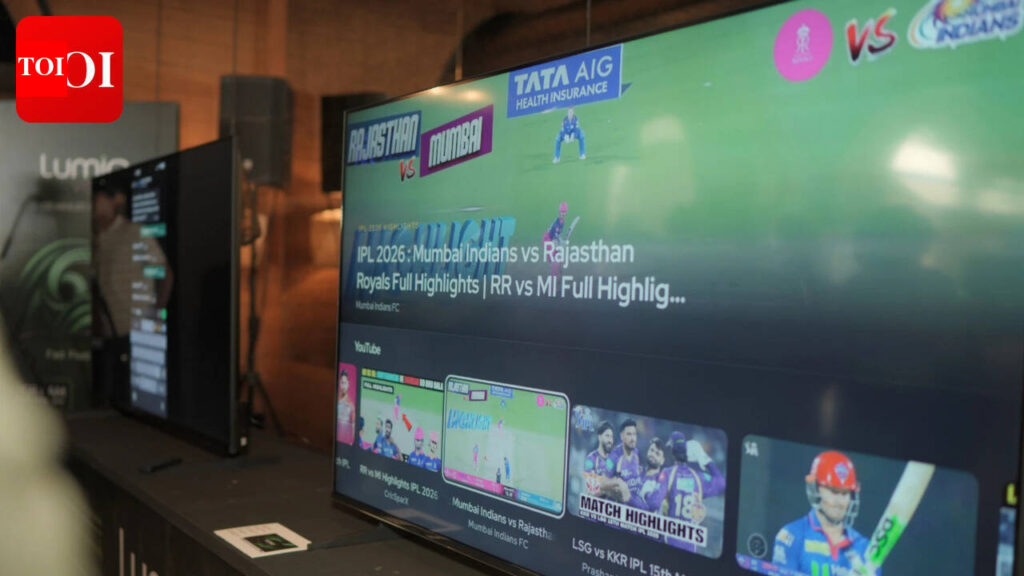
Table of Contents
The War Against Interface Lag
For most of us, the ‘smart’ part of a smart TV is where the experience usually falls apart. We’ve all dealt with the dreaded three-second delay between a remote click and the app opening, or the stuttering navigation of a home screen that feels like it’s running on hardware from 2015. Lumio is betting that the answer isn’t just more RAM, but a fundamental shift in processing priority. The Vision 9 is the company’s third attempt at perfecting this ‘zero-latency’ philosophy.
Priced at Rs 54,999 for the 55-inch model, the Vision 9 enters a crowded mid-range market where it has to fight against established giants like Sony and Samsung. On paper, it hits all the expected markers: a QD mini-LED panel, Google TV powered by Android 14, and three HDMI 2.1 ports for the gaming crowd. However, the real story here is the proprietary BOSS processor.
A Technical Deep Dive into the BOSS Architecture
The BOSS processor isn’t just a branding exercise. While Lumio remains tight-lipped about the exact chip architecture, early testing suggests a heavy emphasis on UI-thread priority. In traditional smart TVs, the SoC (System on a Chip) manages everything from image upscaling to network requests and UI rendering on a shared cycle. The BOSS processor appears to partition these tasks more effectively, ensuring that the interface remains responsive even while the TV is performing heavy background tasks like indexing a library or updating apps.
In practical terms, moving through the Google TV interface feels immediate. The transition from the home screen to an app like Netflix or Disney+ is nearly instantaneous, removing the friction that typically plagues mid-range sets. When paired with Android 14, which is already leaner than its predecessors, the Vision 9 feels more like a high-end tablet than a traditional television.
QD Mini-LED: Balancing Contrast and Bloom
The display is where the Vision 9 tries to punch above its weight. By utilizing a Quantum Dot (QD) mini-LED array, Lumio is attempting to bridge the gap between the perfect blacks of OLED and the searing brightness of traditional LED. The result is a punchy, vibrant image that handles HDR content with genuine intensity.
During initial testing with high-contrast 4K content, the local dimming performed admirably, though some minor blooming is visible around subtitles against a pitch-black background—a common trade-off in the mid-range mini-LED space. However, the color accuracy provided by the Quantum Dots ensures that skin tones look natural rather than oversaturated, making it a viable option for both cinema enthusiasts and gamers.
The Gaming Angle
With three HDMI 2.1 ports, Lumio is clearly courting the PS5 and Xbox Series X audience. These ports support high refresh rates and Variable Refresh Rate (VRR), which, combined with the BOSS processor’s efficiency, keeps input lag to a minimum. While it may not match the professional-grade latency of a dedicated LG OLED gaming monitor, it provides a seamless experience for the average living room setup.
At Rs 54,999, the Vision 9 isn’t trying to be the cheapest TV on the shelf, but it is trying to be the most efficient. If the speed-first argument continues to hold after long-term stress testing, Lumio might have found a viable niche: the TV for people who hate waiting.