Lululemon’s Great Wall Yoga Blunder: How a Japanese Drum Sparked a Nationalist Firestorm in China
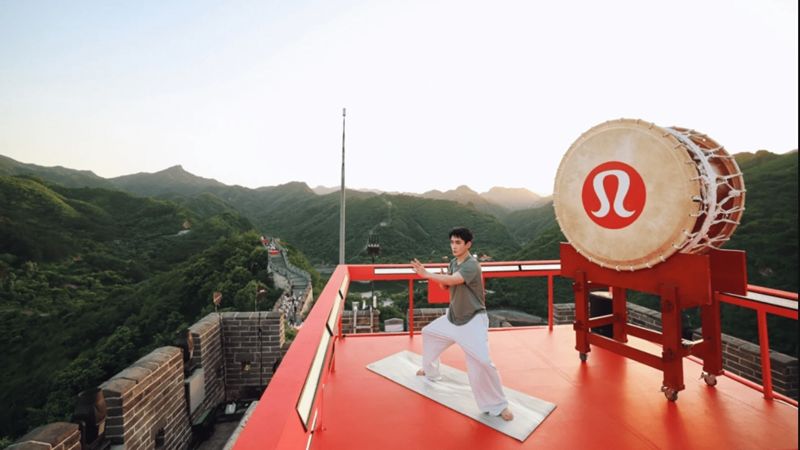
Table of Contents
The Percussion of a PR Crisis
For Lululemon, a yoga festival on the Great Wall of China was intended to be a pinnacle of brand synergy—wellness, heritage, and high-profile celebrity endorsement. Instead, it became a case study in the volatility of the Chinese consumer market. The catalyst was not the yoga, but the percussion. During a promotional event on May 30, 2026, the activewear giant featured a drum performance that social media users quickly identified not as traditional Chinese, but as Japanese Taiko.
In the hyper-connected ecosystem of Weibo and Douyin, the mistake transitioned from a technical error to a political statement in hours. The presence of Japanese-style instrumentation on the Great Wall—a symbol of national resilience and sovereignty—struck a nerve in a climate of surging nationalism. The resulting furor forced Lululemon to scrub its digital footprint and issue a formal apology, yet the damage underscores a precarious reality for Western brands: in China, a lack of cultural precision is often interpreted as a lack of respect.
- The Spark: Use of drums resembling Japanese Taiko instead of traditional Chinese percussion at a Great Wall event.
- The Reaction: Over 50 million views on Weibo, leading to accusations of cultural insensitivity and historical erasure.
- The Fallout: Lululemon and the HIIKO Drum Troupe issued apologies; all event content was deleted from official channels.
- The Context: This occurs amid a broader trend of “nationalistic consumption” where geopolitical tensions dictate brand loyalty.
The Technical Distinction: Taiko vs. Tanggu
To the uninitiated, a large wooden drum with a hide skin may seem universal. However, to ethnomusicologists and Chinese percussionists, the difference is stark. While both Japanese Taiko and Chinese Tanggu share ancestral roots—with many Japanese drumming styles having evolved from instruments introduced via China and Korea—they have diverged into distinct cultural markers.
Japanese Taiko drums are often characterized by their specific tensioning methods, the way the skin is tacked to the body, and the specific rhythmic styles of performance. Chinese percussionists, including Xu Yang who flagged the error on Weibo, pointed out that the form and performance style used in the Lululemon event were unmistakably Japanese. In a professional capacity, these distinctions are not merely academic; they are identities. When a brand claims to “pay tribute to Chinese culture” while utilizing the iconography of a historical rival, the contradiction creates an opening for intense public scrutiny.
Nationalism as a Market Force
The reaction to Lululemon is not an isolated incident of “cancel culture,” but rather a manifestation of a deeply rooted geopolitical sentiment. Under the leadership of Xi Jinping, Chinese nationalism has been integrated into the social and educational fabric of the country. The “century of humiliation”—referring to the period of foreign intervention and Imperial Japanese atrocities—is a central narrative in modern Chinese identity.
When the Great Wall is used as a backdrop, it ceases to be a mere tourist site and becomes a symbol of the state. Introducing elements of Japanese culture into this space is seen by many as an affront to national dignity. This sensitivity is amplified by the current state of Sino-Japanese relations, which remain strained over territorial disputes and historical grievances. For the modern Chinese consumer, purchasing from a brand is often a political act. Supporting a brand that “disrespects” the nation can lead to social ostracization, while leading the charge against such brands provides a sense of patriotic agency.
A Pattern of Western Brand Failures in China
Lululemon joins a growing list of Western companies that have underestimated the complexity of the Chinese landscape. The common thread is often a disconnect between a global corporate mandate and local cultural nuances.
“On a landmark site with strong symbolic meanings like the Great Wall, every detail should withstand scrutiny.” — User post on Weibo regarding the Lululemon event.
Historical precedents include the 2021 boycott of H&M and Nike. In that instance, the brands’ statements regarding forced labor in the Xinjiang region—while aligned with Western human rights standards—were viewed in China as interference in internal affairs and a slur against the nation’s integrity. Similarly, luxury houses like Versace and Coach have faced severe backlash for maps or labels that failed to designate Hong Kong as part of China or implied Taiwanese independence.
Comparative Analysis of Brand Missteps
| Brand | The Trigger | Perception in China | Outcome |
|---|---|---|---|
| Lululemon | Japanese Drums at Great Wall | Cultural Insensitivity/Disrespect | Apology, Content Deletion |
| H&M / Nike | Xinjiang Cotton Statements | Political Interference | Widespread Boycotts, App Removal |
| Versace/Coach | Map/Label Inaccuracies | Violation of Sovereignty | Formal Apologies, Product Recalls |
The Role of Celebrity Influence: The Zhu Yilong Factor
The involvement of actor Zhu Yilong added a layer of volatility to the situation. In China, celebrities are not just spokespeople; they are viewed as moral representatives of their fans. When the public perceived that Zhu had been placed in a compromising position—performing on a Japanese drum while ostensibly promoting Chinese culture—the backlash extended to the brand for “misleading” the artist.
Zhu’s studio was quick to distance the actor from the error, urging Lululemon to “verify the entire process.” This move was a necessary survival tactic. In the current regulatory and social climate, a celebrity’s association with a “politically incorrect” brand can lead to the loss of government endorsements or even the termination of their career. The pressure on Lululemon was therefore doubled: they were not only fighting a consumer boycott but also the potential loss of a key celebrity asset.
What This Means for Global Brands
The Lululemon incident reveals that the “standard” localization strategy is no longer sufficient. In the past, brands could rely on translation and local distributors. Today, they require Geopolitical Risk Assessment as part of their marketing workflow.
p>For companies operating in China, this means that every visual element—from a font choice to a musical instrument—must be vetted not just for aesthetic appeal, but for historical and political connotations. The “wellness” or “lifestyle” branding that works in North America or Europe can be completely overwritten by nationalist sentiment if a single detail is perceived as an insult. The practical implication is a move toward “hyper-localization,” where content is created by local teams with absolute autonomy and veto power over global campaign assets.Frequently Asked Questions
Why was a drum such a big deal for Lululemon?
The drum was perceived as a Japanese Taiko drum rather than a traditional Chinese one. Using a Japanese symbol at the Great Wall—a site of immense national pride—was seen as culturally insensitive and historically offensive given the fraught history between China and Japan.
What is the difference between a Taiko drum and a Chinese drum?
While both are large percussion instruments, Taiko drums have specific construction methods and performance styles unique to Japan. Chinese drums (such as the Tanggu) have different shapes and rhythmic traditions. To experts and nationalists, these are distinct cultural identities that should not be conflated.
How did the public find out about the mistake?
Users on Weibo and music experts analyzed the videos from the event, identifying the drums as Japanese. The story went viral, accumulating over 50 million views and prompting celebrity studios to demand explanations.
What was Lululemon’s official response?
Lululemon issued an apology stating that due to “limitations in professional knowledge,” they failed to identify the potential controversy. They vowed to be more rigorous in their planning and removed all related content from their social media.
Is this part of a larger trend in China?
Yes. This is part of a rise in hyper-nationalism and “patriotic consumption,” where consumers boycott brands that are perceived as disrespectful to Chinese sovereignty or culture.
Conclusion: The Cost of Cultural Blindness
Lululemon’s attempt to blend yoga with Chinese heritage ended in a digital firestorm because the brand failed to recognize that in China, culture is not just an aesthetic—it is a political boundary. The incident serves as a warning that the gap between “intended tribute” and “perceived insult” is narrow and fraught with risk.
As Western brands continue to seek growth in the East, the Lululemon China controversy highlights a fundamental truth: trust is built on precision. In a market where a drum can trigger a national crisis, the only way to maintain authoritativeness and trustworthiness is through an uncompromising commitment to cultural accuracy.