Lenovo’s Yoga Pro 9n Leak Hints at a High-Stakes Bet on Nvidia’s RTX Spark ‘Superchip’
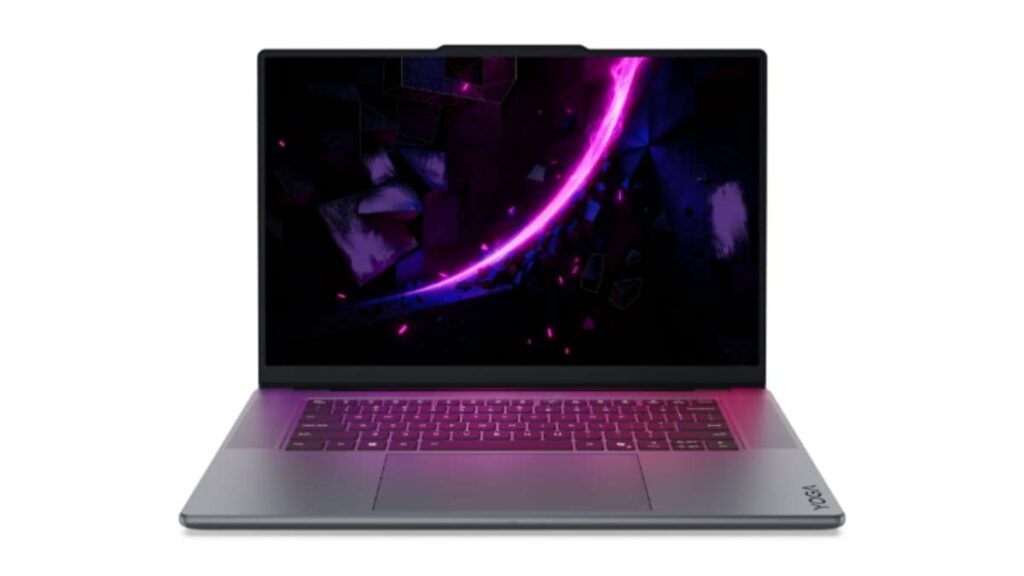
Table of Contents
A Departure from the Status Quo
The race to define the ‘AI PC’ has largely been a battle of incremental NPU additions and software tweaks. However, the emergence of the Lenovo Yoga Pro 9n suggests a more aggressive architectural shift. According to leaked renders and specifications first surfaced by Windows Latest, Lenovo is preparing to launch the first laptop powered by Nvidia’s RTX Spark, a “superchip” that threatens to upend the traditional CPU-GPU split found in most Windows machines.
For those unfamiliar with the technical pivot, the RTX Spark isn’t just a graphics card upgrade. Unveiled at GTC 2026, the chip is a tightly integrated system-on-a-chip (SoC) that combines a Grace-series CPU, a dedicated NPU, a modem, and an RTX GPU. By consolidating these components, Nvidia aims to solve the primary bottleneck of local AI: data latency between the processor and the accelerator. The Yoga Pro 9n is positioned as the primary vehicle for this vision, designed specifically to run sophisticated, low-latency AI personal agents directly on the hardware rather than relying on cloud-based API calls.
Familiar Chassis, Radical Internals
Visually, the Yoga Pro 9n isn’t breaking new ground. The leaked renders indicate that Lenovo is reusing the premium metal chassis from the Yoga Pro 9i (2026) model unveiled at CES earlier this year. This decision likely allows Lenovo to accelerate the time-to-market for the RTX Spark integration while maintaining the high build quality creators expect from the Pro line.
Under the hood, however, the specs are formidable. The leaked data suggests the 9n could support up to 128GB of RAM—a necessity given that local LLMs (Large Language Models) and AI agents are notoriously memory-hungry. This massive memory ceiling indicates that Lenovo isn’t targeting casual users, but rather power users and developers who need to keep complex AI models resident in memory without hitting swap files.
The machine is expected to feature a 15-inch PureSight Pro display with Dolby Vision, maintaining the high-color accuracy standards required for professional creative work. On the utility side, the inclusion of a dedicated Copilot key and a stylus-supported touchpad suggests a workflow heavily centered on multimodal AI interaction—where the user can sketch an idea and have the on-device agent refine it in real-time.
Connectivity and Power Dynamics
Integrating a “superchip” usually comes with a thermal and power penalty, but Lenovo claims “all-day” battery life for the 9n. Whether this is achievable will depend heavily on how Nvidia has optimized the power gating between the Grace CPU and the GPU cores.
The I/O layout remains comprehensive, mirroring the professional needs of the Yoga lineup. The left side reportedly houses two Thunderbolt 4 ports, an HDMI 2.1 port, and a 3.5mm jack. The right side provides the essential legacy and utility ports: a USB Type-A, a USB Type-C, and a full-size SD card reader, positioned alongside the power button and a physical camera shutter for privacy.
The Strategic Stakes
The launch of the Yoga Pro 9n is a significant bellwether for the industry. If the RTX Spark can deliver on its promise of seamless, on-device AI agents without draining the battery in three hours, it provides a viable blueprint for the future of computing that challenges the current dominance of x86 architectures. While we expect a “Thunder Gray” colorway at launch, the real story is whether this integration can actually make the “AI PC” more than just a marketing buzzword.
The Lenovo Yoga Pro 9n is anticipated to hit the market in Fall 2026, coinciding with the broader rollout of Nvidia’s new consumer silicon ecosystem.