Lenovo’s ThinkStation P4 Targets AI Workflows with Ryzen 9000 and Blackwell GPUs
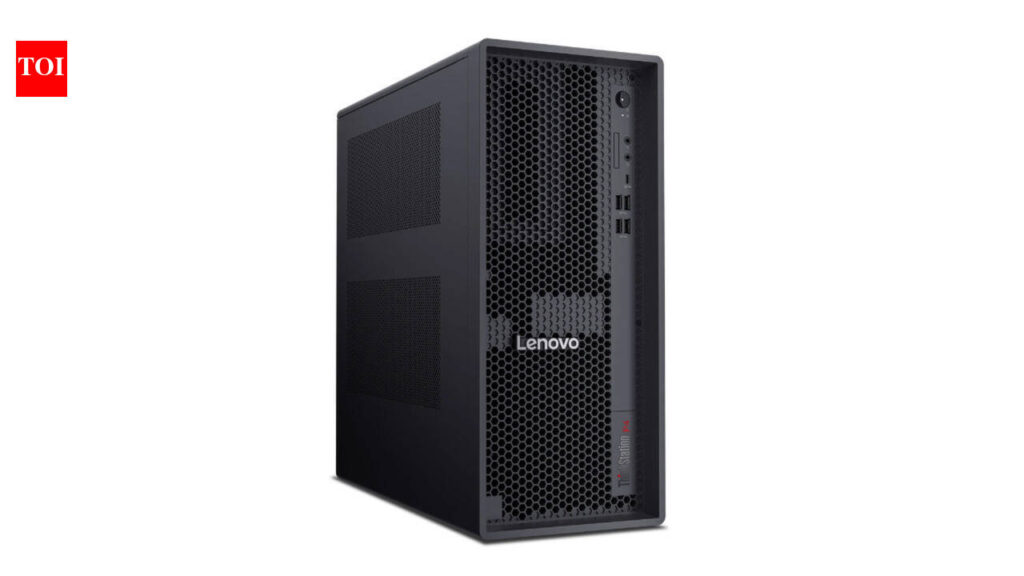
Table of Contents
A Heavy Lift for Local AI
Lenovo is doubling down on the local AI compute trend with the official launch of the ThinkStation P4. While the consumer market has been focused on ‘AI PCs’ with modest NPUs, the P4 is a different beast entirely. It is designed for engineers, data scientists, and 3D artists who need to run large language models (LLMs) or complex simulations locally without relying on the latency or cost of cloud instances.
The core of the P4 is built around AMD’s latest Ryzen PRO 9000 Series processors. More importantly, Lenovo has opted for the variants integrated with 3D V-Cache. In a workstation environment, this additional layer of L3 cache is critical for reducing memory latency in compute-heavy tasks like finite element analysis or high-poly rendering, where the CPU often spends significant time waiting for data from the RAM.
The Blackwell Advantage
While the CPU provides the foundation, the real draw of the ThinkStation P4 is its graphics capability. The machine arrives equipped with the Nvidia RTX PRO 6000 based on the Blackwell architecture. Moving from the previous Ada Lovelace generation, the Blackwell GPUs bring a massive leap in tensor core performance and memory bandwidth, specifically tuned for FP8 and FP4 precision—the gold standard for efficient AI inference.
By pairing the Blackwell GPU with the Ryzen 9000, Lenovo is addressing the ‘bottleneck’ problem. High-end GPUs are often starved by slow CPUs or insufficient PCIe lanes; the P4 architecture ensures that the data pipeline from the NVMe storage to the GPU is wide enough to keep the Blackwell cores saturated during heavy training loads.
Thermal Management and Modular Design
Powering a Blackwell GPU and a 3D V-Cache processor generates immense heat, a problem Lenovo has addressed through a redesigned chassis. The P4 utilizes a tool-less interior design, allowing IT managers to swap components or add storage without dismantling the entire frame. The cooling system leverages a high-pressure airflow path that isolates the GPU heat from the CPU heatsink, preventing the thermal throttling that often plagues smaller ‘workstation’ towers.
The machine also caters to the enterprise security market. Since it uses the Ryzen PRO line, it includes hardware-level security features and remote management capabilities that aren’t available on standard consumer chips, making it a viable option for government and healthcare sectors where data residency is mandatory.
Positioning in the Professional Market
The ThinkStation P4 enters a crowded field, competing directly with the Dell Precision and HP Z-series workstations. However, Lenovo’s decision to lean heavily into the 3D V-Cache and Blackwell combination suggests a specific play for the ‘AI Developer’ persona. This isn’t just a PC for CAD software; it’s a node for developing the next generation of AI applications.
For most users, the cost of the RTX PRO 6000 alone will put this machine in the premium bracket, but for a studio running PyTorch or TensorFlow locally, the investment is a trade-off against monthly cloud subscription fees. As enterprises shift from experimenting with AI to deploying specialized local models, hardware like the P4 becomes the essential infrastructure of the modern digital office.


