Lenovo Floods MWC 2026 With Modular Ambitions and a Foldable Legion Go
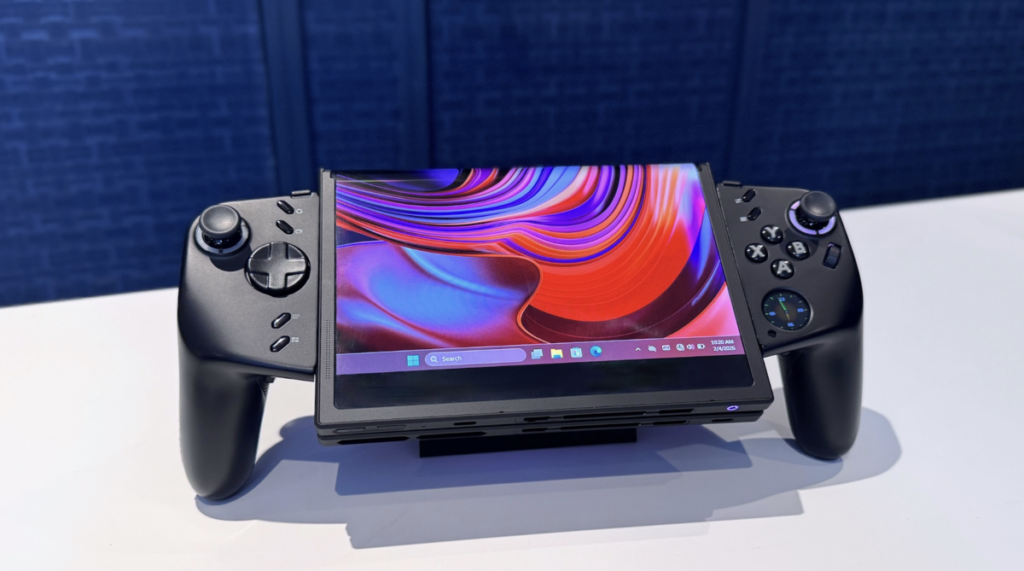
Table of Contents
Beyond the Laptop: Lenovo’s Hardware Experimentation
Lenovo has arrived at Mobile World Congress (MWC) 2026 with a strategy that feels less like a product launch and more like a laboratory reveal. While the company has already dominated the early part of the year with a string of CES wins, its Barcelona showcase is an aggressive bet on a more fluid, modular future for computing.
The centerpiece of the attention is undoubtedly the Legion Go Fold Concept. This device attempts to bridge the gap between a handheld gaming console and a full-fledged Windows workstation. It features a 7.7-inch POLED display that expands into an 11.6-inch canvas. The real engineering feat, however, is the integration of a detachable wireless keyboard that transforms the handheld into a clamshell laptop, with one of the controllers doubling as a vertical mouse. Under the hood, Lenovo is running an Intel Lunar Lake chip paired with 32GB of RAM—specs that suggest this isn’t just a design exercise, but a prototype with a clear path toward production.
Equally provocative is the ThinkBook Modular AI PC Concept. In an era where laptops are increasingly glued shut, Lenovo is pivoting toward the ‘Framework’ philosophy of user-replaceable components. The concept utilizes pogo-pin connectors to allow users to swap ports and modules on the fly. It also features a detachable secondary display and keyboard, enabling a highly adaptable workspace that can shift between a traditional laptop and a dual-monitor setup. By prioritizing a modular architecture, Lenovo is signaling a shift toward device longevity and sustainability, moving away from the planned obsolescence typical of the enterprise sector.
The Push Toward Spatial and AI Interaction
Lenovo is also doubling down on niche display technology with the Yoga Book Pro 3D Concept. Aimed at 3D creators, the dual-display model uses eye-tracking technology to render glasses-free 3D visuals. Powered by an Intel Core Ultra 7 and an Nvidia GeForce RTX 5070, the machine is designed for heavy lifting. A particularly tactile addition is the set of snap-on pads for the lower touchscreen, which trigger specific contextual menus, attempting to solve the inherent clunkiness of 3D creative workflows on a laptop.
The company’s foray into ambient AI is represented by two tabletop companions: the AI Work Companion and the AI Workmate. The former functions as a sophisticated desk clock and secretary, using a ‘Thought Bubble’ interface to sync schedules across devices. The latter, the AI Workmate, is a more anthropomorphic device capable of local AI processing, document scanning, and projecting content onto nearby surfaces. Together, these devices represent Lenovo’s attempt to move AI off the screen and into the physical environment of the home office.
Refining the Core: Aura Edition and Enterprise Updates
Amidst the concepts, Lenovo is shipping tangible updates to its flagship lines. The Yoga 9i 2-in-1 Aura Edition arrives with an Intel Core Ultra Series 3 chip and a refined, lighter chassis. Notably, Lenovo has listened to user feedback by re-introducing the headphone jack and adding a magnetic attachment for the Yoga Pen Gen 2, which enables a new dedicated Canvas mode. The device is slated for a May release with a price tag of $1,949.
The enterprise segment sees a broader refresh of the ThinkPad and ThinkBook portfolios. The T-Series models have been overhauled with a focus on repairability, featuring improved internal accessibility and upgraded 5MP cameras. These updates, alongside the rugged ThinkTab and new ThinkVision monitors, reinforce Lenovo’s current obsession with the ‘Right to Repair,’ a trend that began with the Space Frame design of the ThinkPad X1 Carbon Gen 14 Aura Edition earlier this year.
While much of the MWC showcase consists of prototypes, the consistency of the hardware specs—specifically the use of Lunar Lake and RTX 50-series GPUs—indicates that Lenovo is no longer just dreaming about modular, foldable, and 3D computing. They are building the infrastructure to sell it.


