Lenovo Doubles Down on Rollables at CES 2026 With Expanding ThinkPad and Legion Concepts
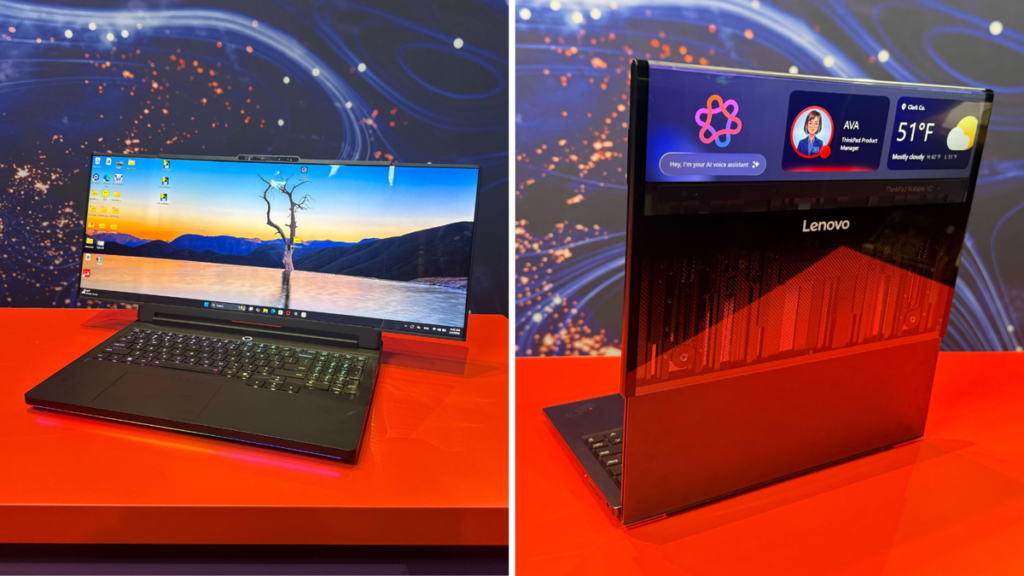
Table of Contents
Beyond the Fold: Lenovo’s New Bet on Expanding Screens
Six months after the commercial debut of the world’s first rollable laptop, Lenovo is returning to the concept stage to push the boundaries of form factor. At CES 2026, the hardware giant unveiled two new prototypes that challenge the traditional limits of screen real estate: the business-centric ThinkPad Rollable XD Concept and the powerhouse Legion Pro Rollable Concept.
While Lenovo cautioned that these devices remain delicate prototypes, the level of polish suggests the company is moving beyond mere curiosity and toward a viable product roadmap. Both machines leverage ultra-thin, flexible OLED panels—a technology Lenovo has been refining since the introduction of the ThinkBook Plus Gen 6 Rollable AI. By shifting the mechanical housing and motor systems, Lenovo is experimenting with not just how a screen rolls, but in which direction it expands.
ThinkPad Rollable XD: Verticality and Transparency
The ThinkPad Rollable XD Concept departs from the horizontal expansion seen in previous iterations, instead opting for a vertical growth spurt. The display can transition from a standard 13.3-inch screen to nearly 16 inches in height, effectively increasing the usable vertical area by 50% in a matter of seconds. This is particularly useful for developers or analysts who typically struggle with the limited verticality of 13-inch laptops.
The most striking design choice, however, is the 180-degree wrap. The OLED panel extends over the top edge of the lid, creating a secondary “world-facing” display on the back. To achieve this, Lenovo partnered with Corning to develop a specialized transparent glass cover. This allows users to see the internal fiber cables and motors that drive the rolling mechanism, turning the laptop’s engineering into a visible design element.
Interaction on the XD is handled via a dedicated button or through touch-sensitive edges on the lid, allowing users to manually dial in the exact screen height. Notably, the voice and gesture controls seen in last year’s prototypes have been omitted here, suggesting a pivot toward more tactile, reliable input methods for the business segment.
Legion Pro Rollable: The ‘Arena’ Experience
If the ThinkPad is about productivity, the Legion Pro Rollable is about sheer spectacle. This concept features a high-refresh 240Hz OLED display that expands laterally from both sides. Lenovo has defined three distinct states for the device:
- Focus Mode: A standard 16-inch display for portable gaming.
- Tactical Mode: An expanded 21.5-inch workspace.
- Arena Mode: A full two-foot expansion, essentially transforming the laptop into a standalone ultra-wide monitor without the need for external peripherals.
Under the hood, the Legion Pro Rollable is designed to mirror the specifications of the current Legion Pro 7i series. This means it’s built to house top-tier Intel Core processors and the Nvidia GeForce RTX 5090 GPU. However, that power comes with a cost. During demonstrations, the device emitted significant heat, even without a demanding game running, highlighting the thermal challenges of cramming high-end silicon into a chassis that must also accommodate complex rolling motors.
The build quality is nearly there, though not perfect. Some superficial marking was visible on the screen during unfurling, and subtle creasing appeared where the OLED panel retreats into its housing. Lenovo claims the mechanism is currently rated for 25,000 roll cycles, a metric that will be critical for any eventual consumer release.
The Price of Innovation
Lenovo’s trajectory suggests these aren’t just “vaporware” exercises. The company has a track record of moving from concept to market, as seen with the original rollable laptop. However, the financial barrier remains steep. Given that the ThinkBook Plus Gen 6 carried a retail price of $3,499.99, any market-ready version of the XD or the Legion Pro Rollable will likely target the ultra-premium enthusiast segment, potentially pushing the five-figure mark for the gaming variant.


