Leaked Specs for Surface Pro 13 Hint at Qualcomm Snapdragon X Elite Shift and OLED Panels
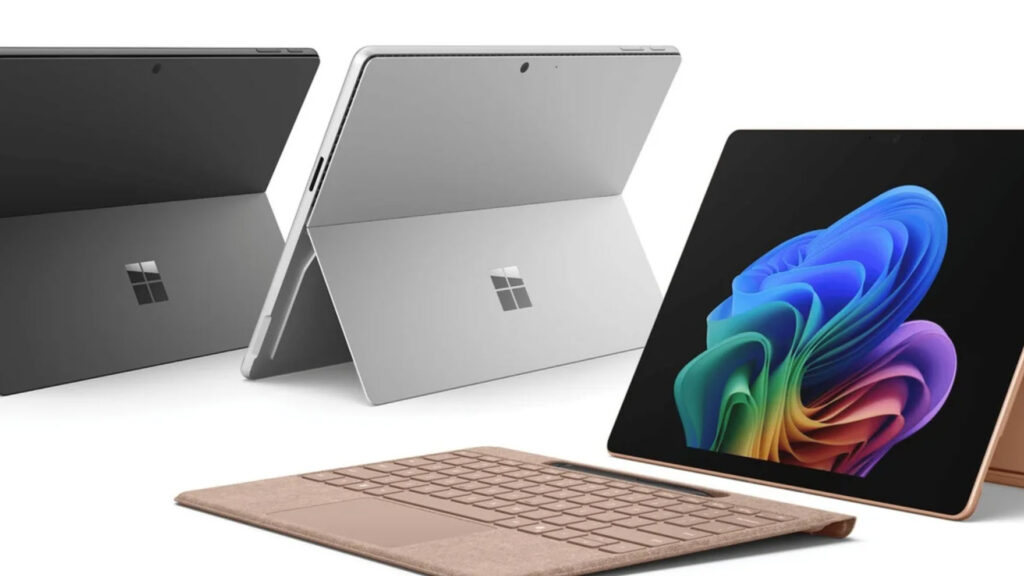
Table of Contents
Microsoft’s ARM Pivot Intensifies
Microsoft has been aggressively pushing a new hardware narrative since Computex, centering on a fragmented but powerful silicon strategy. While the company recently refreshed its laptop lineup, new leaks regarding the Surface Pro 13 suggest that Microsoft is doubling down on Qualcomm’s ARM-based architecture to solve the chronic battery life and thermal issues that have plagued the Pro line for years.
The leaked specifications point to the integration of the Qualcomm Snapdragon X Elite, specifically a variant featuring 12 Prime Oryon cores. This is a significant departure from the Intel-centric heritage of the Surface Pro, mirroring the shift we’ve seen in the MacBook Air’s transition to Apple Silicon. By utilizing the Oryon CPU, Microsoft is aiming for a level of performance-per-watt that x86 architecture has struggled to match in the ultra-portable tablet form factor.
Display and Input Evolution
Perhaps the most striking detail in the leak is the mention of an OLED panel. For years, Surface Pro users have dealt with high-quality but power-hungry LCDs; a move to OLED would not only improve contrast and color accuracy for creative professionals but also potentially extend battery life when using dark modes.
The leaks also introduce the “Surface Pro 13 inch FlexKeyboard.” Unlike the traditional Type Cover, which relies on a physical magnetic connection for input, the FlexKeyboard is rumored to support a wireless connection. This suggests a modular design where the keyboard can operate independently of the tablet’s chassis, allowing users to set the screen at a distance—a move that could redefine the “laptop mode” experience for those who prioritize ergonomic screen height.
The AI Hardware Layer
The Surface Pro 13 is being positioned as a cornerstone for Microsoft’s “AI PC” push. Central to this is the Hexagon NPU, which is reportedly capable of delivering up to 80 TOPS (Tera Operations Per Second) of compute in INT8 precision. This NPU is designed to offload AI tasks—such as live captions, background blur, and local LLM processing—away from the CPU and GPU, significantly reducing power draw.
To balance this AI horsepower, the device is expected to ship with 32GB of soldered RAM. While the lack of upgradeable memory is a point of contention for power users, it is a necessary trade-off for the high-bandwidth memory requirements of the Snapdragon X Elite platform.
Connectivity and Endurance
On the storage front, the device remains pragmatic. While the 32GB of RAM is fixed, the PCIe 3.0 SSD is reportedly replaceable, with configurations available in 256GB, 512GB, and 1TB. This maintains the serviceability that has made the Surface Pro a favorite for corporate IT fleets.
Connectivity is handled via two USB-C 4.0 ports, which will manage everything from high-speed data transfer and external display output to charging. The most compelling claim, however, is the battery life. Early data suggests 15.5 hours of continuous video playback, a figure that would put the Surface Pro 13 in direct competition with the iPad Pro and MacBook Air in terms of endurance.
The device is expected to be available in three finishes: Black, Platinum, and a new “Dune” colorway. If these leaks hold true, we can expect a formal announcement around June 16th.