Jet Fuel Spikes and Pump Panic: How Geopolitical Conflict is Rewiring US Energy Costs
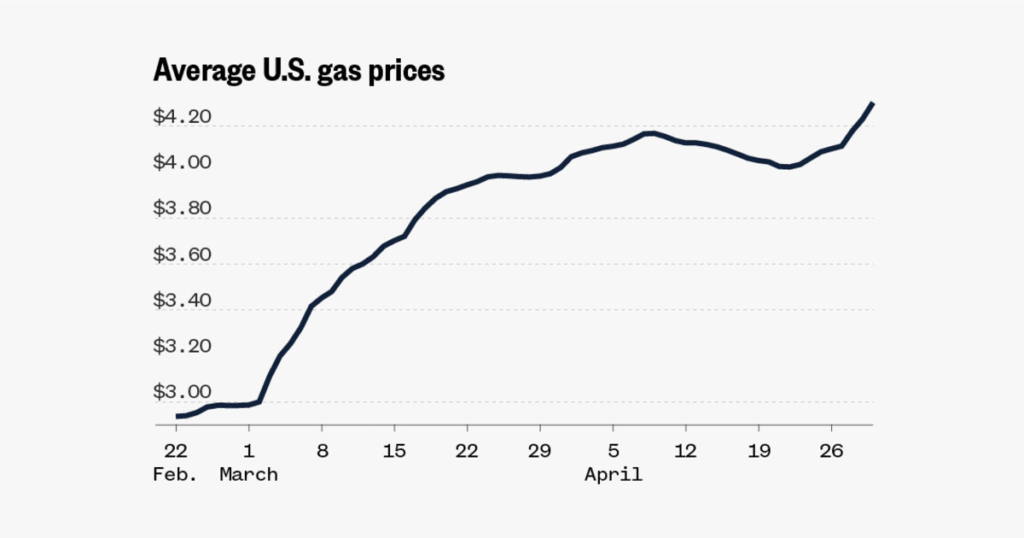
Table of Contents
The Cost of Instability
The American consumer is feeling the direct financial weight of the escalating conflict between the U.S., Israel, and Iran. What began as a geopolitical flashpoint has rapidly translated into a domestic economic burden, with national gas averages climbing toward $4.50 per gallon. According to the latest data from AAA, prices have surged by roughly 50% since the onset of the conflict, reflecting a volatile global oil market that is struggling to maintain stability as supply lines constrict.
The trajectory of these prices has not been a linear climb but rather a series of violent oscillations. For several weeks in early spring, market analysts predicted a downward trend for April, fueled by hopes of a lasting ceasefire. However, as diplomatic efforts stalled and military tensions reignited, those gains were erased almost overnight, sending prices to new highs that are straining household budgets across the country.
A Divided Geography of Fuel
The impact is not being felt uniformly across the United States. While the national average tells one story, the state-level data reveals a stark divide in energy accessibility and cost. In the West Coast and Pacific regions, the situation has reached a critical point. California has seen prices eclipse the $6 per gallon mark, maintaining its position as the most expensive state in the union. Meanwhile, Alaska, Hawaii, Illinois, Nevada, Oregon, and Washington are all hovering near the $5 threshold.
Conversely, the middle of the country continues to see lower relative costs, though the upward trend remains pervasive. This disparity is often a result of regional refinery capacities and the specific logistics of fuel transport, but the overarching driver remains the global crude price, which acts as the baseline for all domestic pricing.
Beyond the Pump: The Aviation Crisis
While the focus is often on the commute, the volatility in the energy sector is hitting the aviation industry with far greater severity. Jet fuel, which is derived from the same crude oil refining process as gasoline, has seen a dramatic price surge. This has created a cascading effect through the travel sector: as fuel costs eat into operating margins, airlines are forced to hike airfares to compensate.
The most visible casualty of this energy volatility is Spirit Airlines. The carrier, which built its entire business model on ultra-low-cost fares for budget-conscious travelers, has found its margins completely eroded. The company’s recent move toward shuttering operations underscores a grim reality: when energy costs spike rapidly, the most lean operators are the first to collapse. This isn’t just a story of bad management, but a reflection of how sensitive the low-cost carrier model is to external shocks in the oil market.
Market Volatility and the ‘Ceasefire Effect’
The current price environment is a textbook example of how markets trade on perception as much as reality. Each announcement of a ceasefire or a diplomatic breakthrough has led to brief, sharp declines in oil prices. However, the lack of a permanent resolution means that traders are pricing in a ‘risk premium,’ keeping costs elevated even during periods of relative quiet.
As long as the threat of supply disruption in the Strait of Hormuz or other critical oil corridors persists, the U.S. economy remains vulnerable to these sudden spikes. For the average driver, this means the stability of the pump is now inextricably linked to the unpredictable nature of Middle Eastern diplomacy.