The Lethal Injection Crisis: How Tennessee’s Botched Execution Exposes the Fragility of State Pharmacy Procurement
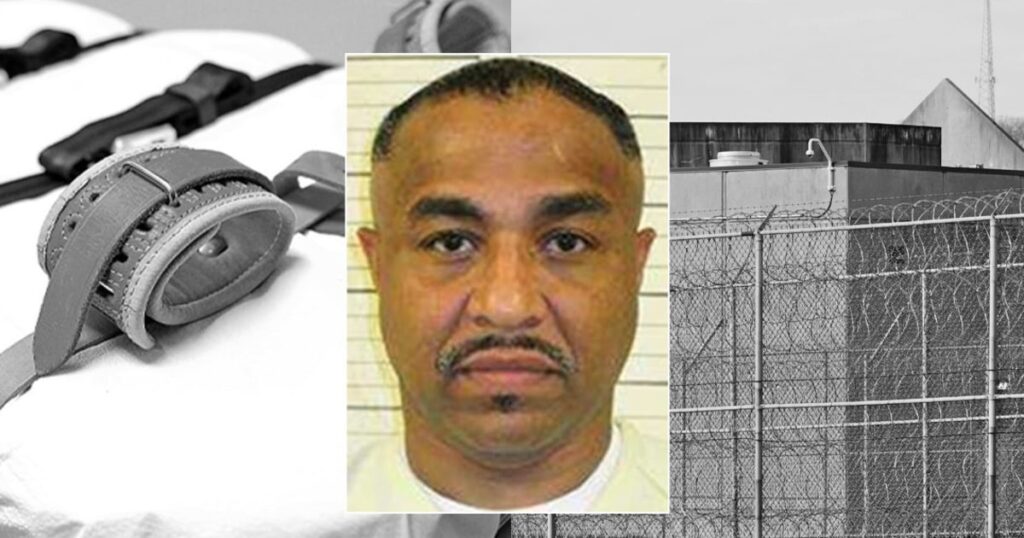
Table of Contents
The Precision of Failure
In the sterile environment of a Tennessee execution chamber, the margin for error is supposed to be zero. However, the recent failed execution of a state prisoner has reignited a fierce debate over the intersection of medicine, technology, and the state’s ability to legally kill. At the center of the fallout is a physician who maintained that his primary goal was to prevent unnecessary suffering—even as the state’s chemical protocol failed in real-time.
The incident was not merely a medical mishap but a systemic collapse. Reports indicate that the pharmacological cocktail intended to induce a rapid, painless death failed to take hold, leading to a prolonged and agonizing ordeal for the inmate. For the physician tasked with overseeing the process, the situation transitioned from a clinical procedure to a crisis of ethics and efficacy.
The Procurement Shadow Market
The core of the issue lies in how states like Tennessee source their drugs. For years, major pharmaceutical companies, led by European manufacturers and later U.S. firms, have implemented strict policies against selling drugs for use in executions. This has forced state departments of corrections to pivot toward a fragmented, often opaque supply chain.
When states cannot buy from established distributors, they turn to compounding pharmacies. These facilities create customized versions of drugs, which often lack the rigorous quality control and stability testing of mass-produced pharmaceuticals. The result is a volatility in drug potency; a dose that should be lethal may be inert, or a drug meant to sedate may fail to act, leaving the prisoner conscious during the administration of paralytics.
This procurement crisis has created a dangerous technical gap. The state relies on a specific chemical sequence—typically a sedative, a paralytic, and potassium chloride—but when the first link in that chain is compromised by poor pharmaceutical grade or improper storage, the entire protocol becomes a violation of the Eighth Amendment’s prohibition against cruel and unusual punishment.
Medical Ethics vs. State Mandates
The physician involved in the botched attempt found himself in an impossible position. While professional medical associations, including the American Medical Association (AMA), explicitly forbid members from participating in executions, state pressure often recruits doctors under the guise of “ensuring humanity.”
The doctor’s assertion that he “didn’t want the prisoner to suffer” highlights the cognitive dissonance of the role. He was tasked with utilizing technology and chemistry to end a life, but the tools provided by the state were fundamentally flawed. This failure is not an isolated event; it mirrors similar botches in Ohio and Arizona, where the use of midazolam—a sedative not designed for general anesthesia—has led to reports of inmates gasping for air and struggling on the gurney.
The Shift Toward Alternative Methods
As the pharmaceutical supply chain continues to tighten, Tennessee and other jurisdictions are reconsidering their technical approach. Nitrogen hypoxia—the method recently adopted by Alabama—is being viewed as a high-tech alternative to the chemistry-dependent lethal injection. By replacing oxygen with nitrogen, the state bypasses the need for a multi-drug cocktail and the precarious sourcing of pharmaceutical-grade sedatives.
However, critics argue that moving from flawed chemistry to experimental gas chambers is simply swapping one form of technical failure for another. The fundamental problem remains: the state is attempting to apply clinical precision to an act that the medical community fundamentally rejects, leading to outcomes that are neither clinical nor precise.