Israel Seizes Beaufort Castle: The Strategic High Ground in Lebanon’s South
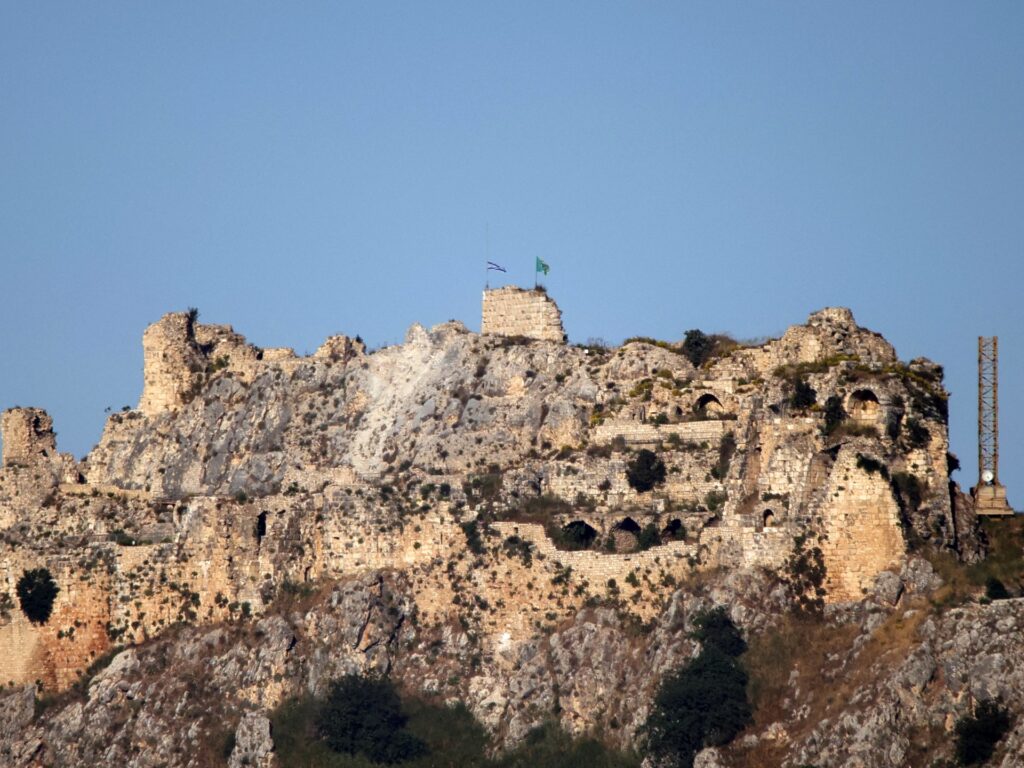
Table of Contents
The High Ground of the Litani
The Israeli military has announced the capture of Beaufort Castle, a medieval fortress perched on a rocky hilltop in southern Lebanon. The operation, confirmed Sunday, sees the Israeli flag flying once again over a site that has historically served as one of the most contested strategic vantage points in the Levant.
Defence Minister Israel Katz announced the seizure during a memorial ceremony for soldiers of the 1982 war, framing the move as a critical step in establishing a permanent security zone. “Our heroic soldiers have captured Beaufort once again and will remain there,” Katz stated, signaling that this is not a temporary raid but a calculated occupation of high ground.
The fortress, known in Arabic as Qalaat al-Shaqif, sits approximately 700 meters above sea level. While its 12th-century Crusader walls are of historical interest, its current value is purely tactical. From its peaks, Israeli forces gain an unobstructed line of sight over the Litani River, the city of Nabatieh—Lebanon’s fifth largest urban center—and deep into the western Bekaa Valley. Crucially, the position allows for real-time monitoring of movement across northern Galilee and as far as the occupied Golan Heights.
Tactical Advantages and the Golani Brigade
The seizure was executed by the Golani Brigade following several days of intensified airstrikes and ground maneuvers in the rugged terrain surrounding the castle. By securing the ridge, the IDF has effectively neutralized Hezbollah’s ability to use the heights for rocket launches or observation of Israeli troop movements in the Galilee panhandle.
The tactical advantage is twofold: signal intelligence and visual reconnaissance. In modern electronic warfare, holding the highest physical point allows for more effective deployment of surveillance drones and the interception of communications. For Hezbollah, the loss of Beaufort means a blind spot in their southern defensive line and a persistent Israeli eye over the towns and villages surrounding Nabatieh.
This operation is part of a broader, deeper push into Lebanese territory ordered by Prime Minister Benjamin Netanyahu. Israeli forces now occupy roughly 2,000 square kilometers of Lebanese land—nearly one-fifth of the country—marking the most extensive invasion of the northern neighbor in over 25 years.
Escalation and Forced Displacement
The capture of the castle follows a period of severe escalation that began on February 28, following the onset of the US-Israel war on Iran. Hezbollah entered the fray on March 2, launching missiles toward Haifa in response to the death of Iranian Supreme Leader Ali Khamenei. Since then, the conflict has devolved into a series of high-intensity maneuvers that have largely ignored previous ceasefire agreements.
The humanitarian cost of this territorial expansion is mounting. The Lebanese Ministry of Public Health reports over 3,412 deaths and 10,269 wounded since early March. On Monday, the Israeli army expanded its operational perimeter, issuing forced displacement orders for seven villages, including Houmine al-Faouqa and Jbaa. Residents were ordered to evacuate immediately, moving at least 1,000 meters away from affected areas to avoid imminent strikes.
As the IDF consolidates its grip on the Beaufort ridge, the focus shifts to whether this newly established security zone will serve as a permanent buffer or a springboard for further incursions into the Bekaa Valley. For now, the capture of the “beautiful fortress” serves as a stark signal of Israel’s intent to reshape the security geography of southern Lebanon through direct territorial control.