Insta360 Luna Ultra: A Leica-Powered Gimbal Camera Aiming to Disrupt the Compact Vlogging Market
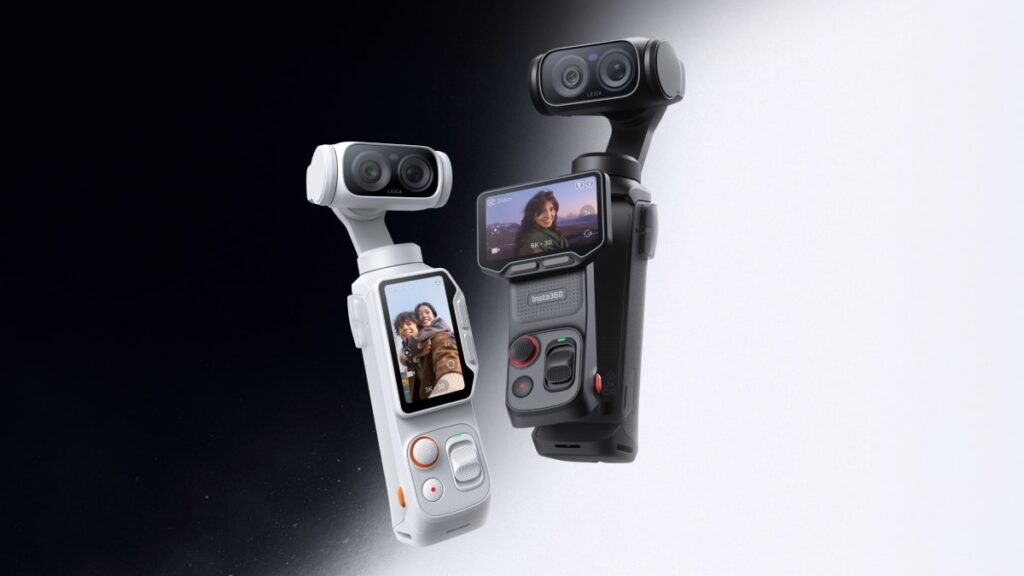
Table of Contents
A New Convergence of Optics and Stabilization
For years, content creators have faced a persistent trade-off: carry a bulky DSLR with a separate gimbal for cinematic stability, or settle for the convenience of a smartphone that, while capable, often lacks the optical depth and versatility of a dedicated lens. The Insta360 Luna Ultra arrives as a direct attempt to bridge this gap, merging Leica-engineered glass with an integrated three-axis mechanical gimbal and a heavy dose of AI processing.
Unlike traditional action cameras that rely heavily on electronic image stabilization (EIS)—which can often lead to “warping” or cropping in wide-angle shots—the Luna Ultra utilizes a physical gimbal system. This means the sensor remains level while the hardware moves, preserving the full field of view and providing a level of smoothness that software alone cannot replicate. By partnering with Leica, Insta360 is signaling a move away from the “action-cam” stigma and toward a professional-grade imaging tool.
- Optical Pedigree: Integration of Leica Summicron lenses ensures superior color science and contrast.
- Hardware Stability: A three-axis mechanical gimbal replaces software-only stabilization for organic, cinematic motion.
- Hybrid Control: A detachable 2-inch OLED screen allows for versatile monitoring and remote operation.
- Processing Power: A triple-chip architecture including a Qualcomm 4nm AI chip for real-time subject tracking.
The Hardware Breakdown: Leica Optics and Sensor Geometry
The centerpiece of the Luna Ultra is its dual-camera array. The primary lens is a Leica Summicron, paired with a 1-inch sensor. In the world of compact cameras, the “one-inch” mark is the gold standard for balancing portability with low-light performance. With an f/1.8 aperture and a 20mm-equivalent focal length, the main camera is designed to capture wide, detailed vistas with a natural bokeh that smartphone sensors struggle to emulate without artificial blurring.
To address the common limitation of wide-angle gimbal cameras—the inability to get close to a subject without losing quality—Insta360 has included a dedicated telephoto lens. This secondary system utilizes a 1/1.3-inch sensor with an f/2.0 aperture and a 60mm-equivalent focal length. This allows the device to achieve up to 12x zoom, making it viable for B-roll and detail shots that would otherwise require a lens swap on a traditional mirrorless setup.
Technical Specifications Comparison
| Feature | Main Camera | Telephoto Camera |
|---|---|---|
| Sensor Size | 1-inch | 1/1.3-inch |
| Aperture | f/1.8 | f/2.0 |
| Focal Length | 20mm equivalent | 60mm equivalent |
Engineering Stability: The Three-Axis Gimbal System
While the lenses grab the headlines, the gimbal is where the Luna Ultra earns its keep. Mechanical stabilization is fundamentally different from the hypersmoothing found in GoPros. The Luna Ultra’s system covers pan, tilt, and roll movements with a control speed of 210 degrees per second. For the user, this translates to an ability to track fast-moving subjects without the “robotic” look of software stabilization.
With an accuracy of ±0.005 degrees, the device is capable of holding a precise horizon even during erratic movement. This is particularly critical for 8K recording, where every shake is magnified. When combined with the Qualcomm 4nm AI chip, the camera doesn’t just stabilize; it anticipates. The AI-powered tracking identifies subjects in the frame and instructs the gimbal motors to follow them with precision, effectively acting as a robotic cameraman for solo creators.
Processing Power and the Triple-Chip Architecture
Recording 8K video and managing real-time AI tracking requires significant computational overhead. Insta360 has opted for a triple-chip design to prevent the overheating and lag often associated with high-resolution compact cameras. Two dedicated imaging processors handle the heavy lifting of the 8K data stream and Dolby Vision HDR mapping, while the Qualcomm AI chip manages the computer vision tasks.
The inclusion of Dolby Vision is a strategic move. By recording in a high-dynamic-range format, the Luna Ultra can preserve detail in both the brightest highlights and the deepest shadows, a common failure point for small sensors in high-contrast environments (such as filming a subject in front of a bright window).
Evaluating the Bundles: Standard vs. Creator
The pricing structure reflects two different user personas. The Standard Bundle at $769.99 is aimed at the enthusiast who already owns a microphone and tripod ecosystem. It provides the core hardware—the camera, a protective cover, and a wrist strap—essentially offering the “brain” of the operation.
However, the Creator Bundle at $969.99 is where the device becomes a complete production kit. The addition of the Battery Handle is perhaps the most critical upgrade; given the power draw of 8K recording and active gimbal motors, the base battery may struggle with long-form shoots. The Mic Pro Transmitter also addresses the one weakness of all integrated cameras: onboard microphones are rarely sufficient for professional work.
What This Means for Creators
The Luna Ultra is effectively trying to replace the “Smartphone + DJI OM Gimbal” setup. For a vlogger, this means fewer cables, no need to balance a phone manually, and significantly better optical quality thanks to the Leica glass. It shifts the workflow from “setup and record” to “power on and shoot,” which is vital for street photography and fast-paced travel content.
Practical Considerations and Limitations
Despite the impressive specs, there are trade-offs. The 8K resolution, while impressive, creates massive file sizes that can clog storage quickly and require powerful computers for editing. Furthermore, while the 2-inch OLED screen is detachable—allowing for remote monitoring—it introduces another component that can be lost or damaged in the field.
There is also the question of the 12x zoom. Because this is a hybrid of optical and digital zoom, the quality at 12x will not match a dedicated telephoto lens on a full-frame camera. It is a tool for convenience, not a replacement for a professional zoom lens.
Frequently Asked Questions
Can the Insta360 Luna Ultra record 8K video for long periods?
Yes, it supports 8K recording, but due to the high data rate and heat generation of the triple-chip system, users are encouraged to use the Battery Handle included in the Creator Bundle to ensure sustained power and thermal management.
How does the Leica partnership actually improve the image?
Leica’s involvement focuses on the Summicron lens design and color calibration. This results in higher contrast, reduced chromatic aberration, and a more natural color reproduction compared to standard action camera lenses.
Is the OLED screen waterproof?
While the main camera body is designed for durability, the detachable screen’s water resistance is lower than the main unit. It is recommended to keep the screen detached or protected when filming in heavy rain or near water.
Does the AI tracking work with any object?
The Qualcomm 4nm chip is optimized for human faces and bodies, but it can also track high-contrast objects. The accuracy is significantly higher than previous generations, reducing the “drift” often seen in AI trackers.
What is the difference between the Standard and Creator bundles?
The Standard bundle ($769.99) includes the camera and basic protection. The Creator bundle ($969.99) adds the Battery Handle, Mic Pro Transmitter, and a Wide-Angle Lens, making it a more complete kit for professional production.
The Verdict: A New Category of Tool
The Insta360 Luna Ultra is not trying to be a GoPro, nor is it trying to be a Sony A7S III. Instead, it carves out a niche for the “pro-sumer” who needs cinematic stability without the technical overhead of a professional rig. By combining Leica optics, a mechanical gimbal, and AI-driven processing, Insta360 has created a device that prioritizes the act of creation over the process of configuration.
For those who find themselves spending more time balancing their gimbals than filming their subjects, the Luna Ultra offers a compelling, albeit expensive, exit strategy. Its success will ultimately depend on how the 8K workflow integrates into the average creator’s pipeline and whether the AI tracking can truly replace a human camera operator in the field.