Googlebook Launches with Tensor G5 Integration: Why India is the Ultimate Battleground for AI Hardware
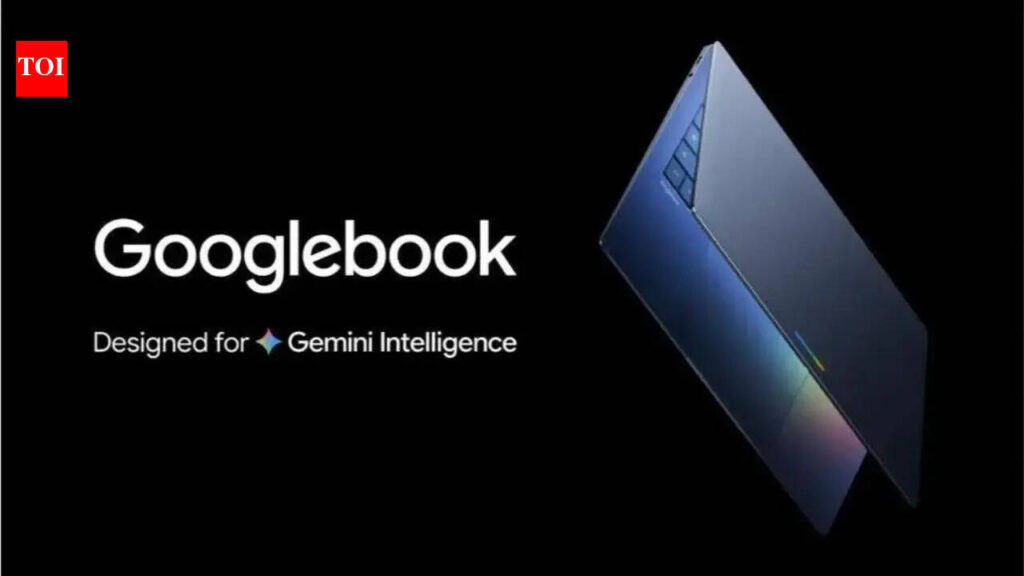
Table of Contents
A Pivot from Software to Silicon
Google has officially stepped out of the shadow of its Chromebooks with the launch of the Googlebook, a premium AI-centric laptop designed to challenge the dominance of Apple’s M-series and Qualcomm’s Snapdragon X Elite. While Google has long flirted with high-end hardware, the Googlebook represents a fundamental shift: the transition from providing a lightweight browser-based experience to delivering a vertically integrated hardware-software ecosystem powered by the new Tensor G5 chip.
- Tensor G5 Integration: The Googlebook moves away from generic ARM/x86 chips to a custom-built Tensor G5, optimizing local execution of Gemini AI models.
- AI-First Architecture: Unlike traditional laptops, the Googlebook features a dedicated AI-priority pipeline, reducing latency for real-time multimodal tasks.
- India as the Primary Test: Google is leveraging India’s massive developer base and growing middle-class appetite for premium tech to prove the Googlebook’s viability.
- Ecosystem Lock-in: The device aims to create a seamless bridge between Android, Pixel, and a new, evolved version of ChromeOS.
The Tensor G5: More Than Just a Mobile Chip
At the heart of the Googlebook is the Tensor G5. For years, Google’s Tensor chips in Pixel phones were essentially modified Samsung Exynos designs. However, industry reports and leaked architectural diagrams suggest the G5 is Google’s first truly “in-house” design, manufactured using TSMC’s 3nm process. This move is critical for the Googlebook to compete on power efficiency and thermal management.
The G5 isn’t just about clock speeds; it’s about the Neural Processing Unit (NPU). While Microsoft’s Copilot+ PCs rely on Qualcomm’s NPU to handle 40+ TOPS (Tera Operations Per Second), Google has optimized the Tensor G5 specifically for Gemini Nano, its on-device LLM. This allows the Googlebook to perform complex tasks—like summarizing hours of recorded meetings or generating high-fidelity images—without sending a single packet of data to the cloud.
Technical Breakdown: Local AI vs. Cloud AI
Most “AI PCs” are essentially thin clients for cloud services. The Googlebook attempts to shift the paradigm toward Edge AI. By integrating a larger SRAM cache specifically for model weights, the Tensor G5 can keep the Gemini Nano model resident in memory, eliminating the “wake-up” lag associated with traditional AI prompts.
| Feature | Standard AI PC (Cloud-Based) | Googlebook (Tensor G5) |
|---|---|---|
| Processing | Remote Server API | On-Device NPU |
| Privacy | Data sent to cloud | Local data processing |
| Latency | Dependent on Ping/Internet | Near-instantaneous |
Why India is the Strategic Epicenter
While the US and Europe are saturated markets, Google is treating India as the primary litmus test for the Googlebook. This isn’t random. India possesses the largest concentration of young, mobile-first developers and a burgeoning “creator economy” that is currently underserved by expensive MacBooks or fragile budget laptops.
Google’s strategy in India involves a three-pronged approach: localized AI language models (supporting Hindi, Bengali, and Tamil natively on-device), aggressive partnerships with campus ambassadors, and a pricing strategy that undercuts the MacBook Air while offering superior AI integration. If Google can capture the 18-30 demographic in Bangalore, Hyderabad, and Delhi, it secures a generational user base for its entire ecosystem.
“The challenge for Google isn’t the hardware—it’s the habit. In India, users are accustomed to the flexibility of Windows and the prestige of Apple. The Googlebook must prove it is not just a ‘fancy Chromebook’ but a legitimate workstation for the next generation of AI developers.”
The OS Dilemma: Beyond the Browser
The biggest risk to the Googlebook is the operating system. ChromeOS, while efficient, has always been seen as a browser wrapped in a shell. For the Googlebook to succeed, Google is introducing what insiders call “ChromeOS Next”. This isn’t a full pivot to Android, but rather a hybrid environment that allows native Linux application support and seamless Android app virtualization without the performance overhead of the current implementation.
The goal is Interoperability. A user should be able to start a draft in Google Docs on their Pixel 9, have the Googlebook automatically suggest completions based on the user’s local context (via the Tensor G5), and then push the final product to a collaborative workspace—all without manual syncing.
What This Means for the Average User
For the consumer, the Googlebook means the end of the “loading spinner” for AI tasks. Instead of waiting for a cloud server to process a request, your laptop handles the logic internally. This implies higher privacy (your data never leaves the device) and functionality in offline modes—something critical for users in regions with unstable internet connectivity, such as parts of rural India or during transit.
Market Implications and Competitive Pressure
The arrival of the Googlebook forces a response from Microsoft and Apple. Microsoft has spent years building the Copilot brand, but it relies on a fragmented hardware ecosystem. Google, by controlling both the silicon (Tensor) and the software (Gemini/ChromeOS), can optimize for a level of efficiency that Microsoft simply cannot achieve with third-party OEMs like Dell or HP.
However, Apple remains the gold standard for the “Pro” user. The Googlebook’s challenge will be moving beyond the student and casual user market. To do this, Google will need to prove that the Tensor G5 can handle heavy workloads—video editing in 4K, complex IDEs for coding, and large-scale data visualization—without thermal throttling.
Addressing the Privacy Gap
Google has a complicated relationship with trust. To counter the perception that the Googlebook is a “data collection machine,” the company is implementing a Hardware Privacy Switch and a transparent AI audit log. This log allows users to see exactly which local files the Gemini Nano model accessed to generate a specific result, providing a layer of transparency that is currently missing from most AI integrations.
Common Questions About the Googlebook
Can I run Windows apps on the Googlebook?
Not natively. While the Googlebook supports Linux apps and Android apps, Windows (.exe) files would require a virtual machine or a translation layer, which may impact performance. Google is focusing on a web-first and Linux-compatible ecosystem.
How does the battery life compare to a MacBook?
Early benchmarks indicate that the Tensor G5’s 3nm process allows for exceptional idling and light-task efficiency. While it may not beat the M3/M4 in sustained heavy workloads, for AI-assisted browsing and writing, it is expected to reach 18-22 hours of real-world use.
Is Gemini AI built-in or is it a subscription?
The Googlebook comes with Gemini Nano integrated for free on-device processing. However, access to the more powerful Gemini Ultra (via the cloud) will likely require a Google One AI Premium subscription.
Will it be available globally?
Yes, but the launch is tiered. India and the US are the primary launch markets, with a phased rollout to Europe and Southeast Asia following in late 2026.
Does it have a touchscreen?
The flagship Googlebook features a high-refresh-rate OLED display with optional touch and stylus support, positioning it as a competitor to both the MacBook Air and the Surface Laptop.
The Verdict on the AI Laptop Race
The Googlebook is more than a new product; it is Google’s attempt to own the entire compute stack. By integrating the Tensor G5, Google is betting that the future of computing isn’t just about raw power, but about intelligent power. If the Indian market adopts this hardware at scale, it will signal a shift away from the Windows-centric corporate world toward an AI-native ecosystem. The success of the Googlebook will ultimately be measured not by its spec sheet, but by whether users feel that the AI is a helpful co-pilot or just another layer of software bloat.