Impulse Space Secures $500 Million to Solve the ‘Last Mile’ Problem of Orbital Logistics
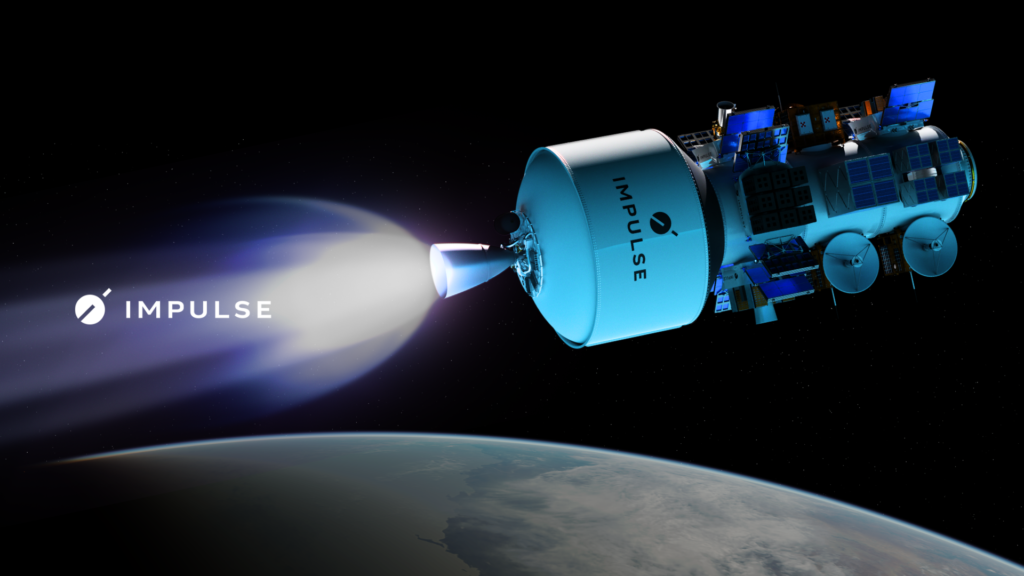
Table of Contents
The Logistics of the Void
While the last decade of the space race focused primarily on getting objects off the Earth—led by the reusable rocket revolution—the next frontier is what happens after the rocket drops its payload. Impulse Space, the venture founded by former SpaceX propulsion chief Tom Mueller, is betting that the real value in the space economy lies in ‘in-space mobility.’
The company recently announced the closure of a $500 million Series D funding round led by 137 Ventures and BANNER VC. This latest infusion brings Impulse Space’s total capital raised to over $1 billion, including a $300 million Series C round closed just a year prior. The funding comes at a critical inflection point as the industry shifts from simple launch services to a complex ecosystem of orbital logistics, where the ability to move assets between different orbits is as vital as the initial launch.
Building the Orbital Tugboat
At the heart of Impulse Space’s strategy are two primary vehicles: Mira and Helios. Mira is designed as a maneuverable spacecraft capable of deploying satellites and hosting diverse payloads, acting essentially as a precision delivery vehicle in orbit. However, it is Helios that represents the company’s high-energy ambition. Helios is a ‘kick stage’ designed to propel spacecraft from low Earth orbit (LEO) to geostationary orbit (GEO) and beyond.
For commercial satellite operators, the economics of GEO are notoriously punishing. The traditional route involves expensive, high-energy launches or long, inefficient drifts. According to Eric Romo, president and COO of Impulse Space, Helios drastically alters this math by getting satellites into their final slots faster, thereby accelerating the time-to-revenue for telecom operators. This capability will be central to the company’s ‘Caravan’ rideshare missions to GEO, slated to begin in 2027.
National Security and the Lunar Pivot
Beyond commercial telecom, Impulse Space is positioning itself as a strategic asset for the U.S. government. With the Space Force increasingly prioritizing ‘dynamic space operations’—the ability to maneuver assets frequently to avoid threats or reposition for intelligence gathering—the demand for highly mobile in-space assets has spiked. Romo notes that much of the current growth is driven by the need for assets that can provide active defense for existing orbital infrastructure.
The company is also eyeing the moon. Last year, Impulse disclosed plans for a lunar lander capable of delivering three tons of cargo to the lunar surface. With NASA doubling down on its moon base ambitions, Romo suggests the agency’s current trajectory aligns perfectly with Impulse’s architecture. The company intends to propose this lander for the ongoing Commercial Lunar Payload Services (CLPS) 2.0 procurement, moving the company from orbital tugs to planetary delivery.
The SpaceX Pedigree and a Private Path
The investor confidence in Impulse is deeply tied to the pedigree of its founder. Tom Mueller was the architect of the propulsion systems that made SpaceX’s early successes possible. Justin Fishner-Wolfson of 137 Ventures—which also holds a stake in SpaceX—noted that Mueller is now applying that same transformative approach to the ‘next major challenge’ of space: mobility.
Despite the massive funding and the proximity to SpaceX’s potential IPO—which could value the launch giant at upwards of $2 trillion—Impulse Space is resisting the urge to go public. Romo emphasized that the company is backed by ‘patient capital,’ allowing them to focus on engineering milestones rather than quarterly earnings reports. In an era of ‘growth at all costs’ that has plagued many space startups, Impulse claims to be taking a more measured approach to scaling, using the new funds to accelerate hiring to its 700-person target without expanding its physical footprint in California and Colorado.