Impulse Space Secures $500 Million to Scale Human Engineering Over AI Automation
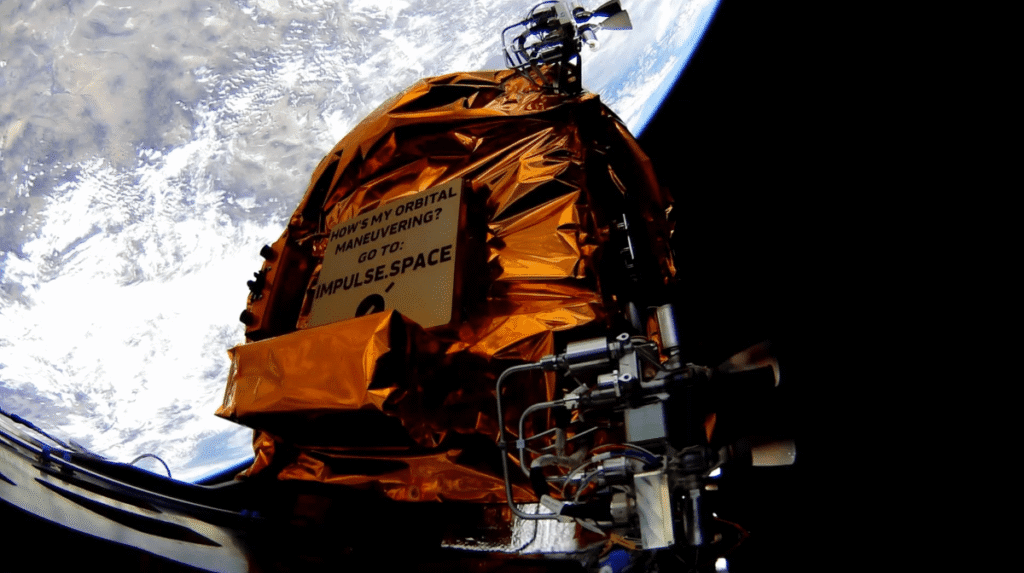
Table of Contents
Betting on Brainpower in the Vacuum of Space
In an era where venture capital is flowing almost exclusively into large language models and generative AI, Impulse Space is placing a massive, $500 million bet on human engineers. The startup, founded by SpaceX propulsion veteran Tom Mueller, announced a Series D funding round led by 137 Ventures and BANNER VC, with significant participation from Founders Fund, Lux Capital, and Linse Capital.
The capital injection isn’t earmarked for GPU clusters or synthetic data training. Instead, Impulse plans to aggressively expand its headcount, aiming to hire up to 200 new employees to accelerate the development of its in-space mobility platforms. The move comes as the U.S. government increases spending on national security space assets and as the broader industry anticipates the eventual public market debut of SpaceX.
The Hardware Gap: Why AI Isn’t Ready for Orbit
While the tech world is enamored with the idea of AI-designed everything, Impulse leadership remains skeptical of the technology’s current utility in high-stakes aerospace hardware. President and COO Eric Romo—who joined SpaceX as its 13th employee in 2003—argues that the “black box” nature of deep learning cannot yet replace the empirical rigor of a test stand.
Romo recalls his early days at SpaceX, where computer simulations were rudimentary tools. “I considered it success if I got within 20% of the right answer, because the simulations were just not that good,” Romo notes. While simulation software has advanced, he contends that the fundamental cycle of design, analysis, and physical testing remains the only reliable path to flight-proven hardware.
The bottleneck, according to Romo, is data. Unlike LLMs, which feast on the vast, open archives of the internet, the world’s most critical aerospace designs—such as the specifics of a high-performance turbo pump seal—are guarded as corporate secrets or classified national security information. Without this proprietary training data, AI cannot effectively innovate in the physical realm of propulsion.
Mira and Helios: Solving the ‘Last Mile’ of Space
Impulse Space is not building traditional rockets to leave Earth; it is building the vehicles that operate once they arrive in the vacuum. The company’s primary focus is the Mira platform, a highly maneuverable spacecraft designed specifically for the U.S. Space Force and other defense clients who require the ability to reposition assets rapidly in orbit.
Complementing Mira is Helios, a vehicle designed to act as an orbital tug. Most satellites are dropped off by primary launch vehicles in lower, more accessible orbits. Helios is engineered to ferry those payloads to higher, specific orbits, providing a level of precision and flexibility that standard launch trajectories lack.
Scaling Beyond the Hubs
The company’s growth strategy involves a geographical pivot. While Los Angeles has long been the epicenter of the “New Space” movement, Impulse recently opened an office in Colorado. This expansion reflects a shifting talent landscape where engineers are increasingly seeking hubs in Denver, Seattle, and Texas, moving away from the traditional California congestion.
This talent acquisition push arrives as the company works through the lessons of its previous missions. The Mira spacecraft’s third flight late last year was a qualified success but highlighted the fragility of orbital navigation; a system glitch caused the craft to expend a significant portion of its propellant prematurely. To correct these teething issues, Impulse is prepping a new Mira mission slated for launch before the end of the year.