Impulse Space Secures $500 Million to Scale Hardware Engineering in an AI-Obsessed Era
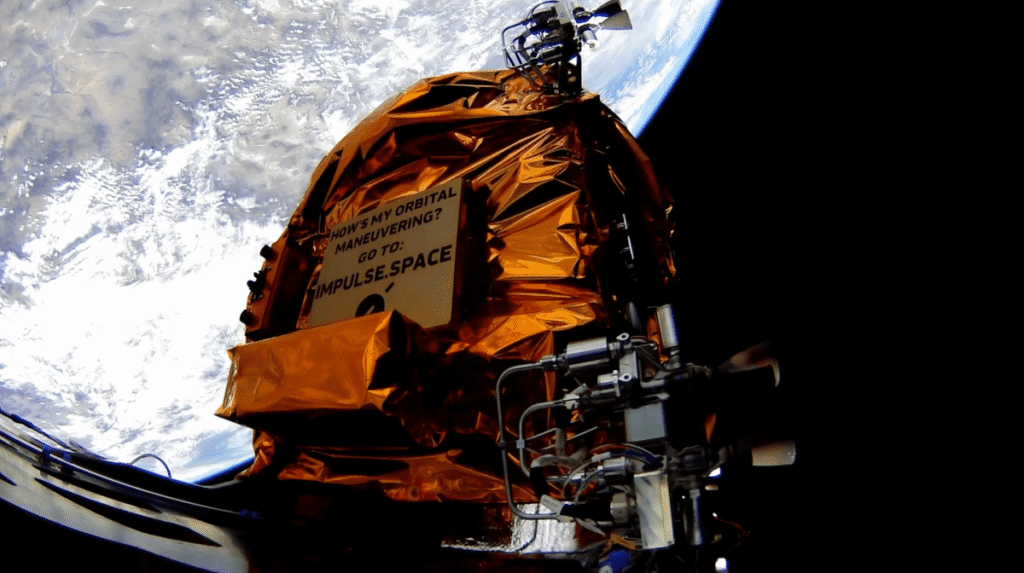
Table of Contents
Betting on Humans in the Age of LLMs
Impulse Space, the orbital infrastructure startup founded by SpaceX propulsion pioneer Tom Mueller, has closed a $500 million Series D funding round. While the venture capital world is currently obsessed with automating every conceivable workflow through generative AI, Impulse is using its new war chest for a different purpose: hiring people. The company plans to add as many as 200 new employees to its ranks, signaling a conviction that the hardest problems in aerospace cannot be solved by a prompt.
The round was led by 137 Ventures and BANNER VC, with significant participation from Founders Fund, Lux Capital, and Linse Capital. The scale of the investment highlights a growing appetite among investors for “hard tech” and defense-adjacent startups, particularly as the U.S. government accelerates spending on national security assets and the broader market anticipates the eventual IPO of SpaceX.
At the core of Impulse’s strategy is the concept of in-space mobility—the ability to move assets once they have already reached orbit, rather than relying on a single, static deployment from a launch vehicle. This shift in philosophy is embodied in two primary projects: Mira and Helios. Mira is a highly maneuverable platform designed specifically for the rigorous requirements of U.S. Space Force buyers, while Helios serves as a “last-mile” delivery vehicle, transporting satellites to high-altitude orbits after they are dropped off by a primary rocket closer to Earth.
The Data Gap in Hardware Design
The company’s stance on AI is not one of Luddism, but of technical pragmatism. According to President and COO Eric Romo, Impulse’s software teams are already utilizing AI coding tools to streamline development. However, when it comes to the physics of propulsion and structural engineering, Romo argues that deep learning models are nowhere near “prime time.”
Romo, who joined SpaceX as its 13th employee in 2003, recalls a time when computer simulations were primitive. “I considered it success if I got within 20% of the right answer, because the simulations were just not that good,” Romo noted. While simulation fidelity has improved, he maintains that there is no digital substitute for the iterative cycle of designing, analyzing, building, and testing on a physical stand.
The bottleneck, Romo suggests, is a fundamental lack of high-quality training data for hardware. Unlike the vast archives of public text and code that fuel Large Language Models (LLMs), the world’s most efficient engineering designs are guarded as corporate secrets. “If you want to go, say, find the best designs for a turbo pump seal package in the world, you’re not going to find those online,” Romo explained. This “data moat” ensures that human expertise remains the primary driver of aerospace innovation.
Scaling Beyond the SpaceX Orbit
The expansion is also a logistical necessity. As Impulse evolved from a propulsion-focused company into a full-scale spacecraft manufacturer, it required a broader spectrum of talent, including experts in flight computers and vehicle structures. This has led the company to diversify its geographic footprint, recently opening an office in Colorado to tap into a talent pool that is no longer tethered to traditional hubs like Los Angeles.
The path forward is not without its hurdles. The company’s Mira spacecraft encountered a significant setback during its third flight late last year, where a navigation system failure caused the vehicle to expend its propellant prematurely. Despite the incident, the company is moving forward with a new Mira mission scheduled to launch before the end of the year, using the new capital to accelerate the testing and deployment cycle.