Hyperinflation and Siege: The Collapse of Gaza’s Livestock Economy Ahead of Eid al-Adha
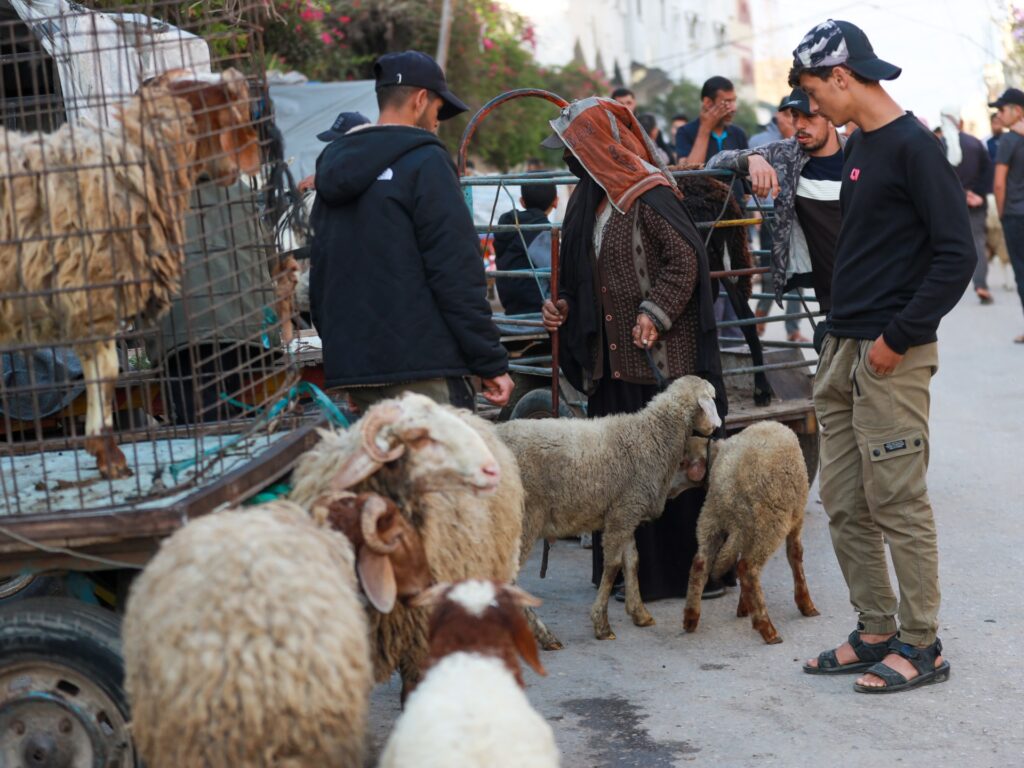
Table of Contents
The Erasure of a Tradition
For millions of Muslims globally, Eid al-Adha is defined by the udhiyah—the ritual sacrifice of livestock—and the spiritual journey of Hajj. In the Gaza Strip, however, these cornerstones of faith have been replaced by a grim economic reality. As the region prepares for another Eid al-Adha under the weight of ongoing conflict and blockade, the livestock sector has shifted from a functional agricultural industry to a casualty of war.
The devastation is not merely collateral; it is systemic. According to data from Gaza’s Chamber of Commerce and Industry, over 90 percent of livestock farms in the enclave have been destroyed or severely damaged. The combination of direct kinetic strikes on farming infrastructure and the restriction of essential veterinary supplies and feed has decimated the population of sheep and cattle, creating a supply vacuum that has triggered astronomical price hikes.
Market Volatility and Hyperinflation
The economic distortion in Gaza’s remaining markets is staggering. Before the current escalation, a sheep typically cost between 400 and 500 Jordanian dinars ($560–$700), or roughly 2,000 shekels. Today, the same animal—often emaciated due to malnutrition—can command between 16,000 and 17,000 shekels ($4,400–$4,700). Some reports indicate that high-end livestock may even reach $6,000, a price point that is functionally impossible for a population currently relying on international aid queues for basic caloric intake.
Emad Suhweil, a displaced father from Beit Lahiya, describes a landscape where the traditional act of sharing meat with the poor has become an impossibility. “People don’t even think about sacrifices now,” Suhweil notes, highlighting a shift where families struggle to afford even two kilograms of vegetables, let alone a sacrificial animal. This economic paralysis is compounded by Israel’s refusal to allow the import of live animals, which would typically serve as a pressure valve for domestic shortages during peak religious holidays.
The Logistics of Displacement
Beyond the livestock crisis, the physical and administrative restrictions on movement have severed the connection between Gazans and the Kaaba. For the third consecutive year, no pilgrims have been able to depart Gaza for Hajj. The administrative blockade on exit points has turned a once-in-a-lifetime spiritual obligation into an indefinite postponement.
For residents like I’tidal Hamdan, 68, the loss is compounded by personal tragedy. Having been on the 2024 Hajj list prior to the conflict, Hamdan now finds herself in a tent in Gaza City, mourning a husband and several grandchildren killed in strikes. Her experience mirrors a wider demographic trend: the total erasure of the middle-class ability to engage in traditional religious commerce. The ‘Eid table,’ once a symbol of abundance and familial unity, has been replaced by canned meats and the hope of securing a single chicken for sacrifice.
Systemic Agricultural Failure
The collapse of the livestock sector is a bellwether for the broader failure of Gaza’s food security infrastructure. The destruction of farms is not just a loss of animals, but a loss of the technical expertise and seed-stock required to rebuild. When 90 percent of a specialized sector is wiped out, the recovery timeline extends far beyond the cessation of hostilities.
As families stand in aid lines for basic staples, the ritual of Eid has transitioned from a celebration of faith to a stark reminder of the enclave’s isolation. For many, the only remaining ritual is patience—a necessity in a landscape where the most basic tenets of their culture have been priced out of existence by war.